Peptides are short chains of amino acids, typically 2 to 50 residues, with applications spanning medicine, wellness, and athletic performance. Their legal status varies enormously depending on FDA approval, how they are manufactured, who distributes them, and for what purpose.
Understanding peptide legality requires navigating three overlapping frameworks: FDA drug approval, compounding pharmacy regulations, and anti-doping rules. The same molecule can be entirely legal as a prescription drug, partially legal as a compounded formulation, or completely prohibited as a research chemical sold for human use, depending entirely on context.Understanding the Regulatory Framework
The FDA regulates peptides based on intended use, manufacturing standards, and distribution channels rather than treating all peptides uniformly. Under the Federal Food, Drug, and Cosmetic Act (FDCA), substances intended for the diagnosis, cure, treatment, or prevention of disease are classified as drugs, requiring FDA oversight and approval before they can be legally marketed. Three distinct regulatory categories exist for peptides in the United States:- FDA-approved peptide drugs: Fully reviewed and authorized for specific indications, manufactured under current Good Manufacturing Practice (cGMP) standards
- Compounded peptides from licensed pharmacies: Prepared for individual patients under prescriptions, subject to specific federal and state regulations
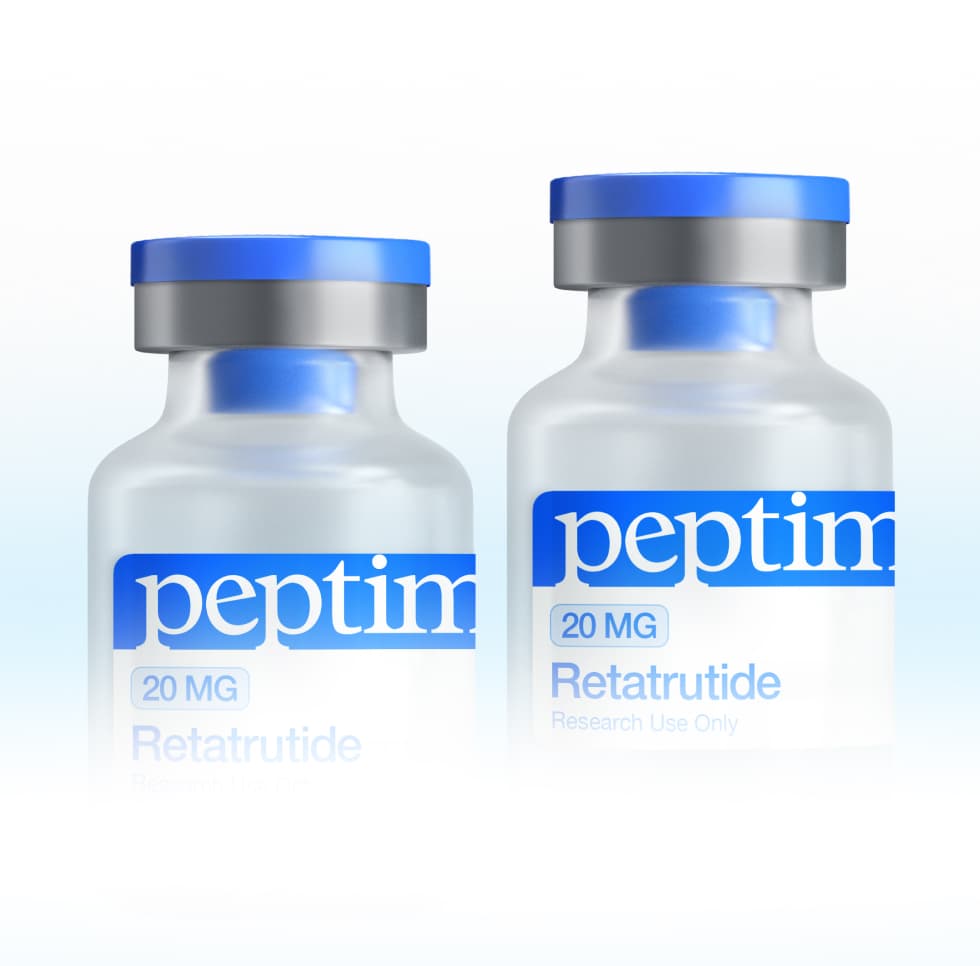
- Research-only peptides: Sold with disclaimers prohibiting human consumption marketing, though enforcement action can occur when marketing suggests human use intent
FDA-Approved Peptide Therapeutics
Several peptides have achieved full FDA approval following clinical trials demonstrating safety and efficacy:
- Insulin: For diabetes management, among the most widely used peptide therapeutics globally
- Semaglutide (Ozempic, Wegovy): GLP-1 receptor agonist for type 2 diabetes and obesity
- Tirzepatide (Mounjaro, Zepbound): Dual GIP/GLP-1 agonist for diabetes and weight management
- Bremelanotide (Vyleesi): For hypoactive sexual desire disorder in premenopausal women
- Tesamorelin (Egrifta): Growth hormone-releasing factor analog for HIV-associated lipodystrophy
- Various growth hormone-related compounds: Approved for specific growth deficiency indications
These peptides can be legally prescribed, dispensed by licensed pharmacies, and administered under medical supervision. They are manufactured under strict quality controls with documented safety and efficacy profiles.
The key point: legal status depends on formal approval, not on whether the molecule is "natural," widely available, or popularly perceived as safe.
Compounding Pharmacy Regulations
Compounding pharmacies operate under Sections 503A and 503B of the FDCA, which grant limited exemptions from standard drug approval requirements:
Section 503A covers customized medications prepared by licensed pharmacists for individual patients based on valid prescriptions. These preparations must be made in compliance with applicable standards and cannot be commercially distributed.
Section 503B covers outsourcing facilities, larger compounding operations that may produce medications without patient-specific prescriptions but must register with the FDA, comply with cGMP standards, and report certain information to the agency.
For a peptide to be legally compounded, it must meet one of the following criteria:
- Be a component of an FDA-approved drug
- Appear on the FDA's approved bulk drug substances list (the "503A bulks list")
- Have a USP compendial monograph
- Be Generally Recognized as Safe (GRAS) for the intended route of administration
Biological products, including many peptides, are generally ineligible for compounding exemptions under the FDCA. Most wellness and performance peptides do not meet any of these criteria, placing compounding pharmacies that prepare them in violation of federal law.
Category 2 Restrictions and Safety Concerns
In 2023, the FDA evaluated numerous bulk drug substances nominated for inclusion on the 503A compounding list and placed many popular peptides into Category 2, effectively restricting their use in compounding due to identified safety concerns or insufficient evidence of safety.
Peptides placed in Category 2 include:
- BPC-157 (Body Protection Compound-157)
- CJC-1295 (growth hormone-releasing hormone analog)
- Ipamorelin (growth hormone secretagogue)
- AOD 9604 (anti-obesity peptide fragment)
- Thymosin Alpha-1 (immune modulator)
- Cathelicidin LL-37 (antimicrobial peptide)
- Dihexa Acetate (cognitive peptide)
- Emideltide (DSIP) (delta sleep-inducing peptide)
The FDA cited "lack of adequate safety data from human clinical trials" as the primary basis for Category 2 placement. Compounding pharmacies that continue to prepare these substances face potential fines, legal action, and loss of licensure. Practitioners who prescribe compounded Category 2 substances may also face professional liability.
The Research Chemical Designation
Many peptides are marketed online as "research chemicals" with disclaimers stating "not for human consumption" or "for research use only." This legal framing represents a gray area — and often a fiction rather than legitimate regulatory protection.
The FDA does not recognize a "research chemical" exemption that permits human use of unapproved substances. When sellers make marketing claims about weight loss, muscle growth, anti-aging, or healing, even implicitly through product descriptions or customer testimonials, the agency treats this as evidence of intent for human use. That intent nullifies the research-only disclaimer and subjects sellers to enforcement action under drug misbranding and adulteration statutes.
From a practical standpoint, purchasing research-labeled peptides for personal use means:
- No legal protection from the "research use only" label
- No quality control or manufacturing oversight
- No recourse if the product is contaminated, mislabeled, or inert
- Potential legal exposure depending on jurisdiction and circumstances
The Advocacy Paradox
A recurring pattern in the peptide community involves well-intentioned initiatives that collect structured data from users — sourcing patterns, dosing protocols, clinical outcomes — to build a case for regulatory reclassification. The logic seems sound: if enough people report positive outcomes, regulators will take notice.
The reality is the opposite. For compounds seeking initial approval or reclassification, the FDA requires controlled clinical trials with standardized dosing, verified manufacturing, and regulatory-compliant study design. Self-reported experiences, anonymous surveys, and aggregated anecdotal data do not meet that standard. While the FDA does use real-world evidence in some post-market contexts, crowd-sourced outcome data from uncontrolled use of unapproved compounds does not qualify.
More critically, these data-collection efforts can backfire. Structured datasets documenting sourcing patterns, usage frequency, and clinical outcomes constitute organized evidence of human use for compounds labeled "Research Use Only." Even anonymized data reveals supply chain patterns, usage volumes, and distribution channels. This creates exactly the kind of intelligence that strengthens rather than weakens regulatory enforcement cases. The fundamental contradiction — collecting clinical outcome data for compounds that carry RUO labels — signals to regulators that the "research only" framing is a legal fiction rather than a reflection of actual use.
The path to legal access for promising peptides runs through funded clinical trials and formal regulatory submission, not through crowd-sourced data that inadvertently documents the gap between how compounds are labeled and how they are actually used.Sports and Anti-Doping Regulations
The World Anti-Doping Agency (WADA) prohibits peptide hormones, growth factors, and related substances under multiple sections of the Prohibited List, banning them both in and out of competition. The prohibition applies regardless of a substance's FDA approval status. A peptide can be entirely legal to possess under federal law and still result in a doping violation.
The 2026 WADA Prohibited List bans peptides under several categories:
- S0 (Non-Approved Substances): BPC-157 falls here. S0 is the most expansive and unconditional ban category, covering any pharmacological substance not addressed by other sections. Critically, S0 has no Therapeutic Use Exemption (TUE) pathway, meaning there is no mechanism for an athlete to obtain authorization for its use.
- S2 (Peptide Hormones, Growth Factors, Related Substances and Mimetics): Covers growth hormone-releasing hormones (GHRHs) and analogs, growth hormone secretagogues (GHS) and analogs, growth hormone-releasing peptides (GHRPs), peptide hormones and their releasing factors, and growth factors including TB-500.
Athletes tested through USADA, the NCAA, or international federations risk sanctions and multi-year suspensions. Testing positive constitutes a violation regardless of how the substance was labeled, acquired, or administered. The "I didn't know it was banned" defense carries no weight under strict liability anti-doping rules.
State-Level Considerations
Federal regulations set the floor, but state laws add additional complexity. Most peptides that require prescriptions under federal law are classified as Schedule 4 controlled substances or prescription-only medications at the state level, requiring valid prescriptions for legal dispensing.
State medical and pharmacy boards maintain independent licensing authority and can take disciplinary action against practitioners who prescribe unapproved substances inappropriately or outside the standard of care. This creates professional liability exposure even in cases where federal law is ambiguous.
State compounding regulations may impose requirements that exceed federal standards. Some states have enacted stricter compounding rules that further limit which bulk substances licensed in-state pharmacies can prepare. Practitioners operating in multiple states must navigate varying frameworks.
Navigating Legal Gray Areas
The peptide landscape contains substantial gray areas where legality depends heavily on specific circumstances:
- A patient may legally possess a substance that a physician cannot legally prescribe
- A supplier may legally sell a compound for laboratory research that a clinic cannot legally administer
- A substance restricted in compounding may not be restricted in simple possession
- Market availability and widespread clinical demand do not substitute for regulatory authorization
Non-approved peptide users assume several categories of risk simultaneously: legal exposure, product quality concerns, absent dosing protocols, and no medical oversight. The regulatory uncertainty does not reduce these risks. It compounds them by removing the institutional safeguards that accompany approved medications.
The appropriate path for peptide therapeutics runs through clinical trial development, regulatory review, and formal approval — not through research chemical channels or regulatory arbitrage.
Conclusion
Peptide legality exists on a spectrum rather than a binary classification. FDA-approved peptides like insulin and semaglutide are clearly legal when prescribed and dispensed appropriately. Compounded peptides are significantly more restricted, with many wellness and performance peptides now explicitly barred from compounding through Category 2 safety designations. Research-only peptides occupy legal gray areas where "not for human consumption" labels provide minimal protection once substances enter personal use.
The regulatory framework distinguishes peptides based on approval status, manufacturing standards, and distribution channels, not on molecular structure, perceived safety, or popularity. For athletes, the anti-doping framework adds a separate layer of prohibition that operates independently of FDA classification. The peptides and drug testing guide covers detection windows, WADA status, and which sports organizations test for specific compounds.
Anyone considering peptide use should understand the specific regulatory status of the substance in question, consult with a licensed healthcare provider, and recognize that market availability is not a proxy for legality or safety.For a practical look at how this regulatory framework actually shapes purchasing decisions, see our guide on where to get peptides in the US, which maps the two main legal routes available to American buyers.