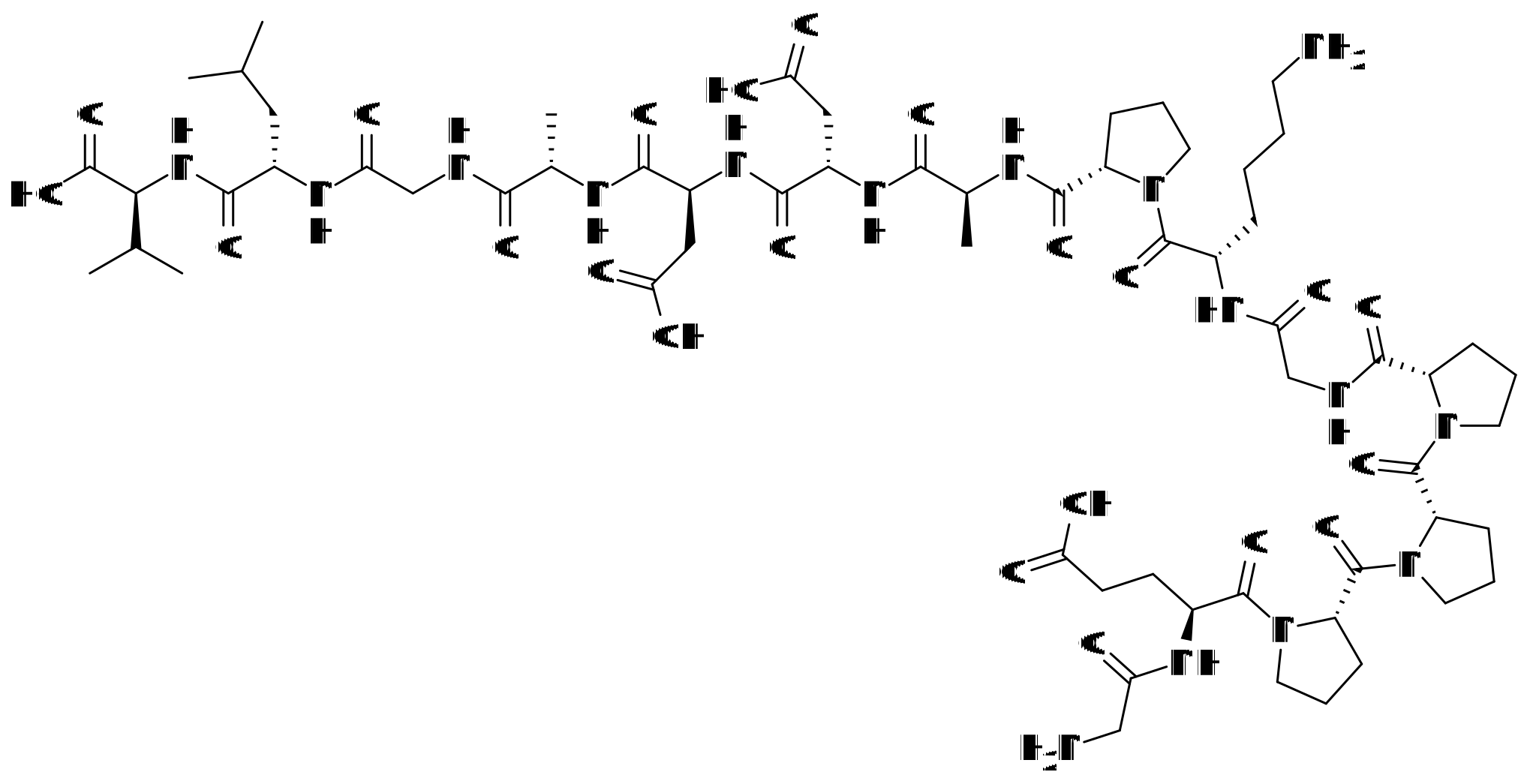
BPC-157
From Peptidepedia, the trusted peptide wiki.



- BPC-157 is a synthetic peptide derived from stomach juice that may accelerate healing of tendons, ligaments, muscles, and bones.
- The compound works by increasing blood vessel formation, reducing inflammation, and activating cellular growth pathways in damaged tissues.
- BPC-157 is not FDA-approved for human use, has limited human research, and is banned in competitive sports.
BPC-157 (Body Protection Compound-157) is a synthetic pentadecapeptide derived from a protective protein found in human gastric juice, investigated primarily for its regenerative and tissue-healing properties. Research in animal models suggests it may accelerate recovery from tendon, ligament, muscle, and bone injuries while reducing inflammation and promoting angiogenesis. It has gained significant popularity among athletes, biohackers, and individuals seeking accelerated recovery from musculoskeletal injuries. Typical dosages range from 200–500 mcg administered once or twice daily via subcutaneous injection, with cycles commonly lasting 4–8 weeks.
What Is BPC-157?
BPC-157, also known as Body Protection Compound-157 or gastric pentadecapeptide, is a 15-amino acid peptide sequence first described in 1992. It is derived from a larger protein called BPC (Body Protection Compound) that naturally occurs in human gastric juice, where it functions to maintain mucosal integrity and promote gastrointestinal homeostasis.
The synthetic version used in research and by the peptide community is a stable fragment of this naturally occurring compound. Unlike many peptides that degrade rapidly in the digestive system, BPC-157 demonstrates remarkable stability in gastric acid, which has contributed to interest in both injectable and oral administration routes.
What distinguishes BPC-157 from other regenerative peptides is its broad spectrum of proposed effects. Preclinical research has demonstrated cytoprotective properties across multiple organ systems, including the gastrointestinal tract, liver, pancreas, heart, and nervous system. However, its primary appeal lies in musculoskeletal applications—specifically its potential to accelerate healing of tendons, ligaments, muscles, and bones.
The primary human-use benefits reported in preclinical studies include:
- Accelerated tendon and ligament repair
- Enhanced muscle healing following injury
- Reduced inflammation at injury sites
- Improved bone fracture healing
- Gastroprotective effects
- Potential neuroprotective properties
How It Works
Angiogenesis and VEGF Upregulation
One of BPC-157's most well-documented mechanisms involves the stimulation of angiogenesis—the formation of new blood vessels. Multiple preclinical studies have identified that BPC-157 increases vascular endothelial growth factor (VEGF) protein and gene expression, a critical pathway in tissue repair and regeneration. Enhanced blood vessel formation delivers more oxygen and nutrients to damaged tissues, accelerating the healing process.
Growth Factor and Cellular Proliferation Pathways
BPC-157 appears to upregulate several pro-survival and pro-proliferation pathways essential for tissue repair. Research has shown increased phosphorylation of extracellular signal-regulated kinases (ERK) 1 and 2, along with their downstream targets including c-Fos, c-Jun, and Egr-1—molecules involved in cell growth, migration, and angiogenesis.
Additionally, BPC-157 has been associated with increased growth hormone receptor expression in tendon fibroblasts, suggesting it may enhance the body's responsiveness to growth hormone at the tissue level. The peptide also activates the FAK-paxillin pathway, important for cellular adhesion, migration, proliferation, and survival.
Anti-Inflammatory Effects
BPC-157 demonstrates significant anti-inflammatory properties through multiple mechanisms. Studies have observed decreased cyclooxygenase-2 (COX-2) gene expression, reduced myeloperoxidase activity, and lower levels of pro-inflammatory cytokines including interleukin-6 (IL-6) and tumor necrosis factor-alpha (TNF-α). In animal models of adjuvant-induced arthritis, BPC-157 reduced paw inflammation, nodule formation, and stiffness.
Nitric Oxide System Modulation
BPC-157 interacts significantly with the nitric oxide (NO) system, upregulating nitric oxide synthase (NOS) gene and protein expression while increasing nitric oxide production. This vasodilatory effect may contribute to improved blood flow to injured tissues and enhanced healing capacity.

Dosage Protocols
Since BPC-157 is not FDA-approved for human use, there are no officially established dosing guidelines. The following information reflects dosages commonly reported in research literature and anecdotal use.
Standard Dosing Range:
- Low dose: 200–250 mcg once daily
- Moderate dose: 250–500 mcg once or twice daily
- Higher dose: 500–800 mcg once or twice daily
Weight-Based Dosing:
Based on animal study extrapolations, an estimated human equivalent dose is approximately 1.6 mcg/kg body weight, translating to roughly 110 mcg for a 150-pound person and 145 mcg for a 200-pound person when using oral administration.
Cycling Guidelines:
- Typical cycle length: 4–8 weeks
- Some users employ 4 weeks on, 2–4 weeks off protocols
- For acute injuries, shorter cycles of 2–4 weeks may be utilized
- Chronic conditions may warrant longer cycles under appropriate guidance
In preclinical safety studies, no toxic or lethal dose was achieved across a wide range of doses from 6 μg/kg to 20 mg/kg, suggesting a favorable safety margin.
How to Use / Administration Methods
Subcutaneous Injection (Most Common)
The most popular administration method involves subcutaneous injection, typically into the fatty tissue of the abdomen, thigh, or near the injury site. Injecting close to the affected area is believed by some to provide more localized effects, though systemic benefits have been observed regardless of injection site.
Intramuscular Injection
Some users prefer intramuscular injection, particularly when targeting specific muscle injuries. This method may provide more direct delivery to affected muscle tissue.
Oral Administration
BPC-157's stability in gastric acid makes oral administration viable, particularly for gastrointestinal applications. Oral capsules and sublingual formulations are available, though bioavailability may differ from injectable forms.
Intra-articular Injection
For joint-related issues, some practitioners have utilized intra-articular injection. One retrospective study found that 7 of 12 patients with chronic knee pain reported symptom improvement lasting more than 6 months following a single intra-articular BPC-157 injection.
Results Timelines
Individual responses to BPC-157 vary considerably based on injury severity, administration method, dosage, and individual physiology. Based on available research and anecdotal reports:
Week 1–2:
- Initial reduction in inflammation and pain may be noticed
- Some users report improved mobility at injury sites
- Gastrointestinal benefits may become apparent for those using oral forms
Week 2–4:
- More noticeable improvements in tissue healing
- Continued reduction in inflammation
- Enhanced range of motion and functional recovery
Week 4–8:
- Significant structural improvements in healing tissues
- Continued functional gains
- Many users report substantial recovery milestones
The peptide has a relatively short half-life of less than 30 minutes, following linear pharmacokinetics after administration. BPC-157 metabolites remain detectable in urine for up to 4–5 days.
Research Evidence
The body of BPC-157 research consists primarily of preclinical animal studies, with very limited human clinical data. A 2025 systematic review identified 36 studies from 1993 to 2024, including 35 preclinical studies and only 1 clinical study.
Tendon Healing:
Multiple rat studies demonstrated that BPC-157 improved structural, functional, and biomechanical outcomes following Achilles and quadriceps tendon transection. Treated animals showed improved load to failure, reduced inflammatory infiltrates, and enhanced tendon-to-bone healing.
Muscle Injury:
In rat muscle transection and crush injury models, BPC-157 treatment improved muscle structure, function, and biomechanics, including improved load to failure, motor function indices, and reduced atrophy.
Ligament Repair:
A rat medial collateral ligament (MCL) transection study found that BPC-157 reduced post-injury valgus instability and contracture while restoring biomechanical properties and motor function.
Bone Healing:
In rabbit nonunion models, intramuscular BPC-157 performed comparably to autologous bone marrow or bone grafting in improving callous mineralization and bone defect resolution.
Human Data:
Only one registered clinical trial (Phase I) exists, with unknown status since 2016. The single retrospective human study involved 12 patients receiving intra-articular BPC-157 for chronic knee pain, with 7 reporting symptom improvement exceeding 6 months.
Stacking
BPC-157 is frequently combined with other peptides to potentially enhance regenerative effects. The most popular combination is known as the "Wolverine Stack."
BPC-157 + TB-500 (Thymosin Beta-4)
This combination is the most widely used stack for injury recovery. While BPC-157 primarily supports local tissue healing, collagen production, and angiogenesis, TB-500 enhances cell migration, new blood vessel formation, and reduces inflammation through different mechanisms. The complementary mechanisms are believed to provide synergistic healing benefits.
Common Wolverine Stack Protocol:
- BPC-157: 250–500 mcg daily
- TB-500: 2–2.5 mg twice weekly (loading phase), then 2–2.5 mg weekly (maintenance)
Other Potential Stacking Options:
- GHK-Cu: For enhanced collagen production and skin/tissue quality
- KPV: For additional anti-inflammatory effects
- Growth hormone secretagogues: For systemic regenerative support
Reconstitution, Storage & Prep
BPC-157 typically comes as a lyophilized (freeze-dried) powder that requires reconstitution before use.
Reconstitution Process:
- Allow the BPC-157 vial to reach room temperature
- Use bacteriostatic water (BAC water) as the reconstitution fluid—this contains 0.9% benzyl alcohol as a preservative, extending shelf life
- Draw the appropriate amount of BAC water into an insulin syringe
- Inject the water slowly down the inside wall of the vial, allowing it to gently dissolve the powder
- Do not shake vigorously—gentle swirling is acceptable
- Allow the solution to sit until fully dissolved (typically a few minutes)
Common Reconstitution Ratios:
- 5mg BPC-157 + 2mL BAC water = 2.5mg/mL (250mcg per 0.1mL/10 units)
- 5mg BPC-157 + 2.5mL BAC water = 2mg/mL (200mcg per 0.1mL/10 units)
Storage Guidelines:
- Lyophilized (unreconstituted) BPC-157: Store below -18°C (-0.4°F) for long-term storage; stable at room temperature for approximately 3 weeks
- Reconstituted BPC-157: Store at 2–8°C (refrigerator temperature) and use within 4 weeks
- Protect from light and avoid repeated freeze-thaw cycles
- Never use if solution appears cloudy or contains particles
Side Effects
Preclinical animal studies have demonstrated a favorable safety profile for BPC-157, with no acute toxicity observed across multiple organ systems including liver, spleen, lung, kidney, brain, thymus, prostate, and ovaries at doses ranging from 6 μg/kg to 20 mg/kg over 6-week periods.
However, human clinical safety data remains extremely limited. Anecdotal reports from users have included:
Commonly Reported:
- Injection site pain, redness, or swelling
- Mild dizziness
- Nausea
- Fatigue or drowsiness
Less Commonly Reported:
- Anxiety or mood changes
- Heart palpitations
- Insomnia
- Loss of appetite
- Depression or anhedonia
The FDA has noted that BPC-157 may pose a risk of immunogenicity (triggering an immune response). Additionally, because BPC-157 products are unregulated, contamination with other substances represents a significant concern—studies suggest between 12% and 58% of ergo-nutritional supplements may be contaminated.
Legal Status / FDA
BPC-157 occupies a complex regulatory gray area. In 2023, the FDA designated BPC-157 as a Category 2 bulk drug substance, meaning it cannot be compounded by commercial pharmaceutical companies and that there is insufficient evidence regarding potential harm to humans.
Key Regulatory Points:
- Not FDA-approved for any medical indication
- Cannot legally be sold as a drug, food, or dietary supplement for human consumption
- Legally sold as a "research chemical" not intended for human use
- Not a DEA-scheduled substance, so possession is not illegal (unlike anabolic steroids)
- Many medical clinics offer BPC-157 treatments despite lack of approval
The FDA has expressed safety concerns due to the lack of human clinical trial data and the potential for adverse effects from unregulated manufacturing.
Sports / WADA
BPC-157 is explicitly prohibited in competitive sports. The World Anti-Doping Agency (WADA) added BPC-157 to its Prohibited List in 2022 under the S0 category (Non-Approved Substances).
Organizations with BPC-157 Bans:
- WADA (World Anti-Doping Agency): Specific ban since 2022
- USADA (U.S. Anti-Doping Agency): Prohibited
- UFC: Specific ban since 2022
- NFL: Specific ban since 2022
- NCAA: Non-specific ban on peptide hormones
- MLB: Non-specific ban on peptide hormones
- PGA: Non-specific ban on peptide hormones
Athletes should be aware that BPC-157 metabolites can be detected in urine for up to 4–5 days using mass spectrometry methods, with detection limits well below WADA's minimum required levels for peptide compounds.
Conclusion
BPC-157 represents one of the most intriguing regenerative peptides currently under investigation. Preclinical evidence consistently demonstrates its potential to accelerate healing across multiple tissue types through mechanisms involving angiogenesis, growth factor modulation, and anti-inflammatory effects. The peptide's favorable safety profile in animal studies and its stability across various administration routes have contributed to its growing popularity.
However, the critical limitation remains the near-complete absence of human clinical trial data. While animal studies are promising, they do not guarantee equivalent effects or safety in humans. Those considering BPC-157 should understand they are using an experimental compound with unknown long-term effects, sourced from an unregulated market where product quality and purity cannot be guaranteed.
For competitive athletes, BPC-157 use carries significant consequences due to its prohibited status across virtually all major sports organizations. For others, the decision to use BPC-157 should involve careful consideration of the limited evidence base, potential risks from unregulated products, and consultation with knowledgeable healthcare providers.
FAQ
Is BPC-157 safe for human use?
Preclinical animal studies have shown no acute toxicity across multiple organ systems at various doses over 6-week periods. However, human clinical safety data is essentially nonexistent. The FDA has expressed concerns about potential immunogenicity and unknown long-term effects. Additionally, unregulated manufacturing creates contamination risks.
How quickly does BPC-157 work?
Individual responses vary significantly. Some users report initial improvements in inflammation and pain within 1–2 weeks, with more substantial healing benefits observed over 4–8 weeks. The peptide has a short half-life of less than 30 minutes, necessitating consistent daily dosing.
Can BPC-157 be taken orally?
Yes, BPC-157 demonstrates unusual stability in gastric acid, making oral administration viable. Oral forms may be particularly suitable for gastrointestinal applications. However, bioavailability may differ from injectable forms, and some users prefer injection for musculoskeletal applications.
Is BPC-157 legal to purchase?
BPC-157 exists in a regulatory gray area. It is not FDA-approved and cannot legally be sold for human consumption. However, it is legally sold as a "research chemical" and is not a DEA-scheduled substance, so possession is not illegal. Many online vendors and medical clinics offer BPC-157 products.
Will BPC-157 show up on a drug test?
For standard employment or medical drug tests, BPC-157 is not typically screened. However, for competitive athletes subject to WADA or sports organization testing, BPC-157 metabolites can be detected in urine for up to 4–5 days using specialized mass spectrometry methods.
What is the best way to administer BPC-157?
Subcutaneous injection is the most common method, offering reliable absorption and the option to inject near injury sites. Intramuscular injection is preferred by some for muscle injuries. Oral administration is viable, particularly for gut-related applications, though absorption characteristics may differ.
Can BPC-157 be combined with other peptides?
Yes, BPC-157 is frequently stacked with TB-500 (Thymosin Beta-4) in what is commonly called the "Wolverine Stack." The two peptides work through complementary mechanisms and are believed to provide synergistic healing benefits. Other combinations include GHK-Cu and KPV for enhanced regenerative effects.
How should BPC-157 be stored?
Lyophilized (powder) BPC-157 should be stored below -18°C for long-term storage, though it remains stable at room temperature for approximately 3 weeks. Once reconstituted with bacteriostatic water, store at 2–8°C (refrigerator) and use within 4 weeks. Protect from light and avoid freeze-thaw cycles.
References
- Vasireddi N, et al. "Emerging Use of BPC-157 in Orthopaedic Sports Medicine: A Systematic Review." HSS Journal. 2025. https://pmc.ncbi.nlm.nih.gov/articles/PMC12313605/
- Sikiric P, et al. "Multifunctionality and Possible Medical Application of the Pentadecapeptide BPC 157." Pharmaceuticals. 2025. https://www.mdpi.com/1424-8247/18/2/185
- Chang CH, et al. "Pentadecapeptide BPC 157 enhances the growth hormone receptor expression in tendon fibroblasts." Molecules. 2014. https://pmc.ncbi.nlm.nih.gov/articles/PMC6271067/
- Examine.com. "BPC-157: Research Breakdown." https://examine.com/supplements/bpc-157/
- U.S. Anti-Doping Agency. "BPC-157: Experimental Peptide Creates Risk for Athletes." https://www.usada.org/spirit-of-sport/bpc-157-peptide-prohibited/
- World Anti-Doping Agency. "The 2024 Prohibited List International Standard." https://www.wada-ama.org/sites/default/files/2023-09/2024list_en_final_22_september_2023.pdf
- ClinicalTrials.gov. "PCO-02 - Safety and Pharmacokinetics Trial." https://clinicaltrials.gov/study/NCT02637284
- Rupa Health. "BPC 157: Science-Backed Uses, Benefits, Dosage, and Safety." https://www.rupahealth.com/post/bpc-157-science-backed-uses-benefits-dosage-and-safety
- Drip Hydration. "The Wolverine Stack: Can BPC 157 and TB 500 Accelerate Injury Recovery?" https://driphydration.com/blog/wolverine-stack-injury-recovery/
- Preferred Regenerative Medicine. "The BPC-157, TB-500, KPV & GHK-Cu Peptide Stack Guide." https://preferredregen.com/blog/the-bpc-157-tb-500-kpv-ghk-cu-peptide-stack-guide