Tesamorelin
From Peptidepedia, the trusted peptide wiki.



- Tesamorelin is a synthetic hormone that stimulates the pituitary gland to produce natural growth hormone.
- It reduces belly fat and improves body composition, with noticeable results appearing within 8-12 weeks.
- Research shows tesamorelin may improve memory and brain function in older adults.
Tesamorelin is a synthetic growth hormone-releasing hormone (GHRH) analog that stimulates the pituitary gland to produce and release natural growth hormone. Approved by the FDA in 2010 under the brand name Egrifta, it is primarily indicated for reducing excess abdominal fat in HIV-positive patients with lipodystrophy. Beyond its approved use, tesamorelin has gained popularity among anti-aging enthusiasts, bodybuilders, and biohackers seeking to reduce visceral fat, improve body composition, and potentially enhance cognitive function. Typical dosing protocols involve 1-2 mg administered subcutaneously once daily, usually before bedtime or in the morning on an empty stomach, with noticeable results generally appearing within 8-12 weeks of consistent use.
What Is Tesamorelin?
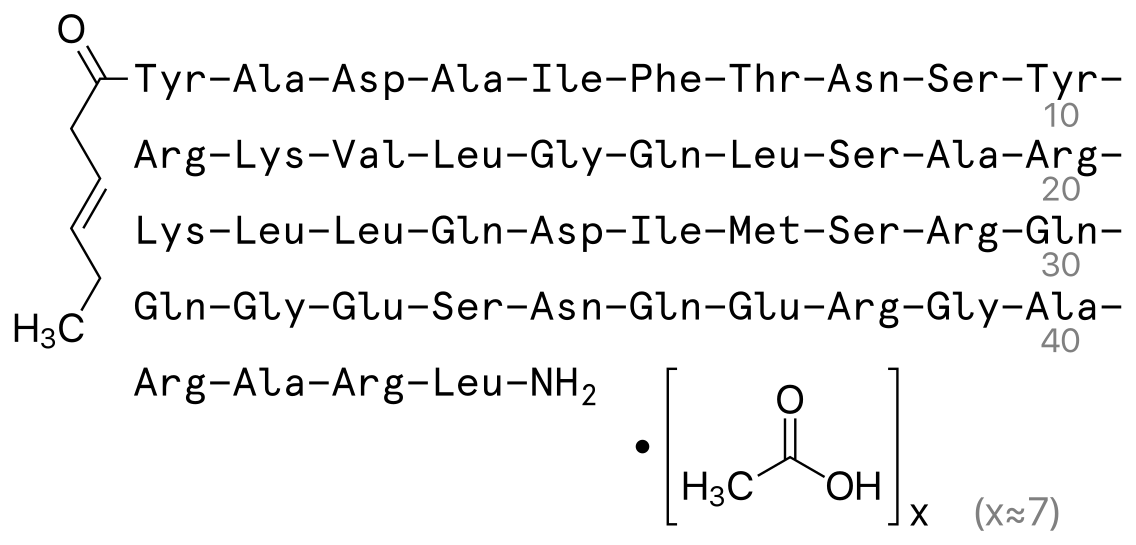
Tesamorelin (chemical name: trans-3-hexenoic acid-modified human GHRH(1-44)) is a synthetic peptide consisting of 44 amino acids identical to endogenous human growth hormone-releasing hormone, with the addition of a trans-3-hexenoic acid group that enhances its stability and bioavailability. Developed by Theratechnologies Inc., it received FDA approval specifically for the reduction of excess abdominal fat in HIV-infected patients experiencing lipodystrophy—a condition characterized by abnormal fat distribution often caused by antiretroviral therapy.
What makes tesamorelin unique among growth hormone secretagogues is its mechanism of action. Unlike synthetic human growth hormone (HGH), which directly introduces exogenous hormone into the body, tesamorelin works by stimulating the pituitary gland to produce and release the body's own growth hormone. This approach maintains the natural pulsatile release pattern of GH and preserves the hypothalamic-pituitary feedback loop, potentially reducing the risk of pituitary suppression associated with direct HGH administration.
The primary human-use benefits that have driven tesamorelin's popularity include significant reduction in visceral adipose tissue (VAT), improvements in lipid profiles including triglycerides and cholesterol ratios, potential cognitive benefits particularly in older adults, and enhanced body composition without the supraphysiological hormone levels associated with exogenous GH therapy.
How It Works
Pituitary Stimulation and GH Release
Tesamorelin functions by binding to growth hormone-releasing hormone receptors (GHRH-R) located on somatotroph cells in the anterior pituitary gland. Upon binding, it triggers a signaling cascade that stimulates the synthesis and secretion of endogenous growth hormone. This process mimics the natural physiological mechanism by which hypothalamic GHRH regulates GH production, resulting in pulsatile GH release rather than the continuous elevated levels seen with exogenous GH administration.
IGF-1 Elevation and Metabolic Effects
The growth hormone released in response to tesamorelin subsequently stimulates hepatic production of insulin-like growth factor-1 (IGF-1). Clinical studies have demonstrated that tesamorelin administration increases IGF-1 levels by approximately 50-100 ng/mL from baseline. This elevation in IGF-1 mediates many of tesamorelin's beneficial effects on body composition, including enhanced lipolysis, increased protein synthesis, and improved glucose metabolism.
Visceral Fat Reduction Mechanism
Tesamorelin's most well-documented effect is its ability to reduce visceral adipose tissue. Growth hormone promotes lipolysis by activating hormone-sensitive lipase in adipocytes, leading to the breakdown of stored triglycerides into free fatty acids and glycerol. Visceral fat cells appear particularly responsive to GH-mediated lipolysis due to their higher density of beta-adrenergic receptors and greater sensitivity to lipolytic hormones. Studies have shown reductions in trunk fat of 10-18% over 26-52 weeks of treatment.
Neuroprotective and Cognitive Effects
Emerging research suggests tesamorelin may offer cognitive benefits, particularly in aging populations. A randomized controlled trial in older adults demonstrated improvements in executive function and verbal memory following 20 weeks of tesamorelin administration. These effects are thought to be mediated by IGF-1's neuroprotective properties, including enhanced neuronal survival, synaptic plasticity, and reduced neuroinflammation.

Dosage Protocols
The FDA-approved dosage for tesamorelin in HIV-associated lipodystrophy is 2 mg administered subcutaneously once daily. However, dosing protocols in non-approved contexts vary based on individual goals and response.
Standard Protocol: 1-2 mg subcutaneously once daily, typically administered in the morning on an empty stomach or before bedtime. Most users begin at 1 mg to assess tolerance before increasing to 2 mg if needed.
Conservative Protocol: 0.5-1 mg daily, often preferred by those new to peptide therapy or seeking to minimize potential side effects while still achieving gradual benefits.
Cycling Considerations: While the FDA-approved use involves continuous daily administration, some practitioners recommend cycling protocols such as 5 days on/2 days off or 8-12 weeks on followed by 4 weeks off. The rationale for cycling includes preventing potential receptor desensitization and allowing the pituitary to maintain sensitivity to GHRH stimulation. However, clinical trial data supporting specific cycling protocols remains limited, and the pivotal trials demonstrating efficacy used continuous daily dosing.
Treatment duration in clinical trials typically ranged from 26 to 52 weeks, with benefits generally maintained throughout the treatment period. Discontinuation of tesamorelin typically results in gradual return of visceral fat accumulation, suggesting ongoing administration may be necessary to maintain results.
How to Use / Administration
Tesamorelin is administered via subcutaneous injection, typically into the abdominal area, rotating injection sites to prevent lipohypertrophy. The following steps outline proper administration:
Preparation: Wash hands thoroughly. Allow the reconstituted solution to reach room temperature if refrigerated. Inspect the solution for particulates or discoloration—it should be clear and colorless.
Injection Technique: Clean the injection site with an alcohol swab. Pinch a fold of skin and insert the needle at a 45-90 degree angle depending on body composition. Inject slowly and steadily, then withdraw the needle and apply gentle pressure without rubbing.
Timing Optimization: Administration timing can influence efficacy. Morning injection on an empty stomach (at least 2 hours after eating and 30-60 minutes before food) takes advantage of naturally lower insulin levels, as insulin can blunt GH release. Alternatively, bedtime administration aligns with the body's natural nocturnal GH surge. Avoid injecting within 2-3 hours of consuming carbohydrates or fats, as elevated blood glucose and free fatty acids can inhibit GH secretion.
Results Timeline
Weeks 1-4: Most users do not observe significant visible changes during this initial period. Internally, GH and IGF-1 levels begin to elevate, and some individuals report improved sleep quality, increased energy, and enhanced recovery from exercise.
Weeks 4-8: Subtle improvements in body composition may become noticeable, including mild reduction in abdominal bloating and improved skin quality. Laboratory testing typically shows elevated IGF-1 levels.
Weeks 8-16: More pronounced reductions in visceral fat become apparent. Clinical trials demonstrated statistically significant trunk fat reduction by week 12-16. Users often report improved muscle definition, particularly in the abdominal region.
Weeks 16-26: Continued progressive improvement in body composition. The pivotal Phase III trials showed approximately 15-18% reduction in trunk fat at 26 weeks. Lipid profile improvements, including reduced triglycerides, typically become measurable.
Beyond 26 Weeks: Extended treatment continues to maintain or further improve results. The 52-week extension studies demonstrated sustained benefits with continued use.
Research Evidence
Tesamorelin's efficacy is supported by robust clinical trial data. The pivotal Phase III trials (Studies 1 and 2) enrolled over 800 HIV-positive patients with lipodystrophy and demonstrated statistically significant reductions in visceral adipose tissue compared to placebo. Study 1 showed a mean reduction of 15.2% in trunk fat versus a 5% increase in the placebo group at 26 weeks.
Beyond fat reduction, research has documented improvements in cardiovascular risk markers. A study published in the Journal of Clinical Endocrinology & Metabolism found that tesamorelin treatment reduced triglycerides by approximately 50 mg/dL and improved the total cholesterol to HDL ratio.
Cognitive research has yielded promising results. A 2020 randomized controlled trial published in the Annals of Neurology examined tesamorelin's effects on cognition in healthy older adults and those with mild cognitive impairment. Results showed significant improvements in executive function and verbal memory, with corresponding changes in cerebrospinal fluid biomarkers suggesting enhanced neuronal health.
Research into tesamorelin's effects on non-alcoholic fatty liver disease (NAFLD) has shown reductions in hepatic fat content, suggesting potential therapeutic applications beyond its current indication.
Stacking
Tesamorelin is sometimes combined with other peptides or compounds to enhance results, though such combinations lack formal clinical study.
Tesamorelin + Ipamorelin: This combination pairs a GHRH analog with a growth hormone-releasing peptide (GHRP). The theoretical synergy involves stimulating GH release through two complementary pathways—GHRH receptor activation and ghrelin receptor agonism—potentially producing greater GH elevation than either compound alone.
Tesamorelin + CJC-1295: Some users combine tesamorelin with CJC-1295 (another GHRH analog with extended half-life), though this approach may be redundant given their similar mechanisms.
Tesamorelin + Lifestyle Interventions: The most evidence-supported "stack" involves combining tesamorelin with structured exercise and dietary optimization. Clinical trials demonstrated that tesamorelin's benefits were additive to lifestyle modifications.
Reconstitution, Storage & Preparation
Tesamorelin typically comes as a lyophilized (freeze-dried) powder requiring reconstitution before use.
Reconstitution: Using bacteriostatic water (preferred for multi-dose vials) or sterile water, inject the diluent slowly against the vial wall, allowing it to run down the side rather than directly onto the powder. Gently swirl—never shake—until fully dissolved. The resulting solution should be clear and colorless.
Concentration: Standard reconstitution uses 2-3 mL of bacteriostatic water per 2 mg vial, yielding a concentration of approximately 0.67-1 mg/mL. This allows for convenient dosing with standard insulin syringes.
Storage: Unreconstituted powder should be stored refrigerated at 2-8°C (36-46°F) and protected from light. Once reconstituted, the solution must be refrigerated and used within 14-28 days depending on the diluent used (bacteriostatic water allows longer storage than sterile water). Never freeze reconstituted solution.
Side Effects
Tesamorelin is generally well-tolerated, with most adverse effects being mild to moderate in severity.
Common Side Effects (occurring in >5% of patients):
Injection site reactions including erythema, pruritus, pain, and swelling affect approximately 8-13% of users. These typically diminish with continued use and proper injection site rotation. Arthralgia (joint pain) and myalgia (muscle pain) occur in approximately 10-13% of patients, likely related to GH-mediated fluid retention and tissue effects. Peripheral edema and paresthesias (tingling sensations) affect roughly 5-6% of users.
Less Common Side Effects:
Carpal tunnel syndrome symptoms, glucose intolerance, and hypersensitivity reactions occur less frequently. Patients with pre-existing glucose intolerance should monitor blood sugar carefully, as GH can antagonize insulin action.
Contraindications:
Tesamorelin is contraindicated in patients with active malignancy, disruption of the hypothalamic-pituitary axis due to conditions such as hypophysectomy or pituitary tumor, pregnancy, and known hypersensitivity to tesamorelin or mannitol.
Legal Status / FDA
Tesamorelin (Egrifta/Egrifta SV) is FDA-approved exclusively for the reduction of excess abdominal fat in HIV-infected patients with lipodystrophy. It is classified as a prescription medication in the United States, meaning legal acquisition requires a valid prescription from a licensed healthcare provider.
Use of tesamorelin for indications other than HIV-associated lipodystrophy constitutes "off-label" use. While physicians may legally prescribe medications off-label based on clinical judgment, patients should understand that such use has not undergone the same regulatory scrutiny as approved indications.
Tesamorelin is not a controlled substance under the Controlled Substances Act. However, the sale of prescription peptides without a valid prescription is illegal, and products sold through gray-market sources may vary in purity, potency, and sterility.
Sports / WADA Status
Tesamorelin is prohibited in competitive sports. The World Anti-Doping Agency (WADA) classifies all growth hormone-releasing hormones and their analogs under category S2 (Peptide Hormones, Growth Factors, Related Substances, and Mimetics) of the Prohibited List. This prohibition applies both in-competition and out-of-competition.
Athletes subject to drug testing should be aware that tesamorelin use would constitute a doping violation. Detection methods for GHRH analogs continue to advance, and the elevated IGF-1 levels resulting from tesamorelin use may trigger additional scrutiny under the GH biomarker test.
Conclusion
Tesamorelin represents a scientifically validated approach to stimulating endogenous growth hormone production, with robust clinical evidence supporting its efficacy in reducing visceral adipose tissue. Its mechanism of preserving natural pulsatile GH release patterns distinguishes it from exogenous growth hormone therapy and may offer advantages in terms of maintaining physiological feedback regulation. While FDA-approved only for HIV-associated lipodystrophy, ongoing research into cognitive benefits and metabolic effects suggests broader therapeutic potential. Users considering tesamorelin should weigh the substantial evidence base against the limitations of off-label use and ensure proper medical supervision.
FAQ
How long does it take to see results from tesamorelin?
Most users begin noticing subtle improvements in body composition between weeks 8-12, with more significant visceral fat reduction becoming apparent by weeks 16-26. Clinical trials demonstrated statistically significant results at the 26-week mark.
Is tesamorelin better than HGH for fat loss?
Tesamorelin stimulates natural GH production rather than introducing exogenous hormone, which maintains physiological pulsatile release patterns and feedback mechanisms. While direct comparison studies are limited, tesamorelin may offer advantages in terms of reduced pituitary suppression risk, though HGH provides more precise dosing control.
Can tesamorelin be used long-term?
Clinical trials have evaluated tesamorelin use for up to 52 weeks with maintained efficacy and acceptable safety profiles. However, long-term data beyond this period is limited, and discontinuation typically results in gradual return of visceral fat accumulation.
Does tesamorelin require cycling?
The FDA-approved protocol involves continuous daily administration without cycling. Some practitioners recommend periodic breaks to prevent theoretical receptor desensitization, though clinical evidence supporting specific cycling protocols is lacking.
What time of day is best to inject tesamorelin?
Morning administration on an empty stomach or bedtime injection are both common approaches. The key consideration is avoiding injection within 2-3 hours of food intake, particularly carbohydrates, as elevated insulin and blood glucose can blunt GH release.
Will tesamorelin show up on a drug test?
Tesamorelin is prohibited by WADA and would constitute a doping violation in competitive sports. Standard employment drug screens typically do not test for peptide hormones, but specialized athletic testing can detect GHRH analogs and their effects on GH/IGF-1 biomarkers.
Can tesamorelin cause cancer?
Tesamorelin is contraindicated in patients with active malignancy due to theoretical concerns that elevated GH/IGF-1 could promote tumor growth. However, clinical trials have not demonstrated increased cancer incidence with tesamorelin use in appropriate patient populations.
How should tesamorelin be stored after reconstitution?
Reconstituted tesamorelin must be refrigerated at 2-8°C (36-46°F) and protected from light. When reconstituted with bacteriostatic water, it remains stable for approximately 14-28 days. Never freeze reconstituted solution.
References
- Falutz J, et al. "Metabolic effects of a growth hormone-releasing factor in patients with HIV." New England Journal of Medicine. 2007;357(23):2359-2370. https://pubmed.ncbi.nlm.nih.gov/18057338/
- Falutz J, et al. "Effects of tesamorelin (TH9507), a growth hormone-releasing factor analog, in human immunodeficiency virus-infected patients with excess abdominal fat." Journal of Clinical Endocrinology & Metabolism. 2010;95(9):4291-4304. https://pubmed.ncbi.nlm.nih.gov/20534753/
- Stanley TL, et al. "Effect of tesamorelin on visceral fat and liver fat in HIV-infected patients with abdominal fat accumulation." JAMA. 2014;312(4):380-389. https://pubmed.ncbi.nlm.nih.gov/25038357/
- Makimura H, et al. "Effects of tesamorelin on cardiometabolic risk factors in HIV-infected patients." Journal of Clinical Endocrinology & Metabolism. 2011;96(9):2831-2838. https://pubmed.ncbi.nlm.nih.gov/21831993/
- Fourman LT, et al. "Tesamorelin treatment for liver fat and histology in HIV-associated NAFLD." Journal of Clinical Investigation. 2019;129(11):4608-4615. https://pubmed.ncbi.nlm.nih.gov/31425815/
- Baker LD, et al. "Effects of growth hormone-releasing hormone on cognitive function in adults with mild cognitive impairment and healthy older adults." Archives of Neurology. 2012;69(11):1420-1429. https://pubmed.ncbi.nlm.nih.gov/22911048/
- Sevigny JJ, et al. "Growth hormone secretagogue MK-677: no clinical effect on AD progression in a randomized trial." Neurology. 2008;71(21):1702-1708. https://pubmed.ncbi.nlm.nih.gov/19015485/
- Dhillon S. "Tesamorelin: A Review of its Use in the Management of HIV-Associated Lipodystrophy." Drugs. 2011;71(8):1071-1091. https://pubmed.ncbi.nlm.nih.gov/21668043/
- FDA Prescribing Information for Egrifta SV (tesamorelin). https://www.accessdata.fda.gov/drugsatfda_docs/label/2019/022505s010lbl.pdf
- World Anti-Doping Agency 2024 Prohibited List. https://www.wada-ama.org/en/prohibited-list
- Spooner LM, et al. "Tesamorelin: A Growth Hormone-Releasing Factor Analogue for HIV-Associated Lipodystrophy." Annals of Pharmacotherapy. 2012;46(2):240-247. https://pubmed.ncbi.nlm.nih.gov/22298606/
- Stanley TL, et al. "Effects of tesamorelin on inflammatory markers in HIV patients with excess abdominal fat." AIDS. 2011;25(10):1281-1288. https://www.ncbi.nlm.nih.gov/pmc/articles/PMC3296129/