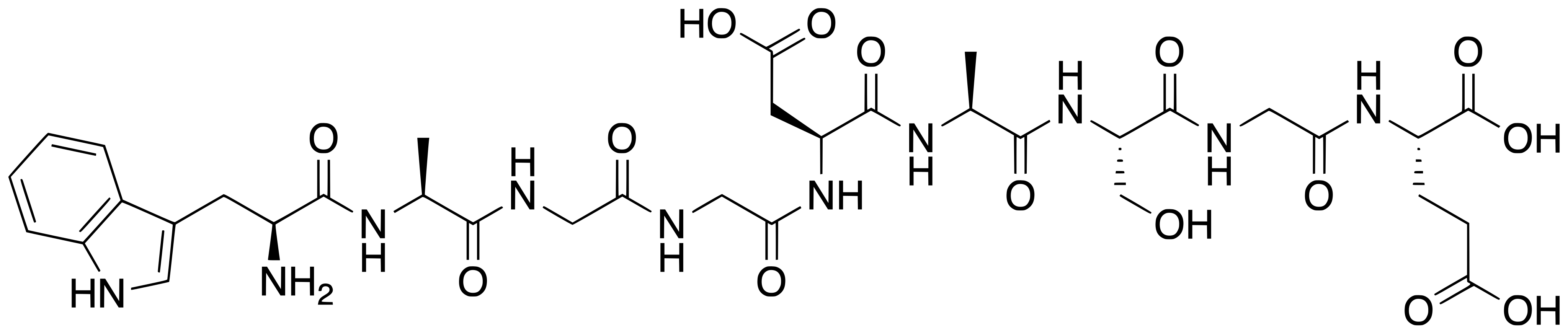
DSIP
From Peptidepedia, the trusted peptide wiki.



- DSIP is a natural brain chemical that helps improve sleep quality by promoting deep, restorative sleep.
- DSIP works by regulating the body's sleep-wake cycle and reducing stress rather than forcing sleep.
- People inject small doses of DSIP and experience better sleep within hours to days of use.
DSIP (Delta Sleep-Inducing Peptide) is a naturally occurring nonapeptide first isolated from rabbit brain in 1977, now widely used for its sleep-promoting, stress-reducing, and neuroprotective properties. Popular among biohackers, athletes seeking recovery optimization, and individuals with chronic insomnia, DSIP works by modulating sleep architecture rather than acting as a sedative. Typical dosages range from 100-300 mcg administered subcutaneously, with effects often noticed within hours to days and optimal results emerging over 2-6 weeks of consistent use.
What Is DSIP?
Delta Sleep-Inducing Peptide is a nine-amino-acid neuropeptide (Trp-Ala-Gly-Gly-Asp-Ala-Ser-Gly-Glu) synthesized primarily in the hypothalamus and found throughout the brain, pituitary gland, and peripheral tissues.1 Unlike conventional sleep medications, DSIP is classified as a sleep-promoting substance rather than a sedative, meaning it modulates and normalizes sleep-wake cycles rather than forcibly inducing unconsciousness.2
What makes DSIP unique among sleep-related compounds is its ability to cross the blood-brain barrier freely and its absorption from the gut without enzymatic degradation—unusual characteristics for a peptide.2 DSIP is also present in human breast milk at concentrations of 10-30 ng/mL, suggesting an evolutionary role in infant sleep regulation.2
The primary human-use benefits include:
- Improved sleep efficiency and reduced sleep latency
- Normalization of disturbed sleep patterns in chronic insomniacs
- Stress resilience and improved coping behavior
- Potential analgesic effects for chronic pain conditions
- Support during alcohol and opioid withdrawal
How It Works
Circadian Rhythm Modulation
DSIP concentrations in the brain and plasma exhibit marked diurnal variation, with levels low in the morning and elevated in the afternoon.2 This natural rhythm correlates with the body's circadian clock, and exogenous DSIP administration appears to help restore disrupted circadian patterns. Research demonstrates that plasma DSIP concentrations decrease at sleep initiation, suggesting the peptide plays a regulatory role in sleep-wake transitions.2
Delta Wave Enhancement
DSIP specifically promotes slow-wave sleep (SWS), characterized by increased delta rhythm activity on EEG monitoring.1 This deep sleep phase is critical for physical restoration, memory consolidation, and growth hormone release. Studies in chronic insomniacs showed that DSIP administration at 25 nmol/kg resulted in higher sleep efficiency and shorter sleep latency compared to placebo.3
Antioxidant and Neuroprotective Mechanisms
DSIP increases the capacity of endogenous antioxidant protection systems by stimulating superoxide dismutase (SOD) and glutamate peroxidase (GPO) activity.4 This mechanism contributes to its neuroprotective effects, demonstrated in rat models of cerebral ischemia where DSIP reduced mortality and improved post-ischemic function.2 Research has also shown DSIP may accelerate motor function recovery following stroke.5
Stress Response Attenuation
DSIP attenuates emotional and psychological responses to stress while reducing central amine responses in animal models.2 It modulates the hypothalamic-pituitary-adrenal (HPA) axis, with some studies showing inhibition of ACTH secretion following corticotrophin-releasing factor stimulation.2 This stress-buffering capacity may explain improved coping behavior and stress tolerance observed in human trials.

Dosage Protocols
Standard dosing for DSIP ranges from 100-300 mcg per administration, with most users starting at the lower end and titrating upward based on response.6 Some individuals may increase to 400 mcg depending on body weight and individual sensitivity.
Frequency: Once daily, typically administered in the evening, though research indicates DSIP given during the day will promote improved sleep that night and for several nights thereafter.2
Cycle Length: Most protocols recommend 4-6 weeks of use, followed by a break period. Some users employ DSIP only when struggling with sleep rather than nightly, while others use short cycles of 2-4 weeks.7
Clinical Study Dosing: Research trials have used 25 nmol/kg body weight (approximately 200-250 mcg for a 70 kg individual) administered intravenously, with effects persisting for multiple nights following single injections.3
Notably, DSIP does not induce tolerance with repeated administration, distinguishing it from many conventional sleep aids.2
How to Use
DSIP is most commonly administered via subcutaneous injection, typically in the abdominal area, thigh, or upper arm. The injection should be performed using an insulin syringe (29-31 gauge) for minimal discomfort.
Timing: While DSIP can be administered at any time of day with sleep benefits occurring that night, most users prefer evening administration 30-60 minutes before desired sleep onset. However, research confirms it is not a "night sedation drug which needs to be given just before retiring."2
Injection Technique:
- Clean the injection site with an alcohol swab
- Pinch a fold of skin
- Insert the needle at a 45-90 degree angle
- Inject slowly and withdraw
- Apply gentle pressure if needed
Some clinical studies have used intravenous administration, and intranasal delivery has been explored, though subcutaneous remains the standard for self-administration.
Results Timeline
Immediate (Hours): Some subjects report feeling "sleep pressure" immediately following administration, with sleep increasing by 59% within 130 minutes compared to placebo in one study.8
Short-term (Days to 1 Week): Delayed effects on subsequent night sleep include shorter sleep onset, reduced stage 1 sleep percentage, and better sleep efficiency.8 Many users report improved sleep quality within the first few nights.
Medium-term (2-4 Weeks): Normalization of disturbed sleep patterns becomes more pronounced. Studies in chronic insomniacs showed cumulative benefits with repeated administration, indicating a "buildup" effect.3
Long-term (4-6 Weeks): Full benefits for stress tolerance, coping behavior, and daytime alertness typically manifest. Improved performance during awake cycles has been documented in controlled studies.2
Research Evidence
The scientific literature on DSIP spans several decades, with key findings including:
A double-blind crossover study in chronic insomniacs demonstrated that DSIP at 25 nmol/kg significantly improved objective sleep quality metrics including sleep efficiency and sleep latency compared to placebo.3
Research published in the European Journal of Anaesthesiology characterized DSIP as having "multifunctional psychophysiological properties" beyond sleep induction, including stress attenuation and improved daytime performance.2
Studies on alcohol and opioid withdrawal found that clinical symptoms and signs disappeared after DSIP injection, suggesting utility in addiction medicine.2
A 2021 study in Molecules demonstrated that DSIP may have clinical benefits for stroke therapy, accelerating recovery of motor functions post-stroke through antioxidant mechanisms.5
Research has also documented anticonvulsant activity, with DSIP increasing the threshold for NMDA- and picrotoxin-induced convulsions in animal models.2
Stacking
DSIP is commonly combined with other peptides for synergistic effects:
DSIP + CJC-1295: This combination targets both sleep quality and growth hormone optimization. CJC-1295 stimulates GH release, which naturally peaks during deep sleep—the very sleep stage DSIP promotes.9
DSIP + BPC-157: Some practitioners combine these for enhanced recovery, with BPC-157 providing tissue healing and gut protection while DSIP optimizes the restorative sleep necessary for recovery processes.9
Sleep Blend Formulations: Commercial preparations combining DSIP, CJC-1295, and BPC-157 are marketed for comprehensive sleep and recovery optimization.9
When stacking, peptides should generally be reconstituted and stored separately, then administered at appropriate intervals rather than mixed in a single vial.
Reconstitution, Storage & Prep
Reconstitution:
- Use bacteriostatic water (BAC water) as the diluent
- Add 1-2.5 mL of BAC water to a standard 5 mg vial
- Direct the stream down the vial wall, not directly onto the powder
- Gently swirl (never shake) until fully dissolved
- A 5 mg vial reconstituted with 2 mL yields 2.5 mg/mL (2500 mcg/mL)
Storage:
- Lyophilized (powder): Store at -20°C for long-term storage, or 2-8°C (refrigerator) for several months. Keep away from light.10
- Reconstituted: Refrigerate at 2-8°C and use within 28 days.10
- Never freeze reconstituted peptide solutions
Preparation Notes:DSIP has a relatively short half-life in plasma (7-8 minutes), though its physiological effects persist much longer due to downstream signaling.2 The peptide is degraded by aminopeptidases, suggesting potential interactions with ACE inhibitors like captopril.2
Side Effects
DSIP demonstrates a remarkably favorable safety profile. The European Journal of Anaesthesiology noted that "DSIP actually appears to be incredibly safe as its LD50 has never been determined because it has never so far proved possible to kill an animal whatever the dose of DSIP administered."2
Reported side effects are generally mild and transient:
- Occasional headache
- Transient nausea
- Mild vertigo
- Injection site reactions (redness, minor irritation)
Considerations:
- Patients on ACE inhibitors should exercise caution due to potential peptidase interactions
- Effects in pregnancy and lactation are not established
- Long-term safety data in humans remains limited
The minimal side effect profile is consistent with DSIP being an endogenous substance present naturally in the body.
Legal Status & FDA
DSIP is not FDA-approved for any medical indication in the United States. The FDA has included DSIP on its list of bulk drug substances with significant safety concerns, primarily due to insufficient clinical data rather than documented adverse events.11
In the United States, DSIP is legally available for purchase as a "research chemical" not intended for human consumption. It is not a controlled substance under the Controlled Substances Act.
Regulatory status varies internationally:
- Most countries permit sale for research purposes
- Some compounding pharmacies may prepare DSIP under physician prescription
- Direct-to-consumer sale for human use remains in a legal gray area in most jurisdictions
Sports & WADA Status
DSIP falls under WADA's S2 category: Peptide Hormones, Growth Factors, Related Substances, and Mimetics, which are prohibited at all times (in and out of competition).12
Athletes subject to anti-doping testing should be aware that:
- DSIP is detectable in urine and blood samples
- Use constitutes an anti-doping rule violation regardless of intent
- Therapeutic Use Exemptions (TUEs) for DSIP are not typically granted
The prohibition relates to DSIP's potential performance-enhancing effects through improved recovery, sleep quality, and stress resilience rather than direct ergogenic properties.
Conclusion
DSIP represents a unique approach to sleep optimization—a naturally occurring peptide that modulates rather than forces sleep, with documented benefits for chronic insomnia, stress resilience, and potentially neuroprotection. Its favorable safety profile, lack of tolerance development, and multi-night efficacy from single doses distinguish it from conventional sleep medications.
While FDA approval remains absent and long-term human data is limited, the existing research base spanning nearly five decades provides reasonable confidence in its mechanisms and acute safety. For individuals seeking alternatives to pharmaceutical sleep aids, DSIP offers a physiologically-aligned option that works with the body's natural sleep architecture rather than against it.
As with all non-approved peptides, users should source from reputable suppliers, follow proper reconstitution and storage protocols, and ideally work with a knowledgeable healthcare provider familiar with peptide therapeutics.
FAQ
How quickly does DSIP work?
Some users experience increased sleep pressure within hours of administration. Research shows sleep can increase by 59% within 130 minutes of dosing, with additional benefits to subsequent nights' sleep including shorter sleep onset and improved efficiency.8
Can DSIP be taken every night?
While DSIP does not induce tolerance, many practitioners recommend cycling (4-6 weeks on, followed by a break) or using it only when needed rather than nightly. A single dose can improve sleep for several consecutive nights.2
Is DSIP better than melatonin?
They work through different mechanisms. Melatonin primarily signals sleep timing to the body, while DSIP modulates sleep architecture and promotes delta-wave (deep) sleep specifically. Some users find DSIP more effective for sleep quality rather than just sleep onset.
What time should I inject DSIP?
DSIP can be administered at any time of day and will promote improved sleep that night. Most users prefer evening administration 30-60 minutes before bed, though it is not required to be given immediately before retiring.2
Does DSIP help with anxiety?
Research demonstrates that DSIP attenuates emotional and psychological responses to stress and improves stress tolerance and coping behavior.2 While not specifically an anxiolytic, its stress-modulating properties may benefit anxiety-related sleep disturbances.
Can DSIP be used for jet lag?
Given DSIP's role in circadian rhythm modulation, it may help reset disrupted sleep-wake cycles associated with travel across time zones, though specific research on jet lag is limited.
Is DSIP safe to combine with other sleep supplements?
DSIP has been used alongside other peptides like CJC-1295 and BPC-157. Caution is advised when combining with pharmaceutical sleep aids, and ACE inhibitors may interact with DSIP metabolism.2
How long can reconstituted DSIP be stored?
Reconstituted DSIP should be refrigerated at 2-8°C and used within 28 days. Lyophilized powder can be stored long-term at -20°C or for several months refrigerated.10
References
- Schoenenberger GA, Monnier M. Characterization of a delta-electroencephalogram (-sleep)-inducing peptide. Proc Natl Acad Sci USA. 1977;74:1282-1286. https://pubmed.ncbi.nlm.nih.gov/265567/
- Pollard BJ, Pomfrett CJD. Delta sleep-inducing peptide. European Journal of Anaesthesiology. 2001;18(7):419-422. https://journals.lww.com/ejanaesthesiology/fulltext/2001/07000/delta_sleep_inducing_peptide.1.aspx
- Bes F, et al. Effects of Delta Sleep-Inducing Peptide on Sleep of Chronic Insomniac Patients. Neuropsychobiology. 1992;26(4):193-197. https://karger.com/nps/article/26/4/193/231036/Effects-of-Delta-Sleep-Inducing-Peptide-on-Sleep
- Bondarenko TI, Mikhaleva II. Mechanism of geroprotective action of delta-sleep inducing peptide. Biology Bulletin Reviews. 2011. https://link.springer.com/article/10.1134/S2079057011040035
- Delta Sleep-Inducing Peptide Recovers Motor Function in SD Rats after Focal Stroke. Molecules. 2021;26(17):5173. https://www.mdpi.com/1420-3049/26/17/5173
- DSIP Dosage Calculator and Chart. Peptides.org. https://www.peptides.org/dsip-dosage-calculator/
- DSIP (Delta Sleep-Inducing Peptide): The Controversial Sleep Peptide. Dr. Lewis. https://drlewis.com/dsip-delta-sleep-inducing-peptide/
- Schneider-Helmert D. DSIP in insomnia. European Neurology. 1984;23:358-363. https://pubmed.ncbi.nlm.nih.gov/6391925/
- Sleep Blend - Peptide Blend. RegenMD Wellness. https://regenmdwellness.com/products/sleep-blend
- DSIP Dosage & Administration. Peptides Insider. https://www.peptidesinsider.com/peptides/dsip/dosage
- DSIP (Delta Sleep-Inducing Peptide) Full Rundown. Innerbody. https://www.innerbody.com/dsip-delta-sleep-inducing-peptide
- The Prohibited List. World Anti-Doping Agency. https://www.wada-ama.org/en/prohibited-list