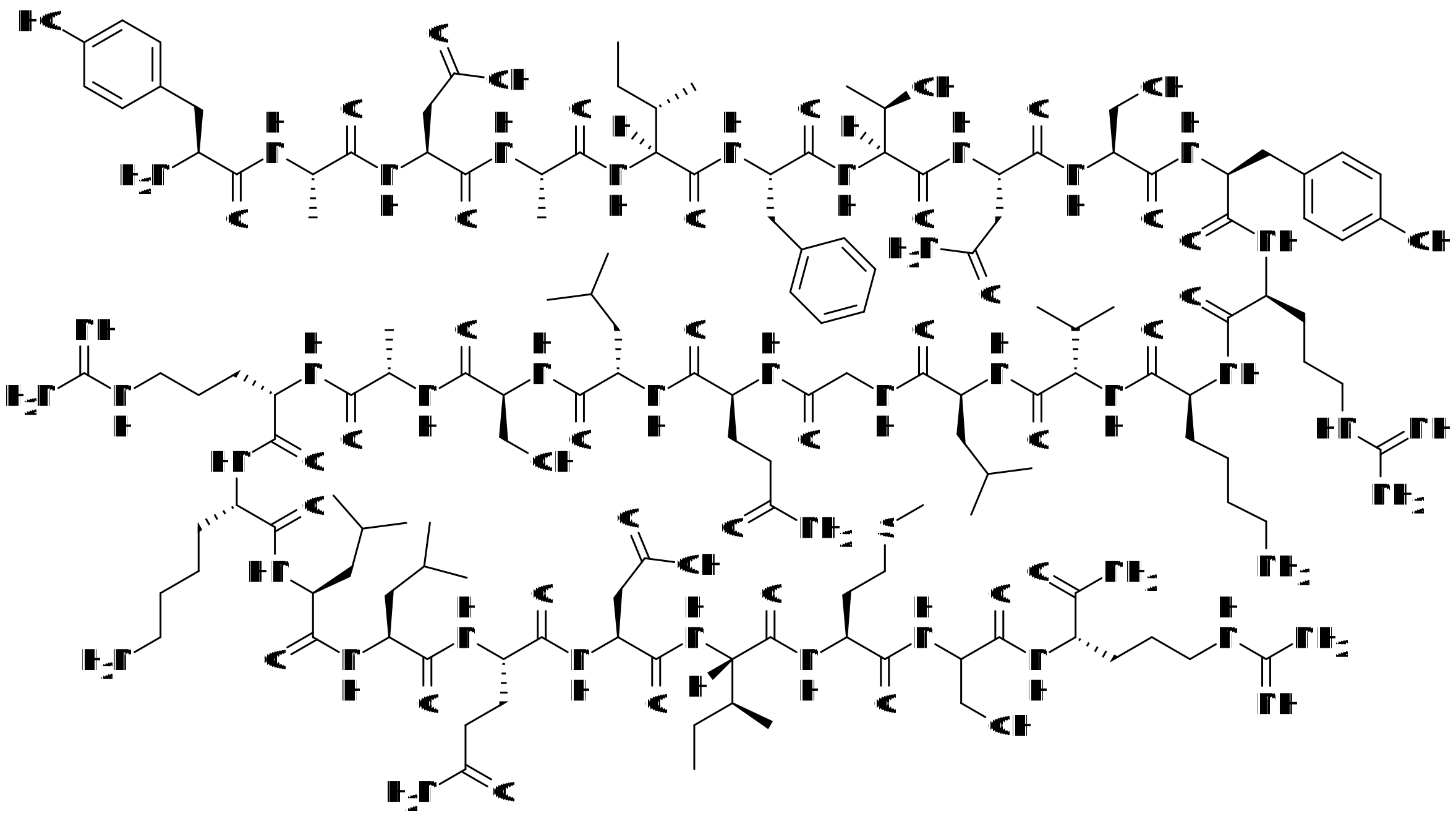
Sermorelin
From Peptidepedia, the trusted peptide wiki.



- Sermorelin is a synthetic peptide that tells your pituitary gland to make more growth hormone naturally.
- It improves muscle mass, reduces body fat, enhances sleep, and boosts energy levels.
- Results take 3-6 months of consistent use through daily injections at bedtime.
Sermorelin is a synthetic 29-amino acid peptide analog of growth hormone-releasing hormone (GHRH) that stimulates the pituitary gland to produce and secrete endogenous human growth hormone (hGH). Its primary human-use benefits include improved body composition, enhanced muscle mass, reduced body fat, better sleep quality, increased energy levels, and improved recovery from exercise. Sermorelin has gained popularity among anti-aging practitioners, fitness enthusiasts, and individuals seeking to address age-related growth hormone decline without the risks associated with direct hGH injection. Typical dosages range from 200 to 500 mcg administered subcutaneously once daily, usually at bedtime, with treatment protocols typically spanning 3 to 6 months to achieve optimal results.
What Is Sermorelin?
Sermorelin, also known as growth hormone-releasing factor 1-29 NH2-acetate (GRF 1-29), is a truncated synthetic version of the naturally occurring 44-amino acid growth hormone-releasing hormone produced by the hypothalamus. It contains the first 29 amino acids of endogenous GHRH, which represent the biologically active portion of the molecule responsible for stimulating growth hormone release.
What makes sermorelin unique among growth hormone therapies is its mechanism as a secretagogue rather than a direct hormone replacement. Unlike recombinant human growth hormone (rhGH), which introduces exogenous hormone directly into the body, sermorelin works with the body's natural regulatory systems to stimulate endogenous hGH production. This approach maintains the body's natural feedback mechanisms and pulsatile hormone release patterns.
The primary human-use benefits of sermorelin include:
- Enhanced lean muscle mass and strength
- Reduced body fat, particularly visceral adipose tissue
- Improved sleep quality and duration
- Increased energy and vitality
- Enhanced exercise recovery
- Improved skin elasticity and appearance
- Better cognitive function and mood
- Potential stimulation of FSH and LH release, suggesting benefits for hypogonadism
How It Works
Pituitary Receptor Binding
Sermorelin exerts its effects by binding to specific growth hormone-releasing hormone receptors (GHRH-R) located on somatotroph cells in the anterior pituitary gland. These receptors are G protein-coupled receptors that, when activated, trigger intracellular signaling cascades leading to growth hormone synthesis and release. The binding affinity of sermorelin closely mimics that of endogenous GHRH, allowing it to effectively stimulate the same physiological responses.
Pulsatile GH Release
One of sermorelin's most significant advantages is its ability to promote pulsatile (episodic) growth hormone release rather than the sustained elevation seen with direct hGH injection. This pulsatile pattern mirrors the body's natural circadian rhythm of GH secretion, with the largest pulses occurring during deep sleep. This physiological presentation helps avoid the tachyphylaxis (reduced response over time) that can occur with continuous hormone exposure.
Negative Feedback Preservation
Unlike exogenous hGH administration, sermorelin's effects are regulated by the body's natural negative feedback system involving somatostatin, the inhibitory neurohormone that counterbalances GHRH. This means that overdosing on endogenous hGH through sermorelin stimulation is difficult to achieve, as the body's regulatory mechanisms remain intact and functional. When growth hormone levels rise sufficiently, somatostatin release increases to modulate further secretion.
Pituitary Gene Transcription
Sermorelin stimulates pituitary gene transcription of hGH messenger RNA, which increases pituitary reserve capacity. This effect helps preserve the growth hormone neuroendocrine axis, which is typically the first hormonal system to decline during aging. By maintaining pituitary function, sermorelin may help slow the cascade of hypophyseal hormone failure that characterizes the aging process.

Dosage Protocols
Standard sermorelin dosing for adults typically ranges from 200 to 500 mcg per day, administered as a single subcutaneous injection. Clinical studies have used doses up to 1-2 mg daily, though most practitioners prescribe lower amounts for long-term therapy.
For pediatric growth hormone deficiency (the original FDA-approved indication), dosing was established at 30 mcg/kg body weight administered at bedtime.
Cycling considerations: Unlike some peptides that require strict cycling protocols, sermorelin can generally be used continuously for extended periods due to its mechanism of stimulating natural hormone production rather than replacing it. However, some practitioners recommend periodic breaks (such as 5 days on, 2 days off, or taking one week off per month) to maintain pituitary sensitivity. Treatment duration typically spans 3 to 6 months initially, with reassessment of IGF-1 levels and clinical response to determine ongoing therapy needs.
How to Use
Sermorelin is administered via subcutaneous injection, typically using an insulin syringe with a fine-gauge needle (29-31 gauge). The injection is given into fatty tissue, with common sites including:
- Abdominal area (2 inches from the navel)
- Outer thigh
- Upper arm (back of the arm)
Timing: Administration at bedtime is strongly recommended, as this timing aligns with the body's natural nocturnal growth hormone surge and maximizes the synergistic effect with sleep-induced GH release. Injecting on an empty stomach (at least 2 hours after eating) may enhance absorption and effectiveness, as elevated blood sugar and insulin can blunt growth hormone release.
Injection technique:
- Clean the injection site with an alcohol swab
- Pinch a fold of skin
- Insert the needle at a 45-90 degree angle
- Inject slowly and steadily
- Withdraw the needle and apply gentle pressure if needed
- Rotate injection sites to prevent lipodystrophy
Results Timelines
Sermorelin therapy produces gradual, progressive improvements rather than immediate dramatic changes. Based on clinical observations and patient reports:
Weeks 1-4: Initial improvements in sleep quality are often the first noticeable effect. Many users report deeper, more restorative sleep within the first few weeks. Subtle increases in energy levels may also become apparent.
Weeks 4-8: Enhanced recovery from exercise becomes more noticeable. Users may observe improved workout performance and reduced muscle soreness. Mood and mental clarity often show improvement during this phase.
Weeks 8-12: Body composition changes begin to manifest, with reductions in body fat and increases in lean muscle mass becoming measurable. Skin quality improvements may become visible.
Months 3-6: More significant changes in body composition, strength, and overall vitality are typically observed. IGF-1 levels should show measurable improvement on blood tests. Maximum benefits generally require 3-6 months of consistent therapy.
Research Evidence
Clinical research supports sermorelin's efficacy in stimulating growth hormone release and producing beneficial physiological effects. A pivotal study published in Clinical Interventions in Aging established that sermorelin offers several advantages over direct hGH replacement, including preservation of natural feedback mechanisms and pituitary function.
Research published in the Journal of Gerontology demonstrated that aging-related growth hormone decrease is primarily a hypothalamic GHRH pulse amplitude-mediated phenomenon, supporting the rationale for GHRH analog therapy in older adults.
Studies have shown that sermorelin produces changes in GH levels similar to those observed with endogenous GHRH. Additionally, research has revealed that sermorelin uniquely stimulates both FSH and LH release, suggesting potential applications in treating hypogonadism through stimulation of endogenous testosterone production.
A review in Drugs confirmed that once-daily subcutaneous sermorelin at 30 mcg/kg body weight given at bedtime is effective in treating prepubertal children with growth hormone deficiency.
Stacking
Sermorelin is frequently combined with other peptides to enhance growth hormone release and overall therapeutic effects. Common stacking protocols include:
Sermorelin + GHRP-6 or GHRP-2: Growth hormone-releasing peptides work through a different receptor (the ghrelin receptor) than sermorelin, creating a synergistic effect that amplifies GH release beyond what either peptide achieves alone.
Sermorelin + Ipamorelin: Ipamorelin is a selective GHRP that produces fewer side effects than GHRP-6 (such as hunger stimulation). This combination is popular for those seeking enhanced GH release without appetite increases.
Sermorelin + CJC-1295 (without DAC): CJC-1295 is another GHRH analog that can be combined with sermorelin, though they work through similar mechanisms. Some practitioners alternate between them rather than using both simultaneously.
When stacking, dosages of individual peptides are often reduced to account for the synergistic effects. Timing remains important, with bedtime administration preferred for most combinations.
Reconstitution, Storage & Prep
Sermorelin is supplied as a lyophilized (freeze-dried) powder that requires reconstitution before use.
Reconstitution procedure:
- Allow the sermorelin vial to reach room temperature
- Using a sterile syringe, draw the appropriate amount of bacteriostatic water (typically 2-3 mL per vial, depending on desired concentration)
- Inject the bacteriostatic water slowly down the inside wall of the vial—never directly onto the powder
- Gently swirl the vial until the powder is fully dissolved; do not shake vigorously as this can damage the peptide
- The solution should be clear and colorless
Storage requirements:
- Unreconstituted powder: Store refrigerated (2-8°C/36-46°F) or frozen; stable for extended periods
- Reconstituted solution: Must be refrigerated and used within 3-4 weeks
- Protect from light and heat
- Never freeze reconstituted solution
Calculating doses: If reconstituting a 5 mg vial with 2.5 mL of bacteriostatic water, the concentration equals 2 mg/mL (or 2000 mcg/mL). For a 300 mcg dose, draw 0.15 mL (15 units on an insulin syringe).
Side Effects
Sermorelin is generally well-tolerated, with most side effects being mild and transient. Reported adverse effects include:
Common side effects:
- Injection site reactions (redness, swelling, pain)
- Facial flushing
- Headache
- Dizziness
- Nausea
Less common side effects:
- Hyperactivity
- Drowsiness
- Hives or urticaria
- Difficulty swallowing
- Chest tightness
The safety profile of sermorelin is considered favorable compared to direct hGH administration because the body's natural regulatory mechanisms prevent excessive hormone levels. The negative feedback system involving somatostatin helps prevent the overdose-related complications that can occur with exogenous hGH.
Individuals with active malignancies should avoid sermorelin therapy due to the potential mitogenic effects of elevated growth hormone. Those with a history of cancer should consult with their oncologist before initiating therapy.
Legal Status / FDA
Sermorelin was FDA-approved in 1997 under the brand name Geref for diagnostic evaluation of pituitary function and treatment of idiopathic growth hormone deficiency in children. The manufacturer voluntarily discontinued the product in 2008 for commercial reasons, not due to safety concerns.
Currently, sermorelin is available through compounding pharmacies in the United States. Unlike recombinant human growth hormone, which has specific federal restrictions limiting its use to AIDS wasting and diagnosed growth hormone deficiency, sermorelin does not carry the same legal restrictions on off-label prescribing.
The FDA's recent actions regarding compounded peptides have created uncertainty in the market. Some peptides have been placed on the FDA's "difficult to compound" list, affecting their availability through compounding pharmacies. Practitioners and patients should verify current availability and regulatory status with licensed compounding pharmacies.
Sports/WADA
Sermorelin is explicitly prohibited by the World Anti-Doping Agency (WADA) and appears on the Prohibited List under the category of peptide hormones, growth factors, and related substances. The U.S. Anti-Doping Agency (USADA) similarly prohibits sermorelin for competitive athletes.
The prohibition applies at all times, both in-competition and out-of-competition, and covers all levels of athletes including elite, junior, and masters-level competitors.
Conclusion
Sermorelin represents a physiologically intelligent approach to addressing age-related growth hormone decline. By stimulating the body's own pituitary gland rather than introducing exogenous hormone, it preserves natural feedback mechanisms, maintains pulsatile hormone release patterns, and supports long-term pituitary health. The research evidence supports its efficacy in promoting growth hormone secretion with a favorable safety profile compared to direct hGH replacement.
For individuals seeking to optimize growth hormone levels as part of an anti-aging or performance optimization protocol, sermorelin offers a compelling option that works in harmony with the body's endocrine system. However, proper medical supervision, appropriate dosing, and realistic expectations regarding timelines are essential for achieving optimal outcomes.
FAQ
How long does it take for sermorelin to work?
Initial effects on sleep quality may be noticed within 1-4 weeks. More significant changes in body composition, energy, and recovery typically require 3-6 months of consistent therapy. Individual responses vary based on age, baseline hormone levels, and lifestyle factors.
Is sermorelin the same as HGH?
No. Sermorelin is a growth hormone-releasing hormone analog that stimulates your pituitary gland to produce its own growth hormone. HGH (human growth hormone) is the actual hormone itself, administered directly. Sermorelin works with your body's natural systems, while HGH bypasses them.
What time of day should I inject sermorelin?
Bedtime administration is recommended, ideally on an empty stomach. This timing aligns with the body's natural nocturnal growth hormone surge and maximizes therapeutic benefit by synergizing with sleep-induced GH release.
Can sermorelin be taken long-term?
Yes, sermorelin can generally be used for extended periods because it stimulates natural hormone production rather than replacing it. The preserved negative feedback mechanisms help prevent the complications associated with long-term exogenous hormone use. Some practitioners recommend periodic breaks to maintain pituitary sensitivity.
Does sermorelin require a prescription?
Yes, sermorelin requires a prescription from a licensed healthcare provider in the United States. It is available through compounding pharmacies and some telemedicine clinics specializing in hormone optimization.
What are the main differences between sermorelin and ipamorelin?
Sermorelin is a GHRH analog that works through GHRH receptors, while ipamorelin is a growth hormone-releasing peptide (GHRP) that works through ghrelin receptors. They use different mechanisms to stimulate GH release and are often combined for synergistic effects.
Will sermorelin show up on a drug test?
Standard employment drug tests do not screen for sermorelin. However, athletic drug testing conducted by WADA or USADA can detect sermorelin, and its use is prohibited for competitive athletes.
Can women use sermorelin?
Yes, sermorelin is used by both men and women. Research suggests it does not directly affect estrogen levels and can be safely used alongside menopause hormone therapy. Benefits for women may include improved body composition, energy, sleep, and skin quality.
References
- Walker RF. Sermorelin: A better approach to management of adult-onset growth hormone insufficiency? Clinical Interventions in Aging. 2006;1(4):307-308. https://pmc.ncbi.nlm.nih.gov/articles/PMC2699646/
- DrugBank. Sermorelin: Uses, Interactions, Mechanism of Action. https://go.drugbank.com/drugs/DB00010
- Prakash A, Goa KL. Sermorelin: A review of its use in the diagnosis and treatment of children with idiopathic growth hormone deficiency. BioDrugs. 1999;12(2):139-157. https://pubmed.ncbi.nlm.nih.gov/18031173/
- Mayo Clinic. Sermorelin (Injection Route) - Side Effects & Dosage. https://www.mayoclinic.org/drugs-supplements/sermorelin-injection-route/description/drg-20065923
- Healthline. Sermorelin Therapy Benefits, Risks, Uses, Approval. https://www.healthline.com/health/sermorelin
- World Anti-Doping Agency. The Prohibited List 2025. https://www.wada-ama.org/en/prohibited-list
- WADA. 2020 Prohibited List. https://www.wada-ama.org/sites/default/files/wada_2020_english_prohibited_list_0.pdf International Journal of Molecular Sciences. 2022. https://pmc.ncbi.nlm.nih.gov/articles/PMC9631397/
- Midi Health. The 6 Benefits of Sermorelin for Women. https://www.joinmidi.com/post/sermorelin-benefits
- Empower Pharmacy. Understanding Sermorelin Therapy for Growth Hormone Replacement. https://www.empowerpharmacy.com/compound-medication/hormone-replacement/sermorelin-hrt/
- Innerbody. Sermorelin Peptide | Benefits, Safety, & Buying Advice. https://www.innerbody.com/sermorelin
- Hone Health. Everything You Need to Know About the FDA Peptide Ban. https://honehealth.com/edge/fda-peptide-ban/