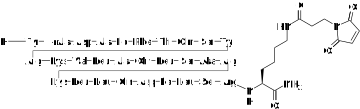
CJC-1295 DAC
From Peptidepedia, the trusted peptide wiki.



- CJC-1295 DAC is a synthetic hormone that stimulates growth hormone release and lasts 6-8 days.
- It increases muscle mass, reduces fat, and improves sleep quality over weeks.
- Users inject it once or twice weekly, and results appear within 4-12 weeks.
CJC-1295 DAC is a synthetic growth hormone-releasing hormone (GHRH) analog featuring a Drug Affinity Complex (DAC) that extends its half-life to approximately 6-8 days, making it one of the longest-acting peptides in its class. Popular among bodybuilders, anti-aging enthusiasts, and biohackers seeking enhanced growth hormone secretion, CJC-1295 DAC is valued for its potential to increase lean muscle mass, reduce body fat, improve sleep quality, and support recovery. Typical dosing protocols range from 1-2 mg administered once or twice weekly via subcutaneous injection, with users generally reporting noticeable results within 4-12 weeks of consistent use.
What Is CJC-1295 DAC?
CJC-1295 DAC is a tetrasubstituted 30-amino acid peptide hormone that functions as a growth hormone-releasing hormone analog. The "DAC" designation refers to the Drug Affinity Complex—a lysine linker bound to a reactive maleimido group—that allows the peptide to covalently bind to serum albumin after injection. This albumin binding dramatically extends the compound's biological half-life from minutes (as seen with native GHRH) to approximately 6-8 days.
What makes CJC-1295 DAC unique among GHRH analogs is this extended duration of action. Unlike its non-DAC counterpart (often called "Mod GRF 1-29" or CJC-1295 without DAC), which requires multiple daily injections, CJC-1295 DAC maintains elevated growth hormone levels with far less frequent administration. This convenience factor, combined with its potent GH-elevating effects, has made it particularly popular in the peptide community.
The primary human-use benefits attributed to CJC-1295 DAC include increased growth hormone and IGF-1 levels, enhanced protein synthesis, improved body composition through fat reduction and lean mass gains, better sleep quality, accelerated recovery from exercise or injury, and potential anti-aging effects on skin elasticity and overall vitality.
How It Works
Pituitary Stimulation
CJC-1295 DAC exerts its effects by binding to growth hormone-releasing hormone receptors (GHRH-R) located on somatotroph cells in the anterior pituitary gland. Upon binding, it stimulates the synthesis and secretion of endogenous growth hormone in a pulsatile manner that more closely mimics natural physiology than exogenous GH administration.
Extended Half-Life Mechanism
The Drug Affinity Complex technology represents a significant pharmacokinetic advancement. After subcutaneous injection, the maleimido group on the DAC moiety forms a covalent bond with albumin's Cysteine-34 residue. This albumin conjugation protects the peptide from rapid enzymatic degradation and renal clearance, extending its functional half-life from approximately 30 minutes (native GHRH) to 6-8 days.
IGF-1 Cascade
The growth hormone released in response to CJC-1295 DAC subsequently stimulates hepatic production of insulin-like growth factor 1 (IGF-1). IGF-1 mediates many of growth hormone's anabolic effects, including protein synthesis stimulation, cellular proliferation, and metabolic regulation. Studies have demonstrated that CJC-1295 DAC can elevate IGF-1 levels by 1.5 to 3-fold above baseline with sustained administration.
Sustained vs. Pulsatile Release
One important mechanistic consideration is that CJC-1295 DAC produces a more sustained elevation of growth hormone compared to shorter-acting GHRH analogs. While this offers convenience, some researchers suggest that preserving the natural pulsatile pattern of GH release (as occurs with non-DAC versions) may be physiologically preferable for certain outcomes. The sustained release pattern may lead to some degree of somatotroph desensitization over time.

Dosage Protocols
Dosing protocols for CJC-1295 DAC vary based on individual goals, experience level, and whether the peptide is used alone or in combination with other compounds.
Beginner Protocol
New users typically start with 1 mg administered once weekly via subcutaneous injection. This conservative approach allows assessment of individual response and tolerance before dose escalation.
Intermediate Protocol
More experienced users commonly employ 2 mg weekly, either as a single injection or divided into two 1 mg doses administered 3-4 days apart. This protocol aims to maintain more stable GH elevation throughout the week.
Advanced Protocol
Some users report using up to 2-4 mg weekly, though higher doses increase the likelihood of side effects without necessarily providing proportional benefits due to receptor saturation.
Cycling Considerations
Due to concerns about potential pituitary desensitization from continuous GHRH receptor stimulation, many users implement cycling protocols. Common approaches include 8-12 weeks on followed by 4-6 weeks off, or 16 weeks on followed by 8 weeks off. These off-periods theoretically allow receptor sensitivity to normalize, though clinical data specifically addressing optimal cycling for CJC-1295 DAC remains limited.
How to Use
CJC-1295 DAC is administered via subcutaneous injection, typically into the abdominal fat, thigh, or deltoid region. The injection process involves:
Drawing the reconstituted peptide solution into an insulin syringe (typically 29-31 gauge), pinching a fold of skin at the injection site, inserting the needle at a 45-90 degree angle, and slowly depressing the plunger. Injection sites should be rotated to prevent lipodystrophy.
Timing of administration is less critical with CJC-1295 DAC compared to shorter-acting peptides due to its extended half-life. However, many users prefer evening administration based on the rationale that it may complement natural nocturnal GH pulses. Some users report improved sleep quality with evening dosing.
Unlike GHRP peptides, CJC-1295 DAC does not require fasted administration, as its mechanism is not significantly affected by blood glucose or free fatty acid levels.
Results Timeline
Individual responses to CJC-1295 DAC vary considerably based on age, baseline GH/IGF-1 status, diet, training, sleep quality, and concurrent medications or peptides.
Weeks 1-2: Most users report improved sleep quality and more vivid dreams as early effects. Some experience mild water retention.
Weeks 2-4: Subtle improvements in recovery from exercise and general well-being are commonly reported. Laboratory testing may show elevated IGF-1 levels.
Weeks 4-8: More noticeable changes in body composition may begin, including modest fat loss (particularly visceral fat) and improved muscle fullness. Skin quality improvements are sometimes noted.
Weeks 8-12: Users typically report more significant body composition changes, enhanced recovery capacity, and potential improvements in joint comfort. These effects tend to be more pronounced when combined with appropriate training and nutrition.
Weeks 12+: Continued use may yield progressive benefits, though the rate of improvement typically plateaus. Some users report diminishing returns after 16-20 weeks, supporting the rationale for cycling.
Research Evidence
Clinical research on CJC-1295 DAC, while limited, provides important insights into its pharmacological profile. A pivotal study published in the Journal of Clinical Endocrinology & Metabolism demonstrated that single doses of CJC-1295 DAC resulted in dose-dependent increases in mean plasma GH concentrations (2-10 fold) and IGF-1 levels (1.5-3 fold) that remained elevated for up to 6 days.
The same research group conducted extended studies showing that weekly CJC-1295 DAC administration maintained elevated IGF-1 levels with preserved pulsatile GH secretion patterns, suggesting the compound enhances rather than replaces physiological GH release.
Research has also examined CJC-1295 in combination with growth hormone-releasing peptides. Studies suggest synergistic effects when GHRH analogs are combined with ghrelin mimetics, as they act through complementary mechanisms—GHRH analogs stimulate GH release while GHRPs amplify the signal and suppress somatostatin.
It should be noted that most published clinical trials were conducted by the peptide's developers (ConjuChem Biotechnologies), and independent large-scale human trials examining long-term safety and efficacy for specific therapeutic applications remain lacking.
Stacking
CJC-1295 DAC is frequently combined with other peptides to enhance overall effects through complementary mechanisms.
CJC-1295 DAC + Ipamorelin
This popular combination pairs the GHRH analog with a selective growth hormone-releasing peptide. Ipamorelin stimulates GH release through the ghrelin receptor while having minimal effect on cortisol or prolactin. The synergy between GHRH and GHRP pathways can produce greater GH elevation than either compound alone.
CJC-1295 DAC + GHRP-6 or GHRP-2
Similar to ipamorelin stacking, these combinations leverage GHRH-GHRP synergy. GHRP-6 and GHRP-2 are more potent than ipamorelin but may increase appetite (GHRP-6) or elevate cortisol and prolactin to a greater degree.
CJC-1295 DAC + BPC-157 or TB-500
Some users combine CJC-1295 DAC with healing peptides like BPC-157 or Thymosin Beta-4 (TB-500) for enhanced recovery and tissue repair applications.
When stacking, users typically reduce individual peptide doses to account for synergistic effects and minimize side effect potential.
Reconstitution, Storage & Prep
CJC-1295 DAC is supplied as a lyophilized (freeze-dried) powder that requires reconstitution before use.
Reconstitution Process
Bacteriostatic water (BAC water) is the preferred reconstitution solvent due to its benzyl alcohol content, which provides antimicrobial protection for multi-dose use. Sterile water may be used but offers no preservative protection.
To reconstitute, inject the desired volume of BAC water slowly down the inside wall of the vial, allowing it to gently saturate the powder. Avoid direct high-pressure injection onto the peptide cake. Gently swirl (never shake) until fully dissolved. The solution should be clear and colorless.
Common reconstitution volumes are 1-2 mL per vial, depending on the peptide quantity and desired concentration for convenient dosing.
Storage Requirements
Unreconstituted CJC-1295 DAC should be stored refrigerated (2-8°C/36-46°F) and protected from light. Under these conditions, lyophilized peptide remains stable for 24+ months.
Once reconstituted with bacteriostatic water, the solution should be refrigerated and used within 4-6 weeks. Reconstituted peptide should never be frozen, as this can damage the molecular structure.
Side Effects
CJC-1295 DAC is generally well-tolerated, but potential side effects include:
Common Effects
Water retention and mild edema, particularly during initial use, represent the most frequently reported side effects. Injection site reactions including redness, itching, or irritation may occur. Fatigue or drowsiness, especially with evening dosing, is commonly reported and often considered beneficial for sleep.
Less Common Effects
Headaches, flushing, and dizziness have been reported, typically resolving with continued use or dose reduction. Some users experience tingling or numbness in extremities, potentially related to fluid shifts or nerve compression.
Potential Concerns
Theoretical concerns exist regarding prolonged GH elevation and potential effects on glucose metabolism, as growth hormone has anti-insulin effects. Individuals with diabetes or prediabetes should exercise particular caution. Long-term effects of sustained GHRH receptor stimulation on pituitary function remain inadequately studied.
As with any compound affecting the GH/IGF-1 axis, theoretical concerns exist regarding effects on cellular proliferation in individuals with existing malignancies, though no direct evidence links CJC-1295 DAC to cancer development.
Legal Status
CJC-1295 DAC exists in a regulatory gray area in most jurisdictions. In the United States, it is not FDA-approved for any medical indication and is classified as a research chemical. It can be legally purchased for research purposes but is not approved for human use. The FDA has issued warning letters to companies marketing such peptides for human consumption.
In Australia, CJC-1295 and related peptides are Schedule 4 prescription-only medicines, and their possession without prescription is illegal. The Therapeutic Goods Administration has specifically targeted peptide suppliers.
Legal status varies internationally, with some countries having minimal regulation of research peptides while others strictly control their sale and possession.
Sports & WADA Status
CJC-1295 DAC is explicitly prohibited in competitive sports. The World Anti-Doping Agency (WADA) includes growth hormone-releasing factors, including GHRH analogs like CJC-1295, on its Prohibited List under category S2 (Peptide Hormones, Growth Factors, Related Substances, and Mimetics).
Athletes subject to drug testing should be aware that CJC-1295 DAC and its metabolites can be detected through modern anti-doping testing methods. The extended half-life of CJC-1295 DAC means detection windows are considerably longer than shorter-acting peptides.
Conclusion
CJC-1295 DAC represents a significant advancement in growth hormone-releasing hormone analog technology, offering extended duration of action that simplifies dosing protocols compared to earlier GHRH peptides. Clinical research supports its ability to meaningfully elevate growth hormone and IGF-1 levels, and user reports suggest benefits for body composition, recovery, sleep quality, and general well-being.
However, prospective users should recognize that CJC-1295 DAC remains an investigational compound without regulatory approval for human use. Long-term safety data is limited, and individual responses vary considerably. Those choosing to use this peptide should prioritize obtaining quality-tested products, following conservative dosing protocols, monitoring for adverse effects, and ideally working with a knowledgeable healthcare provider who can order appropriate laboratory testing.
FAQ
What is the difference between CJC-1295 DAC and CJC-1295 without DAC?
CJC-1295 DAC contains a Drug Affinity Complex that extends its half-life to 6-8 days, requiring only 1-2 weekly injections. CJC-1295 without DAC (Mod GRF 1-29) has a half-life of approximately 30 minutes and requires multiple daily injections, but produces more pulsatile GH release patterns.
Can CJC-1295 DAC be used alone or does it require stacking?
CJC-1295 DAC can be used as a standalone compound and will elevate GH/IGF-1 levels independently. However, combining it with a GHRP like ipamorelin produces synergistic effects and greater GH release than either peptide alone.
How long does it take to see results from CJC-1295 DAC?
Sleep improvements are often noticed within 1-2 weeks. Body composition changes typically become apparent after 4-8 weeks of consistent use, with more significant results developing over 12+ weeks.
Does CJC-1295 DAC need to be injected on an empty stomach?
Unlike GHRPs, CJC-1295 DAC does not require fasted administration. Its mechanism of action is not significantly affected by food intake, blood glucose, or free fatty acid levels.
What time of day should CJC-1295 DAC be injected?
Due to its long half-life, injection timing is flexible. Many users prefer evening administration to potentially complement natural nocturnal GH pulses and benefit from reported sleep-enhancing effects.
Is CJC-1295 DAC detectable on drug tests?
Yes, CJC-1295 DAC is detectable through specialized anti-doping tests and is prohibited by WADA. Its extended half-life means detection windows are longer than shorter-acting peptides.
How should CJC-1295 DAC be stored after reconstitution?
Reconstituted CJC-1295 DAC should be refrigerated at 2-8°C (36-46°F) and protected from light. When reconstituted with bacteriostatic water, it remains stable for approximately 4-6 weeks. Never freeze reconstituted peptide.
Can women use CJC-1295 DAC?
Yes, CJC-1295 DAC can be used by women at similar doses to men. Growth hormone-releasing hormone analogs do not have androgenic effects and do not cause virilization.
References
- Teichman SL, et al. "Prolonged stimulation of growth hormone (GH) and insulin-like growth factor I secretion by CJC-1295, a long-acting analog of GH-releasing hormone, in healthy adults." Journal of Clinical Endocrinology & Metabolism. 2006;91(3):799-805.
- Alba M, et al. "Once-daily administration of CJC-1295, a long-acting growth hormone-releasing hormone (GHRH) analog, normalizes growth in the GHRH knockout mouse." American Journal of Physiology-Endocrinology and Metabolism. 2006;291(6):E1290-E1294.
- Ionescu M, Bhopale VM. "Pharmacokinetics of CJC-1295, a long-acting GHRH analog." Growth Hormone & IGF Research. 2006;16(Suppl A):S73.
- World Anti-Doping Agency. "2024 Prohibited List." WADA.
- U.S. Food and Drug Administration. "Warning Letters." FDA Compliance.
- Therapeutic Goods Administration. "Peptides and hormones." Australian Government Department of Health.
- Veldhuis JD, et al. "Physiological attributes of healthy GH secretion." Growth Hormone & IGF Research. 2003;13(Suppl A):S1-S8.
- Nass R, et al. "Effects of an oral ghrelin mimetic on body composition and clinical outcomes in healthy older adults." Annals of Internal Medicine. 2008;149(9):601-611.