Oxytocin
From Peptidepedia, the trusted peptide wiki.



- Oxytocin is a natural hormone called the "love hormone" that helps with bonding and trust.
- It works by attaching to brain receptors and reduces stress and anxiety in social situations.
- People use it through nasal spray or injection, with effects starting within 15-30 minutes.
Oxytocin is a naturally occurring peptide hormone and neurotransmitter often called the "love hormone" or "bonding hormone" due to its profound effects on social behavior, emotional connection, and trust. Popular among biohackers, individuals seeking enhanced emotional well-being, those addressing intimacy concerns, and researchers exploring its therapeutic potential, oxytocin has gained significant attention for its ability to promote pair bonding, reduce anxiety, and support lactation. Typical intranasal doses range from 20-40 IU (international units) administered 30-60 minutes before desired effects, with subcutaneous injections typically dosed at 10-20 IU. Effects can be felt within 15-30 minutes of administration and generally last 2-4 hours, though cumulative benefits on social cognition and emotional regulation may develop over weeks of consistent use.
What Is Oxytocin?
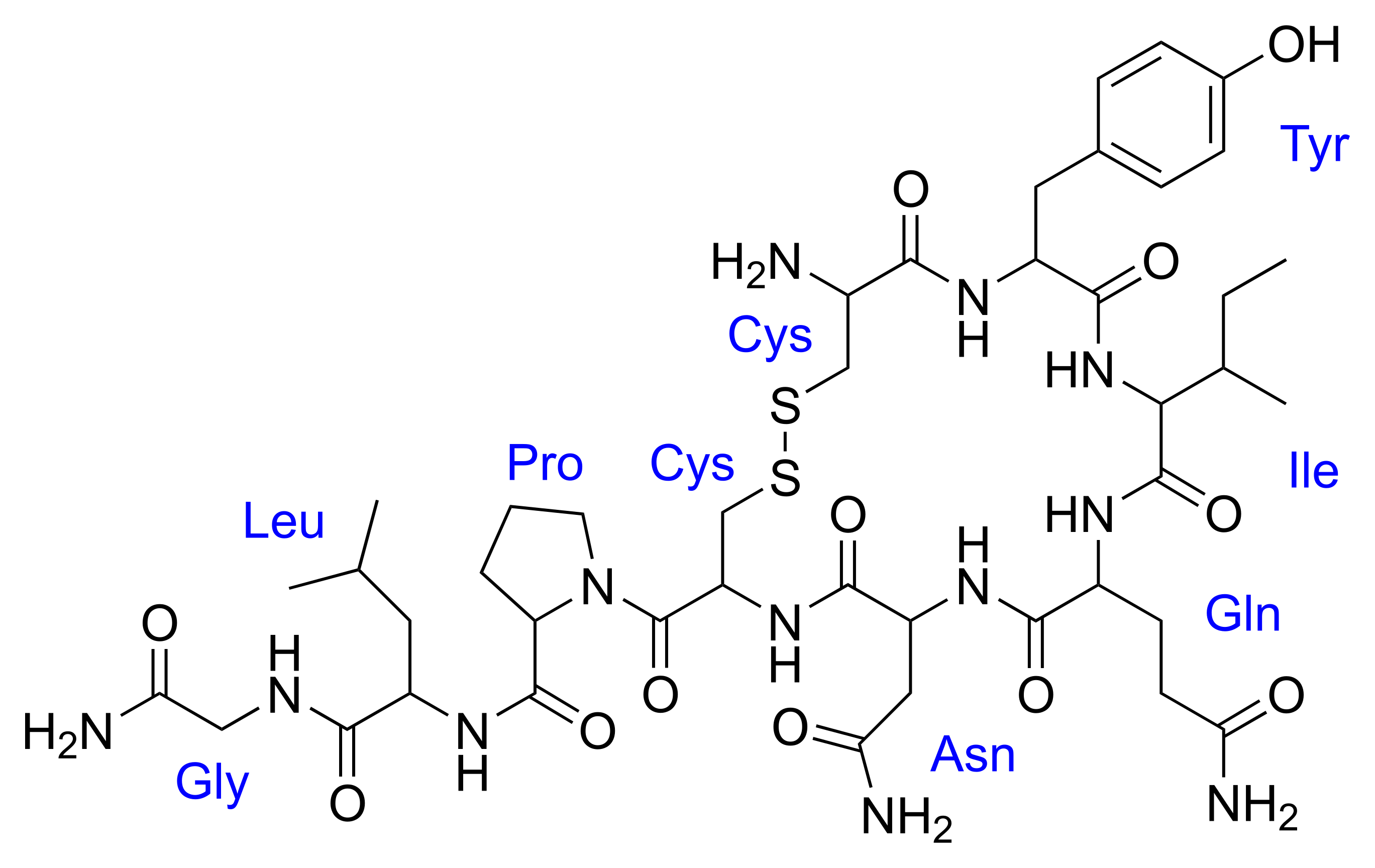
Oxytocin is a nine-amino-acid peptide (nonapeptide) synthesized primarily in the hypothalamus and released by the posterior pituitary gland. Its molecular structure consists of a cyclic six-amino-acid ring connected to a three-amino-acid tail, with the sequence Cys-Tyr-Ile-Gln-Asn-Cys-Pro-Leu-Gly-NH2. This structure is remarkably conserved across mammalian species, underscoring its fundamental biological importance.
What makes oxytocin unique among peptides is its dual function as both a hormone acting on peripheral tissues and a neurotransmitter modulating brain activity. Unlike many peptides that serve singular purposes, oxytocin orchestrates an extraordinary range of physiological and psychological processes—from uterine contractions during childbirth to the subtle feelings of trust experienced during social interactions.
The primary human-use benefits driving oxytocin's popularity include enhanced social bonding and relationship quality, reduced social anxiety and stress responses, improved emotional recognition and empathy, support for lactation in nursing mothers, potential benefits for autism spectrum conditions, and emerging applications in wound healing and metabolic regulation. Its ability to cross the blood-brain barrier when administered intranasally has made it particularly accessible for those seeking its neuropsychological effects.
How It Works
Receptor Binding and Signal Transduction
Oxytocin exerts its effects by binding to oxytocin receptors (OXTRs), which are G-protein-coupled receptors distributed throughout the brain and peripheral tissues. When oxytocin binds to these receptors, it triggers intracellular signaling cascades involving phospholipase C activation, calcium mobilization, and protein kinase C activation. This molecular cascade ultimately influences cellular behavior, gene expression, and neurotransmitter release.
In the brain, oxytocin receptors are concentrated in regions critical for social behavior, including the amygdala, hippocampus, striatum, and prefrontal cortex. The density and distribution of these receptors can vary between individuals, potentially explaining differences in social behavior and responsiveness to oxytocin administration.
Modulation of the HPA Axis
One of oxytocin's most significant mechanisms involves its regulation of the hypothalamic-pituitary-adrenal (HPA) axis, the body's central stress response system. Oxytocin acts as a natural anxiolytic by dampening cortisol release and reducing amygdala reactivity to threatening stimuli. Research has demonstrated that oxytocin administration decreases salivary cortisol levels and attenuates subjective anxiety responses to social stressors.
This stress-buffering effect appears particularly pronounced in social contexts, where oxytocin promotes approach behavior rather than avoidance, facilitating social engagement even in anxiety-provoking situations.
Dopaminergic Interaction
Oxytocin interacts extensively with the dopaminergic reward system, particularly in the nucleus accumbens and ventral tegmental area. This interaction underlies oxytocin's role in making social interactions rewarding and reinforcing pair bonds. Studies indicate that oxytocin enhances dopamine release in response to social stimuli, effectively making social connection feel pleasurable and motivating continued social engagement.
Peripheral Actions
Beyond its central nervous system effects, oxytocin acts on smooth muscle tissue throughout the body. In the uterus, it stimulates contractions essential for labor and postpartum hemostasis. In mammary tissue, it triggers the milk ejection reflex. Emerging research also suggests oxytocin receptors in cardiac tissue, adipose tissue, and bone, pointing to broader metabolic and regenerative functions still being characterized.

Dosage Protocols
Intranasal administration represents the most common route for those seeking neuropsychological effects. Standard protocols typically involve 20-40 IU per administration, with 24 IU being a frequently studied dose in clinical research. Some protocols suggest starting at the lower end (20 IU) and titrating upward based on individual response.
For subcutaneous injection, doses typically range from 5-20 IU, with effects potentially more pronounced but shorter-lasting compared to intranasal delivery.
Cycling considerations remain somewhat empirical, as long-term exogenous oxytocin use has not been extensively studied. Some practitioners recommend cycling patterns such as 5 days on, 2 days off, or 3 weeks on, 1 week off, to prevent potential receptor downregulation. However, evidence for optimal cycling protocols remains limited.
Frequency of administration varies by purpose. Single doses before social situations may suffice for acute anxiolytic effects, while those seeking cumulative benefits for conditions like social anxiety or autism spectrum traits may use daily administration for extended periods.
How to Use
Intranasal Administration: Using a calibrated nasal spray device, administer the prescribed number of sprays alternating between nostrils. Each spray typically delivers 4 IU, so a 24 IU dose would require 3 sprays per nostril. Clear nasal passages before administration. Tilt head slightly forward, insert the nozzle, and spray while gently inhaling. Wait 30-60 minutes before anticipated social interaction or desired effect.
Subcutaneous Injection: After proper reconstitution, draw the appropriate volume into an insulin syringe. Clean the injection site (typically abdominal fat or thigh) with alcohol. Pinch the skin, insert the needle at a 45-degree angle, and inject slowly. Rotate injection sites to prevent tissue irritation.
Timing Considerations: For social enhancement, administer 30-45 minutes before the relevant situation. For general well-being or relationship enhancement, consistent daily timing (such as morning administration) may optimize results.
Results Timelines
Acute Effects (15-60 minutes): Reduced anxiety, increased feelings of calm and trust, enhanced eye contact and social engagement, and improved emotional recognition typically manifest within the first hour of administration.
Short-term Effects (1-4 weeks): With consistent use, individuals often report improved relationship quality, reduced social avoidance, enhanced empathy, and better stress management in social situations.
Medium-term Effects (1-3 months): Cumulative benefits may include lasting improvements in social confidence, attachment security, and emotional regulation, though these effects likely require ongoing administration to maintain.
Individual response varies considerably based on baseline oxytocin levels, receptor density, psychological factors, and concurrent life circumstances. Some individuals report profound effects from initial doses, while others require extended use before noticing benefits.
Research Evidence
Clinical research on intranasal oxytocin has expanded dramatically over the past two decades. A landmark study published in Nature demonstrated that oxytocin administration increased trust in economic games, with participants showing greater willingness to accept social risks after oxytocin versus placebo.
Research in autism spectrum conditions has shown mixed but promising results. A meta-analysis found that single-dose oxytocin improved emotion recognition and social cognition in individuals with autism, though effects on real-world social functioning require further investigation.
Studies on social anxiety disorder have demonstrated that oxytocin reduces amygdala hyperactivity and improves positive evaluations of self-appearance, suggesting therapeutic potential for social phobia.
Relationship research indicates that intranasal oxytocin increases positive communication behaviors during couple conflict discussions and enhances perceptions of partner attractiveness and attachment security.
Stacking
Oxytocin is sometimes combined with other compounds to enhance or complement its effects.
With Magnesium: Magnesium supports oxytocin receptor function and may enhance responsiveness to exogenous oxytocin. Doses of 200-400mg magnesium glycinate are commonly used.
With Vitamin D: Vitamin D receptors interact with oxytocin gene expression, and adequate vitamin D status may optimize oxytocin system function.
With Adaptogens: Compounds like ashwagandha that reduce cortisol may synergize with oxytocin's stress-buffering effects.
With Other Peptides: Some practitioners combine oxytocin with PT-141 (bremelanotide) for intimacy enhancement, though this combination requires careful consideration of individual responses and potential interactions.
Reconstitution, Storage & Prep
Oxytocin typically arrives as a lyophilized (freeze-dried) powder requiring reconstitution before use.
Reconstitution: Using bacteriostatic water, add the appropriate volume to achieve desired concentration. For example, adding 2.5ml bacteriostatic water to a 5mg vial yields a concentration of 2mg/ml. Inject the water slowly down the vial's side, allowing the powder to dissolve without agitation. Gentle swirling is acceptable; vigorous shaking should be avoided as it may damage the peptide structure.
Storage: Unreconstituted oxytocin should be stored in a freezer (-20°C) for long-term stability. Once reconstituted, store in a refrigerator (2-8°C) and use within 4-6 weeks. Protect from light and avoid repeated freeze-thaw cycles.
Nasal Spray Preparation: For intranasal use, reconstituted oxytocin can be transferred to a sterile nasal spray bottle. Ensure the spray mechanism delivers a consistent volume per actuation to maintain accurate dosing.
Side Effects
Oxytocin is generally well-tolerated, but potential side effects include:
Common: Nasal irritation or congestion (intranasal route), mild headache, drowsiness, and nausea. These effects are typically transient and dose-dependent.
Less Common: Increased emotional sensitivity, which some users find overwhelming. Paradoxical anxiety in certain contexts, particularly when social cues are ambiguous or threatening. Water retention with high or frequent doses due to oxytocin's structural similarity to vasopressin.
Theoretical Concerns: Long-term exogenous administration could potentially downregulate endogenous oxytocin production or receptor sensitivity, though evidence for this in humans remains limited. Some research suggests oxytocin may increase in-group favoritism while potentially increasing out-group hostility, raising ethical considerations about its use.
Contraindications: Pregnancy (unless medically supervised for labor induction), cardiovascular conditions, and hyponatremia. Those with psychiatric conditions should consult healthcare providers before use.
Legal Status
In the United States, oxytocin is FDA-approved as a prescription medication (Pitocin) for labor induction and postpartum hemorrhage control. Intranasal oxytocin for neuropsychological purposes remains investigational and is not FDA-approved for these indications.
Oxytocin is not a controlled substance in most jurisdictions, meaning possession is generally legal. However, sale for human use without appropriate licensing may violate pharmaceutical regulations. Research-grade oxytocin is legally available for laboratory use.
International regulations vary. In the European Union, oxytocin is prescription-only. In Australia, it is Schedule 4 (prescription medicine). Users should verify local regulations before obtaining or using oxytocin.
Sports/WADA Status
Oxytocin is not currently listed on the World Anti-Doping Agency (WADA) Prohibited List. It does not possess performance-enhancing properties relevant to athletic competition in the traditional sense (strength, endurance, recovery).
However, athletes subject to drug testing should exercise caution, as anti-doping regulations evolve and some organizations may have specific policies regarding peptide hormones. The theoretical possibility of oxytocin affecting competitive psychology (reducing anxiety, enhancing team cohesion) has not prompted regulatory action to date.
Conclusion
Oxytocin represents a fascinating intersection of neuroscience, psychology, and peptide therapeutics. Its profound effects on social bonding, stress reduction, and emotional well-being make it an attractive option for those seeking to enhance relationship quality, manage social anxiety, or explore the neurochemistry of human connection. While FDA approval for neuropsychological applications remains pending, the substantial body of peer-reviewed research supports oxytocin's potential benefits when used responsibly.
As with any bioactive compound, informed use requires understanding proper dosing, administration techniques, and potential risks. Individual responses vary, and what works optimally for one person may require adjustment for another. Those considering oxytocin should approach it as one component of a broader strategy for social and emotional well-being, complementing rather than replacing genuine human connection and psychological growth.
FAQ
How quickly does intranasal oxytocin work?
Effects typically begin within 15-30 minutes of intranasal administration, with peak effects occurring around 45-60 minutes. Duration is generally 2-4 hours for acute effects.
Can oxytocin help with social anxiety?
Research suggests oxytocin can reduce social anxiety symptoms by dampening amygdala reactivity and promoting approach behavior. However, it works best as part of a comprehensive approach including therapy and lifestyle modifications.
Is oxytocin safe for long-term use?
Long-term safety data in humans is limited. While short-term studies show good tolerability, potential concerns about receptor downregulation suggest cycling protocols may be prudent. Consultation with a healthcare provider is recommended for extended use.
Does oxytocin work the same for everyone?
No. Individual responses vary based on genetics (OXTR gene variants), baseline oxytocin levels, psychological factors, and context. Some individuals are highly responsive while others notice minimal effects.
Can men use oxytocin?
Absolutely. While oxytocin is often associated with female reproduction, it plays equally important roles in male social behavior, pair bonding, and stress regulation. Research demonstrates benefits for both sexes.
Will exogenous oxytocin suppress my natural production?
This remains uncertain. Some theoretical concern exists about feedback inhibition, but human studies have not definitively demonstrated suppression of endogenous oxytocin with typical intranasal protocols. Cycling may mitigate any potential risk.
How should I store reconstituted oxytocin?
Refrigerate at 2-8°C (36-46°F), protected from light. Use within 4-6 weeks of reconstitution. Never freeze reconstituted solution.
Can oxytocin improve my relationship?
Research shows oxytocin can enhance positive communication, increase perceptions of partner attractiveness, and promote attachment behaviors. However, it cannot substitute for genuine relationship work, communication skills, and mutual commitment.
References
- Meyer-Lindenberg A, Domes G, Kirsch P, Heinrichs M. Oxytocin and vasopressin in the human brain: social neuropeptides for translational medicine. Nat Rev Neurosci. 2011;12(9):524-538. https://pubmed.ncbi.nlm.nih.gov/21852800/
- Kosfeld M, Heinrichs M, Zak PJ, Fischbacher U, Fehr E. Oxytocin increases trust in humans. Nature. 2005;435(7042):673-676. https://pubmed.ncbi.nlm.nih.gov/15931222/
- Heinrichs M, Baumgartner T, Kirschbaum C, Ehlert U. Social support and oxytocin interact to suppress cortisol and subjective responses to psychosocial stress. Biol Psychiatry. 2003;54(12):1389-1398. https://pubmed.ncbi.nlm.nih.gov/14675803/
- Guastella AJ, Hickie IB. Oxytocin treatment, circuitry, and autism: a critical review of the literature. Biol Psychiatry. 2016;79(3):234-242. https://pubmed.ncbi.nlm.nih.gov/26257243/
- Labuschagne I, Phan KL, Wood A, et al. Oxytocin attenuates amygdala reactivity to fear in generalized social anxiety disorder. Neuropsychopharmacology. 2010;35(12):2403-2413. https://pubmed.ncbi.nlm.nih.gov/20720535/
- Ditzen B, Schaer M, Gabriel B, Bodenmann G, Ehlert U, Heinrichs M. Intranasal oxytocin increases positive communication and reduces cortisol levels during couple conflict. Biol Psychiatry. 2009;65(9):728-731. https://pubmed.ncbi.nlm.nih.gov/19027101/
- De Dreu CK, Greer LL, Handgraaf MJ, et al. The neuropeptide oxytocin regulates parochial altruism in intergroup conflict among humans. Science. 2010;328(5984):1408-1411. https://pubmed.ncbi.nlm.nih.gov/20538951/
- Striepens N, Kendrick KM, Maier W, Hurlemann R. Prosocial effects of oxytocin and clinical evidence for its therapeutic potential. Front Neuroendocrinol. 2011;32(4):426-450. https://pubmed.ncbi.nlm.nih.gov/21802441/
- MacDonald K, MacDonald TM. The peptide that binds: a systematic review of oxytocin and its prosocial effects in humans. Harv Rev Psychiatry. 2010;18(1):1-21. https://pubmed.ncbi.nlm.nih.gov/20047458/
- Gimpl G, Fahrenholz F. The oxytocin receptor system: structure, function, and regulation. Physiol Rev. 2001;81(2):629-683. https://pubmed.ncbi.nlm.nih.gov/11274341/