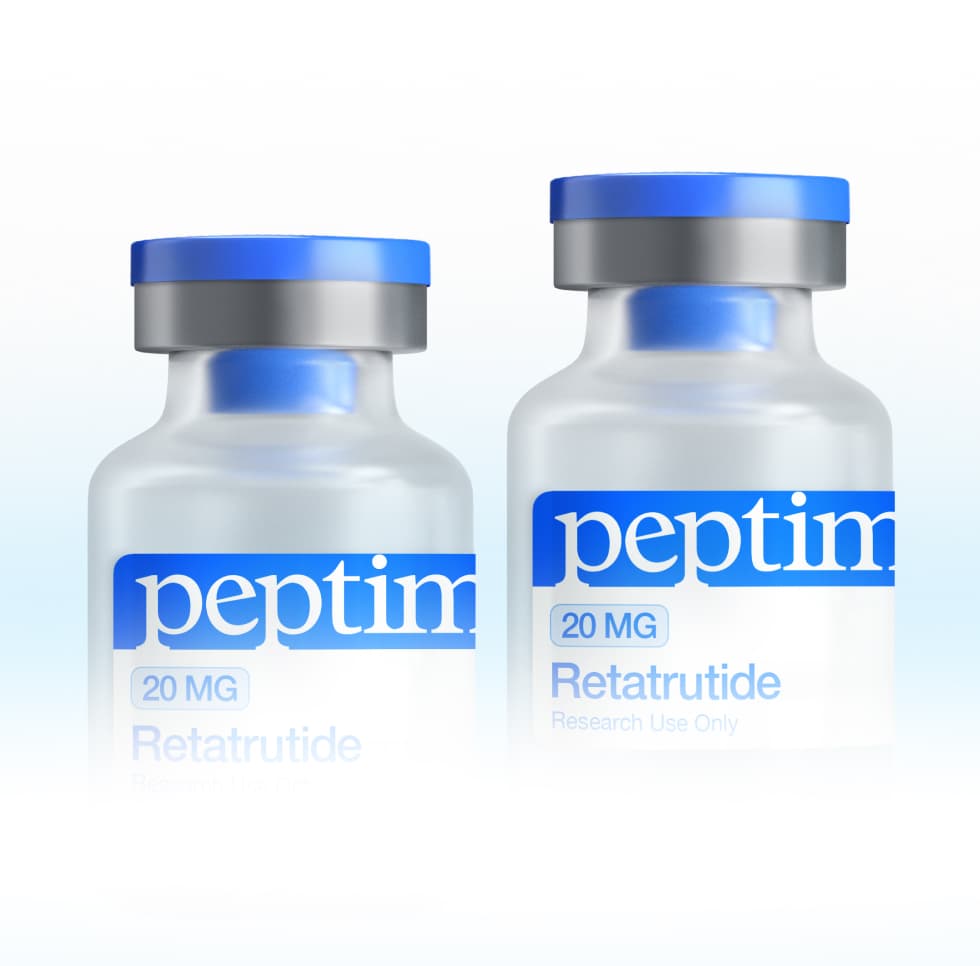
Peptides are short chains of amino acids — typically between 2 and 50 residues linked by peptide bonds — that serve as fundamental building blocks of proteins and participate in virtually all human biological processes. As signaling molecules, they direct specific cellular tasks including hormone production, tissue repair, immune function, and metabolic regulation.
What Are Peptides?
At the molecular level, peptides occupy the space between individual amino acids and full proteins. A single amino acid is the basic unit of protein structure. When two or more amino acids link via peptide bonds, the resulting molecule is a peptide. When a chain grows beyond roughly 50 amino acids, it is typically classified as a protein.
This distinction matters practically: peptides demonstrate superior tissue penetration compared to larger proteins and provide highly specific, high-affinity interactions with endogenous receptors. This precision enables targeted biological pathway activation with potentially fewer off-target effects, a key reason peptides have attracted significant interest in both pharmaceutical development and biohacking communities.The human body naturally produces thousands of peptides. Many function as hormones (insulin, glucagon), neurotransmitters (endorphins), antimicrobial agents, and growth factors. Synthetic peptides designed to mimic or amplify these natural signals form the basis of both FDA-approved medications and the rapidly expanding research peptide market.
How Peptides Work
Peptides operate primarily as signaling molecules. Upon administration, they bind to specific cell surface receptors, triggering intracellular signaling cascades that produce downstream biological effects. Depending on the peptide and receptor involved, these effects may include:
- Hormone release: Growth hormone secretagogues stimulate pituitary cells to release growth hormone, initiating downstream effects on muscle, fat, and cellular repair.
- Receptor activation: GLP-1 receptor agonists bind gut and pancreatic receptors to modulate insulin secretion, appetite, and gastric emptying.
- Tissue remodeling: Peptides like BPC-157 and TB-500 activate fibroblasts, promote angiogenesis, and modulate inflammatory cytokines to accelerate tissue repair.
- Cellular proliferation: Some peptides activate ERK1/2, FAK-paxillin, and other pro-survival pathways that drive cell migration, adhesion, and growth.
Types of Peptides
Growth Hormone Secretagogues
Growth hormone secretagogues (GHS) stimulate the pituitary gland's natural production of growth hormone rather than delivering exogenous GH directly. Key compounds include:
- CJC-1295: A growth hormone-releasing hormone (GHRH) analog that extends the half-life of endogenous GHRH signaling.
- Ipamorelin: A selective growth hormone secretagogue and ghrelin mimetic with minimal impact on cortisol or prolactin.
- Sermorelin: A truncated GHRH analog; one of the first peptides widely used in anti-aging medicine and still available through some compounding pharmacies.
These peptides affect muscle development, fat metabolism, sleep quality, and cellular repair. They are commonly used in cycles to support body composition and recovery.
Healing and Recovery Peptides
- BPC-157 (Body Protection Compound-157): A 15-amino acid peptide derived from a protein in human gastric juice. Preclinical studies show promise accelerating healing of tendons, ligaments, muscles, and gastrointestinal tract. Acts via angiogenesis, VEGF upregulation, and anti-inflammatory cytokine modulation.
- TB-500 (Thymosin Beta-4): A naturally occurring peptide that promotes cell migration, reduces inflammation, and supports tissue repair. Often used alongside BPC-157 in what the community calls the "Wolverine Stack."
Metabolic Peptides
GLP-1 receptor agonists have transformed the treatment of type 2 diabetes and obesity:
- Semaglutide (Ozempic, Wegovy): Achieves 15–20% body weight reduction in clinical trials through appetite suppression, delayed gastric emptying, and improved insulin sensitivity.
- Liraglutide (Victoza, Saxenda): An earlier GLP-1 agonist with established clinical data for diabetes and weight management.
Cosmetic and Anti-Aging Peptides
- GHK-Cu (Copper Peptide): A naturally occurring copper-binding tripeptide that stimulates collagen production, promotes wound healing, and exhibits antioxidant properties. Widely used in topical skincare formulations.
- Matrixyl (Palmitoyl Pentapeptide-4): A collagen-stimulating peptide common in anti-aging creams.
- Argireline (Acetyl Hexapeptide-3): A peptide that inhibits muscle contraction at a superficial level, marketed as a topical alternative to botulinum toxin for wrinkle reduction.
Antimicrobial Peptides
A growing class of compounds that combat bacterial, viral, and fungal infections by disrupting microbial cell membranes. Their specificity for microbial versus mammalian cell membranes makes them attractive candidates for addressing antibiotic-resistant infections, an active area of pharmaceutical research.
Benefits and Applications
Muscle Growth and Athletic Performance
Growth hormone-releasing peptides enhance muscle protein synthesis, accelerate recovery from training, and support lean mass development. By stimulating endogenous GH production rather than administering supraphysiologic doses of exogenous GH, they may offer a more physiologically balanced approach to performance support.
Weight Management
GLP-1 receptor agonists demonstrated efficacy achieving 15–20% body weight loss in clinical trials. They work through multiple complementary mechanisms: appetite suppression via central satiety signaling, delayed gastric emptying that prolongs satiety, and improved pancreatic insulin response. Their clinical success has catalyzed substantial pharmaceutical investment in next-generation metabolic peptides.
Tissue Repair and Healing
BPC-157 and TB-500 show preclinical promise for accelerating healing of tendons, ligaments, muscles, and gastrointestinal tissues. While human clinical data remains limited, animal studies consistently demonstrate structural, functional, and biomechanical improvements following injury. These compounds are widely used in the biohacking and sports recovery community despite the lack of regulatory approval.
Skin Health and Anti-Aging
Topical peptides can penetrate the skin barrier to stimulate collagen production, reduce the appearance of wrinkles, and improve skin texture. Copper peptides in particular have accumulating evidence supporting their role in skin remodeling and wound healing. Unlike retinoids or exfoliants, peptides generally produce minimal irritation, making them suitable for sensitive skin types.
Cognitive Function
Certain nootropic peptides, including Semax, Selank, and Dihexa, have been investigated for memory, focus, and cognitive performance enhancement. Most evidence comes from Russian and Eastern European clinical settings; large-scale Western clinical trials are limited. These compounds remain in early research stages outside their countries of origin.
Administration Methods
Subcutaneous Injection
The most common method for research peptides. Involves injecting into the fatty tissue beneath the skin, typically in the abdomen, thigh, or upper arm. Bypasses digestive breakdown and delivers consistent systemic absorption. Because adipose tissue has relatively low blood flow, subcutaneous injection produces slower, more sustained absorption compared to intramuscular delivery — making it well-suited for peptides where steady-state signaling matters more than rapid peaks. Tissue repair peptides like BPC-157, TB-500, and GHK-Cu benefit from this sustained release profile, and growth hormone secretagogues like Ipamorelin and CJC-1295 more closely mimic natural pulsatile GH patterns via subcutaneous delivery. For peptides targeting specific injury sites, injection near the affected area is widely practiced in the community, though systemic effects have been observed regardless of injection location.
Intramuscular Injection
Less common for peptides but used in some protocols, particularly for amino acid-based compounds and certain hormones. Muscle tissue has significantly higher blood flow than subcutaneous fat, producing faster absorption, higher peak concentrations, and shorter duration of action. This route accommodates larger injection volumes and is better suited for compounds where rapid systemic availability is the goal. Oil-based formulations are generally administered intramuscularly, as they disperse poorly in subcutaneous tissue.
Oral Administration
Most peptides cannot survive oral delivery. The gastrointestinal tract presents a series of barriers — stomach acid, digestive enzymes in the small intestine, the intestinal wall itself, and first-pass liver metabolism — that degrade peptide bonds before the compound reaches systemic circulation. As a general rule, molecules under approximately 500 Daltons cross membranes more readily; most therapeutic peptides exceed this threshold.
Two notable exceptions exist. Semaglutide (Rybelsus) overcomes these barriers through co-formulation with sodium N-(8-[2-hydroxybenzoyl]amino) caprylate (SNAC), an absorption enhancer that creates a localized pH shift and transiently increases gastric permeability, allowing the peptide to reach circulation. BPC-157 takes a different path: derived from a protein naturally present in gastric juice, it demonstrates intrinsic stability in stomach acid without requiring special formulation, making oral administration viable particularly for gastrointestinal applications where the peptide acts locally.
Topical Application
Suitable for peptides targeting the skin. Applied via creams, serums, and patches. Effectiveness depends on molecular size, formulation, and skin barrier integrity. Most cosmetic peptides are specifically designed for topical delivery.
Nasal Sprays
The nasal mucosa offers rapid absorption into local blood vessels and, for certain compounds, direct access to the central nervous system via olfactory and trigeminal nerve pathways — bypassing the blood-brain barrier entirely. This makes intranasal delivery particularly valuable for neuroactive peptides like Semax and Selank, which are specifically optimized for this route.
Not all peptides are candidates for nasal delivery. Absorption depends on molecular weight (smaller peptides cross the nasal membrane more efficiently), lipophilicity (the membrane is partially lipid-based, so highly polar compounds struggle without formulation enhancement), and contact time (the nasal cavity's mucociliary clearance mechanism actively removes compounds before they can fully absorb). PT-141 was originally developed as a nasal spray but moved to subcutaneous injection during clinical development due to inconsistent absorption and blood pressure concerns at the required nasal doses.
Safety Considerations
Common Side Effects
Most peptides used in research settings produce mild, transient side effects:
- Injection site reactions (pain, redness, swelling)
- Headaches
- Nausea
- Fatigue
- Water retention
These typically resolve as the body adjusts, or upon dose reduction.
Hormonal Effects
Peptides that influence hormone production, particularly growth hormone secretagogues, may cause imbalances with improper use. Potential concerns include effects on cortisol, thyroid function, and insulin sensitivity. Cycling protocols and periodic bloodwork monitoring are standard community practices to mitigate these risks.
Quality and Purity Concerns
The unregulated research peptide market features significant quality variation. Contamination, incorrect dosing, microbial contamination, and peptide degradation pose real risks. Studies examining the broader sports supplement market have found contamination rates ranging from 12% to 58%, a figure that reflects dietary supplements generally, not peptide injectables specifically, though similar quality risks likely extend to the unregulated peptide research market. Third-party tested products from transparent suppliers meaningfully reduce this risk.
Drug Interactions
Peptides may interact with medications affecting similar biological pathways. Insulin-sensitizing peptides combined with diabetes medications may potentiate hypoglycemia. Anyone taking prescription medications should consult a healthcare provider before use.
Long-Term Effects
Short-term safety data for most research peptides appears favorable in both animal studies and anecdotal human reports. However, long-term human studies are largely absent. Users of unapproved peptides should understand they are operating with incomplete information about chronic effects, a risk that should factor into any decision to use these compounds.
Regulatory Status
The regulatory landscape for peptides spans a wide spectrum:
Fully approved: A growing list of peptide drugs have received full FDA (and international regulatory body) approval. Insulin was the first, approved in 1982. Today, the FDA has approved approximately 100+ peptide drugs as of 2024–2025, and the global peptide therapeutics market exceeded $70 billion. These compounds have completed rigorous Phase I–III clinical trials and have well-characterized benefit-risk profiles.
Compounded peptides: Some peptides (like Sermorelin) are available through licensed compounding pharmacies by prescription. Regulatory status in this category has been volatile; the FDA periodically updates lists of substances eligible for compounding.
Research chemicals: Many widely used peptides, including BPC-157, TB-500, and most growth hormone secretagogues, are legally sold only as "research chemicals" not intended for human use. They are not FDA-approved, cannot be sold as drugs or dietary supplements for human consumption, and exist in a regulatory gray area that varies by jurisdiction.
Understanding which category a specific peptide falls into is essential before use.
Sourcing and Quality
For research peptides, sourcing from reputable suppliers is the single most important risk-reduction step. See the guide on how to safely source peptides for a full breakdown. Reputable suppliers should provide:
- Third-party testing: Independent laboratory analysis confirming peptide identity, purity (ideally >98%), and absence of contaminants including heavy metals, bacterial endotoxins, and residual solvents.
- Certificates of analysis (CoA): Batch-specific documentation from accredited laboratories, available on request or published on the supplier's website.
- Proper cold-chain handling: Evidence of appropriate storage and shipping conditions, including refrigerated or frozen shipping for temperature-sensitive compounds.
- Transparent labeling: Clear identification of the compound, batch number, concentration, and expiration date.
- Sterile vials: Properly lyophilized peptides in sealed, sterile vials, not loose powder or liquid of ambiguous origin.
Avoid suppliers who cannot provide CoAs, offer unusually low prices, or make therapeutic health claims about research products.
Conclusion
Peptides represent one of the most targeted and rapidly evolving approaches to addressing a wide range of health goals, from metabolic disease and body composition to tissue repair, skin health, and cognitive performance. The FDA-approved end of this spectrum is well-validated and continues expanding, with multiple new peptide drugs in late-stage clinical development.
The research peptide space carries considerably more uncertainty. Animal studies do not guarantee equivalent human effects, and the near-complete absence of long-term human safety data means users are operating with incomplete information. The unregulated supply chain introduces quality risks that no amount of anecdotal evidence can fully eliminate.
For those who choose to engage with research peptides, the path to minimizing risk runs through education (understanding mechanisms, dosing protocols, potential side effects, and quality considerations), combined with reputable sourcing and healthcare provider consultation where possible. New readers often find it useful to keep our peptide glossary open in another tab while working through the technical material, since terms like lyophilization, half-life, and bioavailability appear repeatedly across the literature. The coming years promise continued advances in peptide science, with treatments for metabolic disorders, neurodegenerative diseases, and beyond moving through the clinical pipeline toward potential approval.