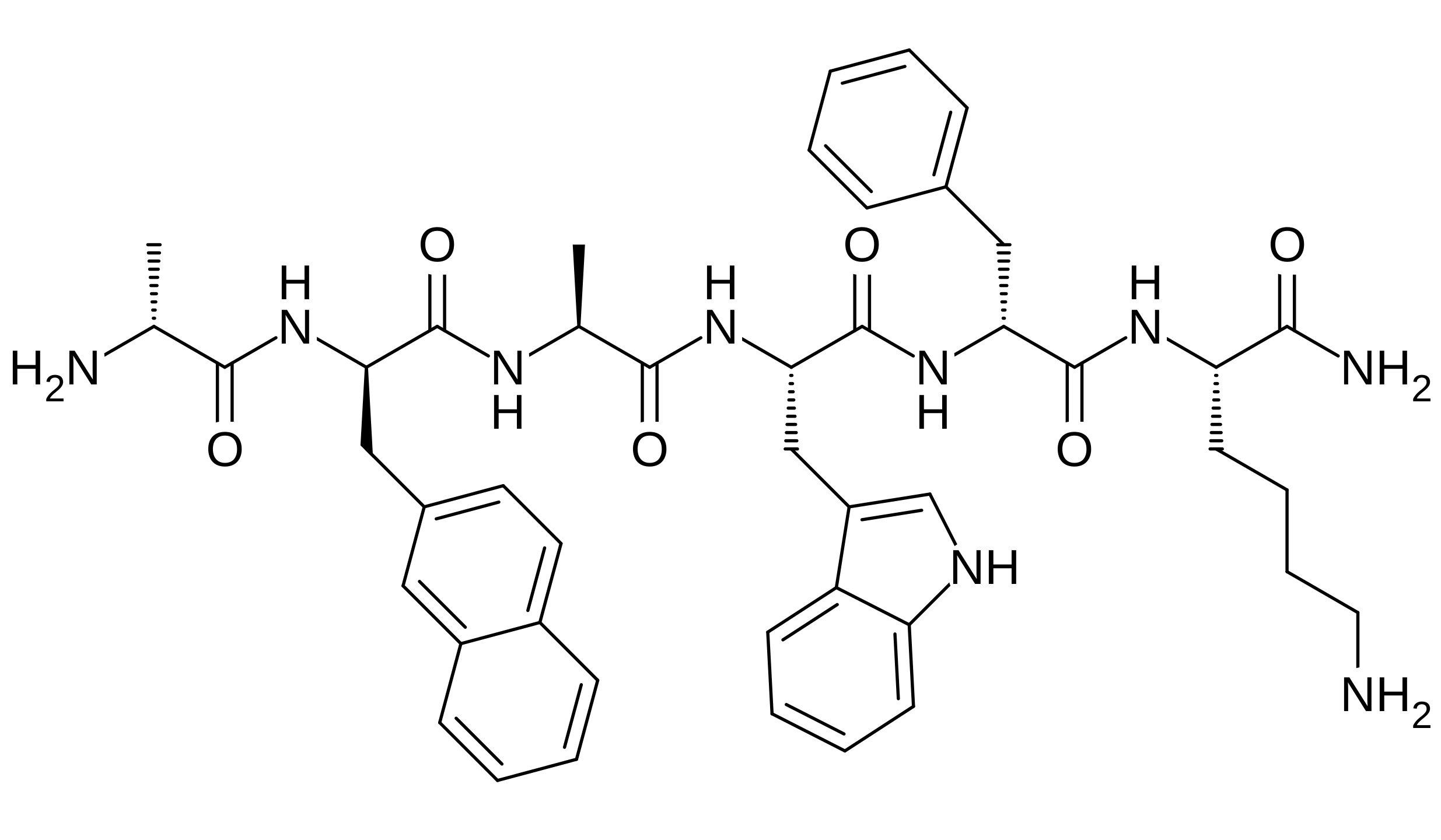
GHRP-2
From Peptidepedia, the trusted peptide wiki.



- GHRP-2 is a synthetic peptide that stimulates the pituitary gland to release growth hormone.
- It increases lean muscle, burns fat, and speeds up recovery from exercise.
- Results appear within 2-4 weeks, with major changes visible after 3-6 months.
GHRP-2 (Growth Hormone Releasing Peptide-2) is a synthetic hexapeptide that stimulates the pituitary gland to release growth hormone, offering benefits including increased lean muscle mass, enhanced fat metabolism, improved recovery, and anti-aging effects. Popular among bodybuilders, athletes, and individuals seeking age-related hormone optimization, GHRP-2 is typically administered via subcutaneous injection at doses of 100-300 mcg two to three times daily, with noticeable effects emerging within 2-4 weeks and more substantial results developing over 3-6 months of consistent use.
What Is GHRP-2?
GHRP-2, also known by its research designation KP-102 or pralmorelin, is a synthetic growth hormone secretagogue composed of six amino acids. Developed in the 1990s, it belongs to the growth hormone releasing peptide family and functions as a ghrelin mimetic, binding to the growth hormone secretagogue receptor (GHS-R1a) in the hypothalamus and pituitary gland.
What distinguishes GHRP-2 from other peptides in its class is its potency and relatively clean stimulation profile. Compared to GHRP-6, it produces significantly less appetite stimulation while maintaining robust growth hormone release. This makes it particularly attractive for users seeking the anabolic and recovery benefits of elevated growth hormone without excessive hunger that could interfere with body composition goals.
The primary human-use benefits associated with GHRP-2 include:
- Increased growth hormone secretion and IGF-1 levels
- Enhanced muscle protein synthesis and lean mass development
- Accelerated fat oxidation and improved body composition
- Faster recovery from training and injury
- Improved sleep quality and depth
- Enhanced collagen synthesis benefiting skin, joints, and connective tissue
- Potential neuroprotective and cardioprotective effects
How It Works
Ghrelin Receptor Activation
GHRP-2 exerts its primary effects through binding to the GHS-R1a receptor, the same receptor targeted by the endogenous hunger hormone ghrelin. However, GHRP-2 demonstrates approximately 20-fold greater potency than ghrelin itself in stimulating growth hormone release.1 Upon receptor binding, a signaling cascade initiates that ultimately triggers somatotroph cells in the anterior pituitary to release stored growth hormone into circulation.
Hypothalamic Modulation
Beyond direct pituitary stimulation, GHRP-2 influences the hypothalamus by promoting the release of growth hormone releasing hormone (GHRH) while simultaneously suppressing somatostatin, the hormone responsible for inhibiting growth hormone secretion.2 This dual mechanism creates a synergistic environment for growth hormone release that mimics and amplifies the body's natural pulsatile secretion patterns.
IGF-1 Cascade
The growth hormone released following GHRP-2 administration travels to the liver, where it stimulates production of insulin-like growth factor-1 (IGF-1). This secondary messenger is responsible for many of the anabolic effects attributed to growth hormone, including muscle protein synthesis, cellular proliferation, and tissue repair. Elevated IGF-1 levels persist longer than the initial growth hormone spike, providing extended anabolic signaling.3
Cortisol and Prolactin Considerations
Unlike some growth hormone secretagogues, GHRP-2 produces modest increases in cortisol and prolactin at standard doses. Research indicates these elevations remain within physiological ranges and do not typically produce adverse effects when dosing protocols are followed appropriately.4

Dosage Protocols
Standard dosing for GHRP-2 ranges from 100-300 mcg per administration, with most users finding 100-200 mcg optimal for balancing efficacy with side effect minimization. Administration frequency typically involves 2-3 injections daily, strategically timed to maximize growth hormone pulsatility.
Beginner Protocol: 100 mcg administered 2-3 times daily for 8-12 weeks, followed by a 4-week break.
Intermediate Protocol: 150-200 mcg administered 3 times daily for 12-16 weeks, with periodic 2-4 week breaks every 3-4 months.
Advanced Protocol: 200-300 mcg administered 3 times daily, often combined with GHRH analogs for amplified effects.
Cycling GHRP-2 is recommended to prevent receptor desensitization, though research suggests the GHS-R1a receptor demonstrates less downregulation than initially theorized. Many experienced users implement 5-days-on, 2-days-off protocols or take full weeks off monthly to maintain receptor sensitivity.
Timing considerations are crucial. GHRP-2 should be administered on an empty stomach, as elevated blood glucose and fatty acids significantly blunt growth hormone release. Optimal timing includes immediately upon waking, post-workout, and before bed.
How to Use
GHRP-2 is administered via subcutaneous injection, typically into the abdominal fat, thigh, or deltoid region. The peptide arrives as a lyophilized (freeze-dried) powder requiring reconstitution before use.
Administration Steps:
- Reconstitute the peptide with bacteriostatic water (detailed below)
- Draw the appropriate dose using an insulin syringe (typically 29-31 gauge)
- Pinch a fold of skin at the injection site
- Insert the needle at a 45-degree angle
- Inject slowly and withdraw
- Rotate injection sites to prevent lipodystrophy
For optimal results, avoid eating for 30 minutes before and 30 minutes after injection. Carbohydrates and fats are particularly suppressive to growth hormone release, while protein has minimal impact.
Results Timelines
Week 1-2: Initial effects include improved sleep quality, particularly deeper slow-wave sleep. Some users report vivid dreams and feeling more rested upon waking. Mild water retention may occur as growth hormone influences fluid balance.
Week 2-4: Enhanced recovery becomes noticeable, with reduced muscle soreness following training. Skin quality may begin improving, appearing more hydrated and elastic. Energy levels often increase.
Week 4-8: Body composition changes become measurable. Users typically observe reduced subcutaneous fat, particularly in stubborn areas, alongside modest increases in lean mass. Joint comfort often improves as collagen synthesis increases.
Week 8-12: More pronounced muscle fullness and definition develop. Fat loss continues progressively. Hair and nail growth may accelerate. Recovery times continue shortening.
Month 3-6: Maximum benefits manifest with continued use. Significant improvements in body composition, recovery capacity, and overall vitality are commonly reported. Anti-aging effects on skin, hair, and general well-being become most apparent during extended protocols.
Research Evidence
Clinical research on GHRP-2 has demonstrated consistent growth hormone releasing effects across multiple studies. A pivotal study published in the Journal of Clinical Endocrinology & Metabolism confirmed that GHRP-2 produces dose-dependent increases in growth hormone, with peak levels occurring 15-30 minutes post-administration.5
Research examining GHRP-2's effects on body composition found significant reductions in fat mass and increases in lean body mass over 12-week treatment periods.6 These findings align with the known lipolytic and anabolic properties of growth hormone.
Cardioprotective effects have been documented in animal models, with GHRP-2 demonstrating ability to reduce infarct size and improve cardiac function following ischemic events.7 While human cardiovascular studies remain limited, these findings suggest potential therapeutic applications beyond body composition.
Neuroprotective properties have also been investigated, with research indicating GHRP-2 may protect against neuronal damage and support cognitive function through growth hormone and IGF-1 mediated mechanisms.8
Sleep architecture studies reveal GHRP-2 increases slow-wave sleep duration, the restorative sleep phase during which natural growth hormone secretion peaks. This enhancement of physiological sleep patterns may contribute significantly to recovery and anti-aging benefits.9
Stacking
GHRP-2 is frequently combined with other peptides to enhance overall efficacy. The most common and well-researched combination involves pairing GHRP-2 with a GHRH analog such as Modified GRF (1-29), also known as CJC-1295 without DAC or Mod GRF.
This combination produces synergistic effects, with studies demonstrating growth hormone release significantly exceeding what either peptide achieves independently.10 The GHRH analog amplifies the pituitary's response to GHRP-2's secretagogue signal, creating a more robust and sustained growth hormone pulse.
Common Stacking Protocols:
- GHRP-2 (100-200 mcg) + Mod GRF 1-29 (100 mcg) administered simultaneously 2-3 times daily
- GHRP-2 + Ipamorelin for users seeking minimal cortisol and prolactin elevation
- GHRP-2 + BPC-157 for enhanced injury recovery and tissue healing
When stacking, peptides can be mixed in the same syringe immediately before injection, provided they are compatible. GHRP-2 and GHRH analogs are commonly combined this way without stability issues.
Reconstitution, Storage & Prep
GHRP-2 requires careful handling to maintain potency and sterility.
Reconstitution Process:
- Allow the lyophilized peptide vial to reach room temperature
- Using a sterile syringe, draw bacteriostatic water (not sterile water, which lacks preservative)
- Inject the water slowly against the vial wall, allowing it to run down gently
- Never shake the vial; instead, roll gently between palms or allow to sit until fully dissolved
- The solution should be clear and colorless; discard if cloudy or discolored
Reconstitution Ratios:
Adding 2 mL bacteriostatic water to a 5 mg vial yields 2.5 mg/mL (250 mcg per 0.1 mL or 10 units on an insulin syringe). This concentration simplifies dosing calculations.
Storage Requirements:
- Unreconstituted peptide: Store frozen (-20°C) for long-term storage or refrigerated (2-8°C) for several months
- Reconstituted peptide: Refrigerate immediately and use within 4-6 weeks
- Never freeze reconstituted peptide
- Protect from light and heat
- Maintain sterile technique throughout handling
Side Effects
GHRP-2 is generally well-tolerated when used at recommended doses, though several side effects may occur:
Common Side Effects:
- Increased hunger (less pronounced than GHRP-6 but still present)
- Water retention, particularly during initial weeks
- Tingling or numbness in extremities
- Tiredness or lethargy following injection
- Injection site reactions including redness or irritation
Less Common Side Effects:
- Elevated cortisol (typically within normal ranges)
- Mild prolactin elevation
- Head rush or lightheadedness post-injection
- Vivid dreams or altered sleep patterns
Potential Concerns with Long-term Use:
- Possible desensitization of growth hormone secretagogue receptors
- Theoretical concerns regarding IGF-1 and cellular proliferation in predisposed individuals
- Impact on glucose metabolism with extended high-dose use
Users with history of cancer, diabetes, or pituitary disorders should exercise particular caution and consult healthcare providers before use.
Legal Status
GHRP-2 occupies a complex regulatory position. In the United States, it is not FDA-approved for human use and is classified as a research chemical. It can be legally purchased for research purposes but is not approved for human consumption or medical treatment.
The FDA has issued warning letters to companies marketing GHRP-2 for human use, and it cannot be legally prescribed by physicians in the United States.11 However, possession for personal use exists in a legal gray area in many jurisdictions.
In some countries, including certain regions of Asia and Eastern Europe, GHRP-2 has received approval for specific medical applications, particularly diagnostic testing of growth hormone deficiency.
Users should research their local regulations, as legal status varies significantly by country and jurisdiction.
Sports & WADA Status
GHRP-2 is explicitly prohibited by the World Anti-Doping Agency (WADA) under category S2: Peptide Hormones, Growth Factors, Related Substances, and Mimetics.12 It has been banned since 2015, and testing methods can detect GHRP-2 and its metabolites in urine samples.
Multiple athletes have received sanctions for GHRP-2 use, and detection windows have improved significantly with advances in mass spectrometry techniques. Athletes subject to drug testing should be aware that GHRP-2 is detectable and carries significant consequences including competition bans and result disqualification.
The peptide is similarly banned by most professional sports organizations, collegiate athletics governing bodies, and military branches conducting performance-enhancing drug testing.
Conclusion
GHRP-2 represents one of the most researched and reliable growth hormone secretagogues available, offering a mechanism to enhance natural growth hormone production with a well-characterized safety and efficacy profile. Its ability to stimulate meaningful growth hormone release while producing fewer side effects than alternatives like GHRP-6 has established it as a foundational peptide for those seeking improved body composition, recovery, and anti-aging benefits.
While not approved for human use in most Western countries, the substantial body of clinical research provides valuable guidance for those who choose to use GHRP-2. Proper reconstitution, storage, timing, and dosing protocols significantly influence outcomes, and combining GHRP-2 with GHRH analogs can substantially amplify results.
As with any bioactive compound, individual responses vary, and users should approach GHRP-2 with appropriate caution, starting with conservative doses and monitoring for adverse effects. The peptide's decades-long research history and widespread use provide a reasonable foundation for informed decision-making.
Frequently Asked Questions
How quickly does GHRP-2 work?
Growth hormone levels peak within 15-30 minutes of injection. Subjective effects like improved sleep often appear within the first week, while body composition changes typically become noticeable after 4-8 weeks of consistent use.
Can GHRP-2 be taken orally?
No. GHRP-2 is a peptide that would be destroyed by digestive enzymes if taken orally. Subcutaneous injection is the only effective administration route.
What is the difference between GHRP-2 and GHRP-6?
Both stimulate growth hormone release, but GHRP-6 causes significantly more hunger due to stronger ghrelin-like activity. GHRP-2 provides comparable growth hormone stimulation with less appetite increase, making it preferred for those managing caloric intake.
Should GHRP-2 be cycled?
While not strictly necessary, cycling (such as 5 days on, 2 days off, or taking periodic breaks) is recommended to maintain receptor sensitivity and optimize long-term results.
Can women use GHRP-2?
Yes. GHRP-2 is used by both men and women, and dosing protocols are generally similar. Women may start at the lower end of dosing ranges and adjust based on response.
Does GHRP-2 require refrigeration?
Reconstituted GHRP-2 must be refrigerated and used within 4-6 weeks. Unreconstituted powder can be stored frozen for extended periods or refrigerated for several months.
Is GHRP-2 detectable on drug tests?
Yes. GHRP-2 and its metabolites are detectable using modern testing methods. It is banned by WADA and most sports organizations.
What happens when you stop taking GHRP-2?
Growth hormone levels return to baseline after discontinuation. Benefits accumulated during use, particularly lean mass gains, can be maintained with proper training and nutrition, though some effects like enhanced recovery will diminish.
References
- Bowers CY. Growth hormone-releasing peptide (GHRP). Cell Mol Life Sci. 1998;54(12):1316-29. https://pubmed.ncbi.nlm.nih.gov/9893710/
- Arvat E, et al. Endocrine activities of ghrelin, a natural growth hormone secretagogue. J Clin Endocrinol Metab. 2001;86(3):1169-74. https://pubmed.ncbi.nlm.nih.gov/11238504/
- Veldhuis JD, et al. Somatotropic and gonadotropic axes linkages in infancy, childhood, and the puberty-adult transition. Endocr Rev. 2006;27(2):101-40. https://pubmed.ncbi.nlm.nih.gov/16434512/
- Camanni F, et al. Growth hormone-releasing peptides and their analogs. Front Neuroendocrinol. 1998;19(1):47-72. https://pubmed.ncbi.nlm.nih.gov/9465289/
- Bowers CY, et al. On the actions of the growth hormone-releasing hexapeptide, GHRP. Endocrinology. 1991;128(4):2027-35. https://pubmed.ncbi.nlm.nih.gov/1900788/
- Svensson J, et al. Two-month treatment of obese subjects with the oral growth hormone secretagogue MK-677 increases GH secretion, fat-free mass, and energy expenditure. J Clin Endocrinol Metab. 1998;83(2):362-9. https://pubmed.ncbi.nlm.nih.gov/9467534/
- Berlanga J, et al. Growth hormone-releasing peptide 6 (GHRP6) prevents oxidant cytotoxicity and reduces myocardial necrosis in a model of acute myocardial infarction. Clin Sci. 2007;112(4):241-50. https://pubmed.ncbi.nlm.nih.gov/17020540/
- Frago LM, et al. Growth hormone-releasing peptide-6 enhances the healing process and improves the esthetic outcome of the wound. Growth Horm IGF Res. 2017;36:4-12. https://pubmed.ncbi.nlm.nih.gov/28865713/
- Frieboes RM, et al. Growth hormone-releasing peptide-6 stimulates sleep, growth hormone, ACTH and cortisol release in normal man. Neuroendocrinology. 1995;61(5):584-9. https://pubmed.ncbi.nlm.nih.gov/7617137/
- Bowers CY. Synergistic release of growth hormone by GHRP and GHRH. J Pediatr Endocrinol. 1993;6(3-4):227-34. https://pubmed.ncbi.nlm.nih.gov/8123739/
- U.S. Food and Drug Administration. Warning Letters: Peptide Products. https://www.fda.gov/inspections-compliance-enforcement-and-criminal-investigations/compliance-actions-and-activities/warning-letters
- World Anti-Doping Agency. Prohibited List 2024. https://www.wada-ama.org/en-prohibited-list