PT-141
From Peptidepedia, the trusted peptide wiki.



- PT-141 is a medicine that works in the brain to increase sexual desire in both men and women.
- The drug activates special receptors in the brain that control sexual behavior and arousal responses.
- PT-141 is injected under the skin and works within 45 minutes, lasting up to 12 hours.
PT-141 (bremelanotide) is a synthetic peptide primarily used to treat hypoactive sexual desire disorder (HSDD), working through central nervous system pathways rather than vascular mechanisms. Approved by the FDA in 2019 under the brand name Vyleesi for premenopausal women, PT-141 has gained significant popularity among both men and women seeking to enhance sexual desire and arousal. The peptide is commonly used by individuals experiencing low libido, those exploring peptide therapies for sexual wellness, and biohackers interested in its unique mechanism of action. Typical subcutaneous doses range from 0.5mg to 2mg, administered approximately 45 minutes before anticipated sexual activity, with effects lasting up to 12 hours.
What Is PT-141?
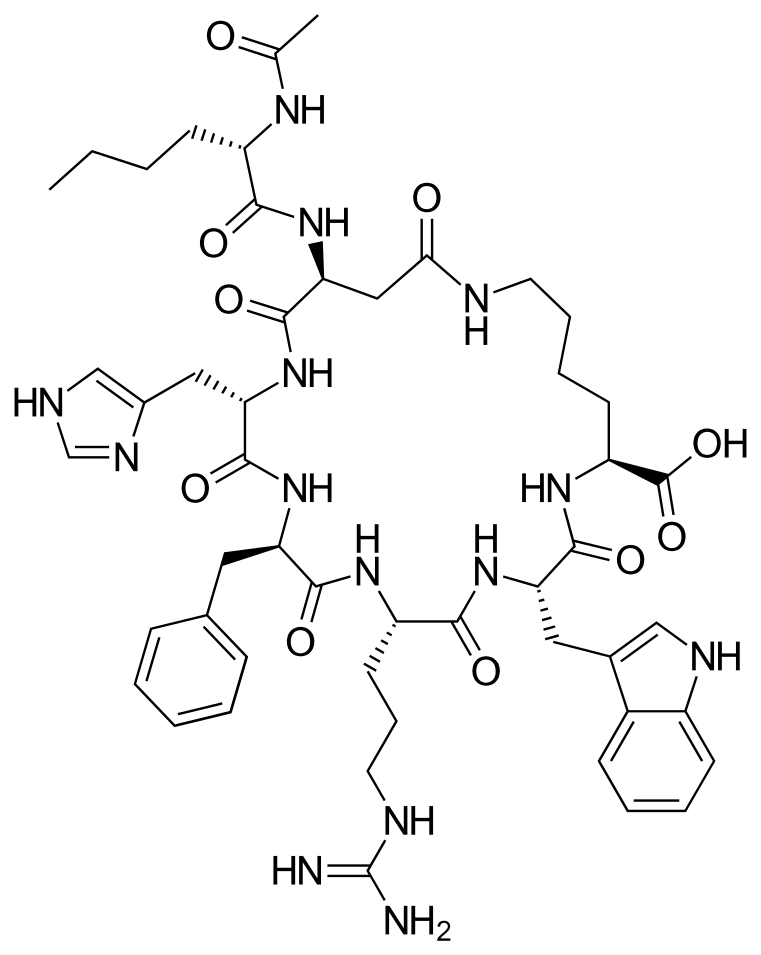
PT-141, known pharmaceutically as bremelanotide, is a cyclic heptapeptide derived from the melanocortin peptide Melanotan II. Unlike phosphodiesterase type 5 (PDE5) inhibitors such as sildenafil, which work by increasing blood flow to genital tissues, PT-141 acts directly on the central nervous system to stimulate sexual desire at its neurological source.
The peptide's uniqueness lies in its mechanism—it activates melanocortin receptors in the brain, specifically MC3R and MC4R, which are involved in regulating sexual function, energy homeostasis, and behavior. This central action distinguishes PT-141 from all other sexual dysfunction treatments currently available, making it the first medication to address desire rather than simply physical response.
PT-141 is popular among individuals who have not responded adequately to traditional erectile dysfunction medications, women experiencing HSDD, and those seeking a non-hormonal approach to enhancing libido. Its appeal extends to the biohacking and peptide research communities, where it is valued for its novel approach to sexual wellness.
The primary human-use benefits include:
- Enhancement of sexual desire in both men and women
- Improved sexual arousal and satisfaction
- Treatment of erectile dysfunction unresponsive to PDE5 inhibitors
- Non-reliance on vascular mechanisms, making it suitable for those with cardiovascular concerns
How It Works
Melanocortin Receptor Activation
PT-141 functions as an agonist at melanocortin receptors, particularly MC3R and MC4R, located in the hypothalamus and limbic system. These receptors play crucial roles in regulating sexual behavior, appetite, and energy balance. When PT-141 binds to these receptors, it initiates a cascade of neurological signals that enhance sexual desire and arousal.
The melanocortin system is intimately connected to dopaminergic pathways, and activation of MC4R has been shown to increase dopamine release in brain regions associated with reward and motivation. This neurochemical shift contributes to the subjective experience of increased sexual interest.
Central Nervous System Pathway
Unlike medications that act peripherally on blood vessels, PT-141 crosses into the central nervous system where it modulates neural circuits governing sexual response. Research has demonstrated that the peptide activates neurons in the medial preoptic area and paraventricular nucleus of the hypothalamus—regions critical for sexual behavior in mammals.
This central mechanism explains why PT-141 can be effective in individuals for whom vascular-based treatments have failed, as it addresses the psychological and neurological components of sexual desire rather than simply facilitating physical response.
Dopaminergic and Oxytocinergic Effects
PT-141's activation of melanocortin receptors triggers downstream effects on multiple neurotransmitter systems. Studies indicate that MC4R activation leads to increased oxytocin release from the paraventricular nucleus, which contributes to pro-erectile and pro-sexual effects. Additionally, the peptide influences dopamine signaling in the mesolimbic pathway, enhancing motivation and reward associated with sexual activity.

Dosage Protocols
The FDA-approved dosage for Vyleesi (bremelanotide) is 1.75mg administered subcutaneously approximately 45 minutes before anticipated sexual activity. However, in research and off-label contexts, dosing protocols vary.
For men using PT-141 for erectile dysfunction or libido enhancement, typical doses range from 1mg to 2mg subcutaneously. Many users begin with a lower dose of 0.5mg to assess tolerance before increasing to the standard range.
Women typically use doses between 0.5mg and 1.75mg, with the FDA-approved dose representing the upper end of this range.
Important dosing considerations include:
- PT-141 should not be used more than once within 24 hours
- The FDA recommends no more than 8 doses per month
- Effects typically begin within 45 minutes and can last up to 12 hours
- Dosing should be individualized based on response and tolerability
There is no established cycling protocol for PT-141, as it is designed for on-demand use rather than continuous administration. However, some users report that limiting use to 2-3 times weekly helps maintain sensitivity to the peptide's effects.
How to Use
PT-141 is administered via subcutaneous injection, typically in the abdomen, thigh, or upper arm. The peptide comes as a lyophilized powder that requires reconstitution with bacteriostatic water before use.
Administration steps:
- Reconstitute the peptide with the appropriate volume of bacteriostatic water
- Allow the solution to sit until fully dissolved (do not shake vigorously)
- Draw the calculated dose into an insulin syringe
- Clean the injection site with an alcohol swab
- Pinch the skin and insert the needle at a 45-degree angle
- Inject slowly and withdraw the needle
- Apply gentle pressure to the injection site
The FDA-approved Vyleesi product comes in pre-filled auto-injectors containing 1.75mg doses, simplifying administration for those using the pharmaceutical version.
Results Timelines
PT-141's effects follow a relatively predictable timeline:
Onset (30-60 minutes): Most users begin experiencing initial effects within 45 minutes of injection. Early signs may include mild flushing, subtle changes in mood, and the beginning of enhanced sexual interest.
Peak effects (1-3 hours): Sexual desire and arousal typically reach maximum intensity during this window. Users report heightened sensitivity, increased interest in sexual activity, and enhanced pleasure response.
Duration (6-12 hours): Effects gradually diminish over several hours, with most users reporting a return to baseline within 12 hours. Some residual enhancement may persist for up to 24 hours in certain individuals.
Cumulative effects: Unlike some peptides, PT-141 does not appear to produce cumulative benefits with repeated use. Each administration produces relatively consistent effects, though some users report slight variations in response over time.
Research Evidence
Clinical research on PT-141 has demonstrated significant efficacy for sexual dysfunction in both sexes. The RECONNECT trials, which led to FDA approval, showed that bremelanotide significantly increased sexual desire and reduced distress associated with low sexual desire in premenopausal women with HSDD.
In these phase 3 trials involving over 1,200 women, those receiving bremelanotide showed statistically significant improvements in the Female Sexual Function Index desire domain and the Female Sexual Distress Scale compared to placebo.
Research in men has also shown promising results. A study published in the Journal of Sexual Medicine demonstrated that PT-141 produced erections in men with erectile dysfunction, including those who had not responded to sildenafil. The peptide's ability to work through central mechanisms rather than vascular pathways makes it a potential option for men with contraindications to PDE5 inhibitors.
Animal studies have provided insight into PT-141's mechanism, showing that melanocortin receptor activation in the hypothalamus directly stimulates sexual behavior independent of peripheral vascular effects.
Stacking
PT-141 is sometimes combined with other compounds to enhance overall sexual function or address multiple aspects of sexual health simultaneously.
Common stacking approaches include:
- PT-141 + Oxytocin: Some users combine PT-141 with intranasal oxytocin to potentially enhance emotional connection and intimacy alongside increased desire
- PT-141 + Low-dose PDE5 inhibitors: For men with both desire and erectile components to their dysfunction, combining PT-141 with reduced doses of sildenafil or tadalafil may address both central and peripheral aspects
- PT-141 + Testosterone optimization: Individuals with low testosterone may find that optimizing hormone levels enhances PT-141's effects on libido
Caution is warranted when combining PT-141 with other substances, as interactions have not been extensively studied. The peptide should not be combined with naltrexone, as this may reduce its efficacy.
Reconstitution, Storage & Prep
PT-141 typically comes as a lyophilized (freeze-dried) powder requiring reconstitution before use.
Reconstitution procedure:
- Gather bacteriostatic water, alcohol swabs, and appropriate syringes
- Clean the vial stoppers with alcohol
- Draw the desired volume of bacteriostatic water (commonly 1-2mL per vial)
- Inject the water slowly into the peptide vial, directing it down the side
- Allow the peptide to dissolve naturally—gentle swirling is acceptable, but avoid shaking
- Once fully dissolved, the solution is ready for use
Storage guidelines:
- Unreconstituted PT-141 should be stored in a cool, dry place or refrigerated
- Reconstituted PT-141 must be refrigerated at 2-8°C (36-46°F)
- Reconstituted solution remains stable for approximately 28 days when properly stored
- Protect from light and avoid freezing the reconstituted solution
- Never use solution that appears cloudy or contains particles
Side Effects
PT-141 is associated with several side effects, most of which are mild to moderate and transient.
Common side effects (occurring in >10% of users):
- Nausea (most common, affecting approximately 40% of users)
- Flushing
- Headache
- Injection site reactions
Less common side effects:
- Fatigue
- Dizziness
- Hot flashes
- Nasal congestion
- Transient increases in blood pressure
Serious considerations:
- PT-141 can cause transient increases in blood pressure, typically resolving within 12 hours
- The FDA has issued warnings regarding use in patients with uncontrolled hypertension or cardiovascular disease
- Focal hyperpigmentation has been reported with repeated use, particularly in individuals with darker skin tones
Nausea is the most frequently reported side effect and often diminishes with subsequent doses. Taking PT-141 with food or using anti-nausea medication may help mitigate this effect.
Legal Status
FDA Status: PT-141 (bremelanotide) received FDA approval in June 2019 under the brand name Vyleesi for the treatment of acquired, generalized HSDD in premenopausal women. It is available by prescription only in this formulation.
The peptide is not FDA-approved for use in men or postmenopausal women, though off-label prescribing does occur. Research-grade PT-141 is available from peptide suppliers and is legal to purchase for research purposes in many jurisdictions, though regulations vary by country.
In the United States, PT-141 is not a controlled substance, but selling it for human consumption without FDA approval is prohibited. Compounding pharmacies may prepare PT-141 formulations under certain circumstances.
Sports & WADA Status
PT-141 is included on the World Anti-Doping Agency (WADA) Prohibited List under the category of peptide hormones, growth factors, and related substances. Specifically, it falls under the prohibition of melanocortin receptor agonists.
Athletes subject to WADA testing should be aware that PT-141 use would constitute a doping violation. The peptide is prohibited both in-competition and out-of-competition. Detection methods for melanocortin peptides have improved significantly, and PT-141 metabolites can be identified in urine samples.
Conclusion
PT-141 represents a paradigm shift in the treatment of sexual dysfunction, offering a mechanism of action fundamentally different from existing therapies. By targeting central nervous system pathways rather than peripheral vascular function, it addresses sexual desire at its neurological source—a capability unique among approved sexual dysfunction treatments.
The peptide's FDA approval for HSDD in premenopausal women validates its efficacy and safety profile, while ongoing research and clinical experience continue to expand understanding of its potential applications. For individuals who have not responded to traditional treatments or who seek a non-vascular approach to enhancing sexual function, PT-141 offers a scientifically-grounded option.
As with any peptide therapy, responsible use requires attention to proper dosing, administration technique, and awareness of potential side effects. Those considering PT-141 should ideally work with knowledgeable healthcare providers who can monitor response and adjust protocols accordingly.
FAQ
How quickly does PT-141 work?
PT-141 typically begins working within 45 minutes of subcutaneous injection, with peak effects occurring 1-3 hours after administration. Effects can last up to 12 hours.
Can men use PT-141?
Yes, although PT-141 is only FDA-approved for premenopausal women, research has demonstrated efficacy in men with erectile dysfunction. Many men use PT-141 off-label for libido enhancement and erectile support.
How often can PT-141 be used?
The FDA recommends no more than one dose per 24 hours and no more than 8 doses per month. Many users find that 2-3 uses per week maintains effectiveness while minimizing side effects.
Does PT-141 cause permanent skin darkening?
PT-141 can cause focal hyperpigmentation, particularly with repeated use. This effect is generally mild and may be more noticeable in individuals with darker skin tones. Unlike Melanotan II, PT-141 has reduced melanogenic activity.
Can PT-141 be used with Viagra or Cialis?
PT-141 can potentially be combined with PDE5 inhibitors, as they work through different mechanisms. However, caution is warranted due to potential additive effects on blood pressure. Medical supervision is recommended.
Why does PT-141 cause nausea?
Nausea is related to PT-141's activation of melanocortin receptors in areas of the brain involved in nausea and vomiting. This side effect typically diminishes with repeated use and can be managed with anti-nausea medications.
Is PT-141 legal to purchase?
In the United States, PT-141 is legal to purchase for research purposes. The FDA-approved version (Vyleesi) requires a prescription. Regulations vary internationally, and users should verify local laws.
How should PT-141 be stored after reconstitution?
Reconstituted PT-141 should be refrigerated at 2-8°C (36-46°F) and used within 28 days. It should be protected from light and never frozen.
References
- Clayton AH, et al. "Bremelanotide for Female Sexual Dysfunctions in Premenopausal Women: The RECONNECT Studies." Journal of Sexual Medicine. 2019. https://pubmed.ncbi.nlm.nih.gov/31082567/
- Kingsberg SA, et al. "Bremelanotide for the Treatment of Hypoactive Sexual Desire Disorder." Obstetrics & Gynecology. 2019. https://www.ncbi.nlm.nih.gov/pmc/articles/PMC6350782/
- Diamond LE, et al. "An Effect on the Subjective Sexual Response in Premenopausal Women with Sexual Arousal Disorder by Bremelanotide." Journal of Sexual Medicine. 2006. https://pubmed.ncbi.nlm.nih.gov/17655838/
- Rosen RC, et al. "Evaluation of the Safety, Pharmacokinetics and Pharmacodynamic Effects of Subcutaneously Administered PT-141." International Journal of Impotence Research. 2004. https://pubmed.ncbi.nlm.nih.gov/18281514/
- U.S. Food and Drug Administration. "Vyleesi Prescribing Information." 2019. https://www.accessdata.fda.gov/drugsatfda_docs/label/2019/210557s000lbl.pdf
- U.S. Food and Drug Administration. "FDA Approves New Treatment for Hypoactive Sexual Desire Disorder in Premenopausal Women." 2019. https://www.fda.gov/news-events/press-announcements/fda-approves-new-treatment-hypoactive-sexual-desire-disorder-premenopausal-women
- World Anti-Doping Agency. "2024 Prohibited List." https://www.wada-ama.org/en/prohibited-list
- Molinoff PB, et al. "PT-141: A Melanocortin Agonist for the Treatment of Sexual Dysfunction." Annals of the New York Academy of Sciences. 2003. https://pubmed.ncbi.nlm.nih.gov/14684442/