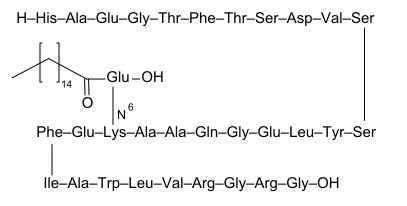
Liraglutide
From Peptidepedia, the trusted peptide wiki.



- Liraglutide is a medicine that helps people lose weight and control blood sugar levels.
- It works by reducing hunger in the brain and slowing how fast your stomach empties food.
- Most people see weight loss results within 4-8 weeks when taking the medicine regularly.
Liraglutide is a glucagon-like peptide-1 (GLP-1) receptor agonist originally developed for type 2 diabetes management and later approved for chronic weight management. It promotes significant weight loss, improves glycemic control, and offers cardiovascular benefits, making it popular among individuals seeking metabolic optimization, those with obesity or insulin resistance, and increasingly within biohacking communities. Typical dosing begins at 0.6 mg daily via subcutaneous injection, titrating up to 1.2-1.8 mg for diabetes or 3.0 mg for weight loss over several weeks, with meaningful results typically observed within 12-16 weeks of consistent use.
What Is Liraglutide?
Liraglutide is a synthetic analog of human glucagon-like peptide-1 (GLP-1), a naturally occurring incretin hormone released from intestinal L-cells following food intake. Developed by Novo Nordisk, it shares 97% amino acid sequence homology with endogenous GLP-1 but includes a fatty acid side chain that enables albumin binding, dramatically extending its half-life from approximately 2 minutes to 13 hours.
What makes liraglutide unique among peptide therapeutics is its dual regulatory approval status. Marketed as Victoza for type 2 diabetes (approved 2010) and Saxenda for chronic weight management (approved 2014), it represents one of the most extensively studied peptides in metabolic medicine.
The primary human-use benefits include:
- Weight reduction: Average loss of 5-10% body weight in clinical trials
- Glycemic control: Significant HbA1c reductions without hypoglycemia risk
- Cardiovascular protection: Demonstrated reduction in major adverse cardiovascular events
- Appetite suppression: Reduced hunger and increased satiety signaling
- Potential neuroprotective effects: Emerging research in neurodegenerative conditions
How It Works
GLP-1 Receptor Activation
Liraglutide functions as a GLP-1 receptor agonist, binding to and activating GLP-1 receptors distributed throughout multiple organ systems. Upon binding, it triggers intracellular cyclic AMP (cAMP) production, initiating downstream signaling cascades that produce its therapeutic effects.
Glucose-Dependent Insulin Secretion
In pancreatic beta cells, liraglutide enhances insulin secretion in a glucose-dependent manner. This means insulin release increases only when blood glucose is elevated, significantly reducing hypoglycemia risk compared to sulfonylureas or exogenous insulin. Simultaneously, it suppresses glucagon secretion from alpha cells when glucose levels are high, further improving glycemic control.
Central Appetite Regulation
Liraglutide crosses the blood-brain barrier and acts on GLP-1 receptors in hypothalamic nuclei, particularly the arcuate nucleus and paraventricular nucleus. This central action reduces appetite, increases satiety, and decreases food intake. Neuroimaging studies demonstrate altered brain responses to food cues in treated individuals.
Gastric Emptying Delay
By slowing gastric emptying, liraglutide reduces postprandial glucose excursions and prolongs feelings of fullness. This effect is most pronounced during initial treatment and may attenuate somewhat with continued use, though appetite suppression persists through central mechanisms.

Dosage Protocols
Liraglutide requires gradual dose escalation to minimize gastrointestinal side effects. The standard titration schedule differs based on indication:
For metabolic optimization/weight management (Saxenda protocol):
- Week 1: 0.6 mg once daily
- Week 2: 1.2 mg once daily
- Week 3: 1.8 mg once daily
- Week 4: 2.4 mg once daily
- Week 5 onward: 3.0 mg once daily (maintenance dose)
For glycemic control (Victoza protocol):
- Week 1: 0.6 mg once daily
- Week 2 onward: 1.2 mg once daily
- Optional increase to 1.8 mg if additional glycemic control needed
If gastrointestinal symptoms become intolerable at any step, remain at the current dose for an additional week before advancing. Some users find optimal results at sub-maximal doses, particularly when combining with lifestyle modifications.
Unlike some peptides, liraglutide does not require cycling. Clinical trials have demonstrated sustained efficacy over 56 weeks and beyond without evidence of tachyphylaxis. However, discontinuation typically results in weight regain, suggesting long-term use may be necessary for sustained benefits.
How to Use / Administration
Liraglutide is administered via subcutaneous injection using a pre-filled multi-dose pen device. Key administration guidelines include:
Injection sites: Abdomen (preferred), thigh, or upper arm. Rotate injection sites within the same region to prevent lipodystrophy.
Timing: Once daily at any time, independent of meals. Consistency in timing optimizes steady-state plasma concentrations, though the 13-hour half-life provides flexibility.
Technique: Pinch skin fold, insert needle at 90-degree angle, inject slowly, hold for 6 seconds before withdrawal. No need to aspirate.
Needle handling: Use a new needle for each injection to ensure sterility and accurate dosing. Remove needle after each use to prevent air bubbles and leakage.
The pen device allows dose selection in 0.6 mg increments, facilitating the titration protocol. Each pen contains 18 mg of liraglutide, providing multiple doses depending on the selected amount.
Results Timeline
Individual responses vary based on baseline metabolic status, adherence, and concurrent lifestyle factors. General expectations include:
Weeks 1-2: Initial appetite suppression often noticeable within days. Some users report reduced food cravings and earlier satiety. Gastrointestinal side effects most common during this period.
Weeks 2-4: Measurable weight loss typically begins, averaging 1-2 kg. Fasting glucose improvements may be detectable in those with elevated baseline levels.
Weeks 4-8: Weight loss acceleration as full therapeutic dose is reached. Average cumulative loss of 3-5% body weight. Improved energy levels and reduced hunger between meals commonly reported.
Weeks 8-16: Continued progressive weight loss. Clinical trials show average 5-7% body weight reduction by week 16. HbA1c reductions of 1.0-1.5% in diabetic populations.
Weeks 16-56: Weight loss typically plateaus around weeks 20-40, with maintenance thereafter. The SCALE trial demonstrated mean weight loss of 8.0% at 56 weeks versus 2.6% with placebo.
Maximum benefits require concurrent attention to diet quality and physical activity. Liraglutide enhances but does not replace lifestyle interventions.
Research Evidence
Liraglutide boasts one of the most robust evidence bases among peptide therapeutics, with multiple large-scale randomized controlled trials supporting its efficacy and safety.
The LEADER trial (Liraglutide Effect and Action in Diabetes: Evaluation of Cardiovascular Outcome Results) enrolled 9,340 patients with type 2 diabetes and high cardiovascular risk. Over 3.8 years median follow-up, liraglutide reduced the primary composite outcome of cardiovascular death, nonfatal myocardial infarction, and nonfatal stroke by 13% compared to placebo (HR 0.87, 95% CI 0.78-0.97).
The SCALE Obesity and Prediabetes trial randomized 3,731 adults with obesity or overweight plus comorbidities to liraglutide 3.0 mg or placebo. At 56 weeks, 63.2% of liraglutide-treated participants lost ≥5% body weight versus 27.1% with placebo. Additionally, liraglutide reduced progression from prediabetes to type 2 diabetes by 79% over three years.
Emerging research explores applications beyond metabolic disease. Studies in Alzheimer's disease models demonstrate neuroprotective effects, with the ELAD trial investigating cognitive outcomes in humans. Research also suggests potential benefits in non-alcoholic fatty liver disease (NAFLD), with improvements in hepatic steatosis and inflammation observed in the LEAN trial.
Stacking
While liraglutide is typically used as monotherapy, certain combinations may enhance outcomes:
Metformin: The most common combination for glycemic control. Complementary mechanisms provide additive benefits without increased hypoglycemia risk. This combination is well-established in clinical practice.
SGLT2 inhibitors: Combining with agents like empagliflozin or dapagliflozin offers synergistic cardiorenal protection and additional weight loss through different mechanisms.
Testosterone replacement therapy: In hypogonadal men, combining liraglutide with TRT may enhance body composition improvements, though direct evidence is limited.
Growth hormone secretagogues: Some users combine with peptides like ipamorelin or tesamorelin, though this combination lacks clinical trial data and may increase cost without proven additive benefit.
Avoid combining with other GLP-1 receptor agonists (semaglutide, tirzepatide) due to overlapping mechanisms and increased adverse effect risk. Combining with insulin requires careful monitoring and potential insulin dose reduction.
Reconstitution, Storage & Preparation
Pharmaceutical liraglutide (Victoza/Saxenda) comes as a pre-mixed solution in pen devices, requiring no reconstitution. Storage and handling guidelines include:
Before first use: Store refrigerated at 2-8°C (36-46°F). Do not freeze. Protect from light by keeping in original carton.
After first use: May be stored at room temperature (up to 30°C/86°F) or refrigerated for up to 30 days. Discard pen 30 days after first use regardless of remaining volume.
Research-grade liraglutide: If obtained as lyophilized powder, reconstitute with bacteriostatic water. Calculate concentration based on powder amount and desired injection volume. Store reconstituted solution refrigerated and use within 28 days.
Pre-injection preparation: Remove pen from refrigerator 15-30 minutes before injection to reduce injection site discomfort. Inspect solution for particulates or discoloration; should appear clear and colorless.
Side Effects
Gastrointestinal effects are most common, particularly during dose escalation:
Very common (>10%): Nausea (affecting up to 40% initially), diarrhea, constipation, vomiting. These typically diminish within 4-8 weeks as tolerance develops.
Common (1-10%): Headache, dizziness, fatigue, dyspepsia, abdominal pain, injection site reactions, hypoglycemia (primarily when combined with sulfonylureas or insulin).
Uncommon but notable: Acute pancreatitis (rare but serious; discontinue if suspected), gallbladder disease including cholelithiasis, acute kidney injury (usually in setting of dehydration from GI effects).
Boxed warning: Liraglutide carries an FDA boxed warning regarding thyroid C-cell tumors observed in rodent studies. While human relevance is uncertain, it is contraindicated in individuals with personal or family history of medullary thyroid carcinoma or Multiple Endocrine Neoplasia syndrome type 2.
To minimize side effects, adhere strictly to the titration schedule, stay well-hydrated, eat smaller meals, and avoid high-fat foods that may exacerbate nausea.
Legal Status / FDA
Liraglutide holds FDA approval for two indications:
Victoza (liraglutide 1.2-1.8 mg): Approved as adjunct to diet and exercise for glycemic control in adults with type 2 diabetes. Also approved to reduce cardiovascular risk in adults with type 2 diabetes and established cardiovascular disease.
Saxenda (liraglutide 3.0 mg): Approved for chronic weight management in adults with BMI ≥30 kg/m² or ≥27 kg/m² with at least one weight-related comorbidity. Also approved for adolescents aged 12-17 with body weight >60 kg and obesity.
Both formulations require a prescription in the United States, European Union, and most other jurisdictions. Obtaining liraglutide without a prescription or from unregulated sources carries legal and safety risks, including potential for counterfeit or contaminated products.
Sports / WADA Status
The World Anti-Doping Agency (WADA) does not currently list liraglutide as a prohibited substance. It does not appear on the 2024 or 2025 Prohibited List under any category.
However, athletes should note that anti-doping regulations change annually, and some sporting organizations may have additional restrictions. The weight loss effects could theoretically provide competitive advantage in weight-class sports, though no specific prohibition exists.
Athletes subject to drug testing should verify current status with their specific governing body and consider declaring use on therapeutic use exemption (TUE) forms if applicable.
Conclusion
Liraglutide represents a well-validated peptide therapeutic with extensive clinical evidence supporting its efficacy for weight management and metabolic optimization. Its favorable safety profile, once-daily dosing, and dual benefits for glycemic control and weight loss make it a cornerstone of modern obesity pharmacotherapy. While gastrointestinal side effects require careful dose titration, most users achieve tolerance within weeks. For individuals committed to comprehensive lifestyle modification, liraglutide offers a powerful adjunctive tool with cardiovascular benefits extending beyond weight loss alone.
FAQ
How long does it take for liraglutide to start working?
Appetite suppression often begins within the first week, though measurable weight loss typically requires 4-8 weeks at therapeutic doses. Maximum effects are generally observed after 20-40 weeks of consistent use.
Can I use liraglutide without diabetes?
Yes. Saxenda (liraglutide 3.0 mg) is specifically approved for weight management in non-diabetic individuals with obesity or overweight plus comorbidities. Clinical trials demonstrated significant efficacy in this population.
What happens when I stop taking liraglutide?
Weight regain is common after discontinuation, with studies showing approximately 50% of lost weight returning within one year. Sustained lifestyle changes may help maintain some benefits.
Is liraglutide the same as semaglutide (Ozempic/Wegovy)?
Both are GLP-1 receptor agonists with similar mechanisms, but semaglutide has higher receptor affinity and longer half-life, allowing weekly dosing. Semaglutide generally produces greater weight loss in head-to-head comparisons.
Can liraglutide cause thyroid cancer?
Rodent studies showed increased thyroid C-cell tumors, but human relevance is unclear. Epidemiological studies have not confirmed increased risk in humans. However, it remains contraindicated in those with medullary thyroid carcinoma history.
How much weight can I realistically expect to lose?
Clinical trials show average weight loss of 5-10% of body weight over 56 weeks. Approximately one-third of users lose >10% body weight. Individual results vary based on adherence and lifestyle factors.
Can I drink alcohol while using liraglutide?
Moderate alcohol consumption is not contraindicated, but alcohol may worsen nausea and can affect blood glucose levels. Those using liraglutide for diabetes should monitor glucose carefully if consuming alcohol.
Is liraglutide safe for long-term use?
Clinical trials up to 3 years and post-marketing surveillance support long-term safety. The LEADER trial demonstrated cardiovascular benefits over nearly 4 years of use. Ongoing monitoring for rare adverse events is recommended.
References
- National Center for Biotechnology Information. Liraglutide. StatPearls. https://www.ncbi.nlm.nih.gov/books/NBK534795/
- Drugs.com. Saxenda Approval History. https://www.drugs.com/history/saxenda.html
- Gentilella R, et al. Glucagon-like peptide-1 receptor agonists in type 2 diabetes treatment. Diabetes Obes Metab. 2019. https://www.ncbi.nlm.nih.gov/pmc/articles/PMC6812410/
- Seino Y, et al. Mechanisms of Action of GLP-1 in the Pancreas. Diabetes Care. 2011. https://diabetesjournals.org/care/article/34/Supplement_2/S279/27270/Mechanisms-of-Action-of-GLP-1-in-the-Pancreas
- van Bloemendaal L, et al. GLP-1 receptor activation modulates appetite and reward-related brain areas in humans. Diabetes. 2014. https://www.ncbi.nlm.nih.gov/pmc/articles/PMC4119845/
- Pi-Sunyer X, et al. A Randomized, Controlled Trial of 3.0 mg of Liraglutide in Weight Management. N Engl J Med. 2015. https://www.nejm.org/doi/full/10.1056/NEJMoa1411892
- Marso SP, et al. Liraglutide and Cardiovascular Outcomes in Type 2 Diabetes. N Engl J Med. 2016. https://www.nejm.org/doi/full/10.1056/NEJMoa1603827
- le Roux CW, et al. 3 years of liraglutide versus placebo for type 2 diabetes risk reduction and weight management. Lancet. 2017. https://www.thelancet.com/journals/lancet/article/PIIS0140-6736(17)30069-7/fulltext
- Femminella GD, et al. Evaluating the effects of the novel GLP-1 analogue liraglutide in Alzheimer's disease (ELAD study). Trials. 2019. https://www.ncbi.nlm.nih.gov/pmc/articles/PMC8075807/
- Armstrong MJ, et al. Liraglutide safety and efficacy in patients with non-alcoholic steatohepatitis (LEAN). Lancet. 2016. https://www.thelancet.com/journals/lancet/article/PIIS0140-6736(15)00803-X/fulltext
- FDA. Victoza Prescribing Information. https://www.accessdata.fda.gov/drugsatfda_docs/label/2017/022341s027lbl.pdf
- World Anti-Doping Agency. Prohibited List. https://www.wada-ama.org/en/prohibited-list