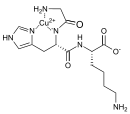
GHK-Cu
From Peptidepedia, the trusted peptide wiki.



- GHK-Cu is a natural peptide that repairs tissues and reduces signs of aging.
- It works by boosting collagen production and reducing inflammation in the body.
- People use it through injections or creams to heal wounds and improve skin appearance.
GHK-Cu (copper peptide) is a naturally occurring tripeptide composed of glycine, histidine, and lysine bound to a copper ion. It has gained significant popularity for its regenerative properties, including wound healing, skin rejuvenation, hair growth stimulation, and anti-inflammatory effects. GHK-Cu is widely used among anti-aging enthusiasts, biohackers, athletes recovering from injuries, and individuals seeking enhanced tissue repair. Typical dosing ranges from 1-2 mg daily via subcutaneous injection or topical application, with cycles commonly lasting 4-12 weeks to observe meaningful results.
What Is GHK-Cu?
GHK-Cu, or glycyl-L-histidyl-L-lysine copper complex, is a naturally occurring peptide first identified in human plasma in 1973 by Dr. Loren Pickart. This small tripeptide exists endogenously in human blood, saliva, and urine, with plasma concentrations declining significantly with age—from approximately 200 ng/mL at age 20 to 80 ng/mL by age 60.
What makes GHK-Cu unique among peptides is its remarkable ability to regulate numerous genes involved in tissue remodeling and repair. Research has demonstrated that GHK-Cu can modulate the expression of over 4,000 human genes, effectively resetting gene expression patterns toward a healthier, more youthful state.[^1]
The primary human-use benefits include accelerated wound healing, reduction of fine lines and wrinkles, increased collagen and elastin synthesis, hair follicle stimulation, anti-inflammatory action, and potential neuroprotective effects. Its multifunctional nature and excellent safety profile have made it one of the most researched and utilized peptides in the regenerative medicine space.
How It Works
Collagen and Extracellular Matrix Remodeling
GHK-Cu exerts powerful effects on the extracellular matrix (ECM) by stimulating the synthesis of collagen types I, III, and V, as well as elastin, proteoglycans, and glycosaminoglycans. It simultaneously inhibits metalloproteinases that degrade collagen while promoting the activity of tissue inhibitors of metalloproteinases (TIMPs).[^2] This dual action creates an environment favorable for tissue regeneration and structural integrity.
The peptide also increases decorin production, a proteoglycan essential for proper collagen fibril organization. This results in stronger, more organized connective tissue formation during wound healing and general tissue maintenance.
Anti-Inflammatory and Antioxidant Mechanisms
GHK-Cu demonstrates significant anti-inflammatory properties by modulating cytokine expression. It reduces pro-inflammatory markers including TNF-α, IL-6, and TGF-β while promoting anti-inflammatory responses.[^3] The copper ion component provides additional antioxidant benefits by serving as a cofactor for superoxide dismutase (SOD), a critical enzyme in neutralizing reactive oxygen species.
This anti-inflammatory action extends to reducing oxidative damage in tissues, which contributes to both its wound-healing capabilities and its anti-aging effects on skin and other organs.
Gene Expression Modulation
Perhaps the most remarkable aspect of GHK-Cu is its ability to influence gene expression on a broad scale. Genomic studies have shown that GHK-Cu can reset the expression of genes associated with aging, disease, and tissue damage to patterns more characteristic of healthy, younger tissue.[^4]
Specifically, GHK-Cu upregulates genes involved in stem cell proliferation, DNA repair, and antioxidant responses while downregulating genes associated with inflammation, tissue destruction, and cancer metastasis. This comprehensive gene-regulatory activity underlies many of its observed therapeutic effects.
Copper Delivery and Angiogenesis
The copper ion in GHK-Cu serves multiple biological functions beyond antioxidant activity. Copper is essential for angiogenesis—the formation of new blood vessels—which is critical for wound healing and tissue regeneration. GHK-Cu facilitates copper delivery to tissues where it supports the activity of lysyl oxidase, an enzyme necessary for collagen and elastin cross-linking.[^5]
Additionally, copper supports nerve regeneration and has demonstrated the ability to attract immune cells and endothelial cells to wound sites, accelerating the healing cascade.

Dosage Protocols
For subcutaneous injection, the most common dosage range is 1-2 mg per day, administered once daily. Some protocols suggest starting at the lower end (1 mg) and increasing based on individual response and tolerance.
Cycling is generally recommended to prevent receptor desensitization and maintain efficacy. A typical cycle consists of 4-8 weeks of daily administration followed by a 2-4 week break. Some users extend cycles to 12 weeks for specific therapeutic goals such as significant wound healing or hair restoration.
For localized concerns, lower systemic doses of 0.5-1 mg daily may be combined with topical application to the target area. When used primarily for anti-aging skin benefits, some practitioners recommend 2-3 times weekly dosing rather than daily administration.
It is advisable to begin with the minimum effective dose and adjust based on observed results and tolerance. Individual responses vary, and conservative dosing helps identify the optimal amount for each person's physiology.
How to Use / Administration Methods
Subcutaneous Injection: The most common and effective method for systemic benefits. Injections are typically administered in the abdominal area, rotating injection sites to prevent tissue irritation. Using an insulin syringe (29-31 gauge), inject into the subcutaneous fat layer at a 45-degree angle. Morning administration is preferred by most users.
Topical Application: GHK-Cu is available in creams, serums, and solutions for direct skin application. Concentrations typically range from 0.1% to 1%. Topical use is effective for localized skin concerns but provides limited systemic benefits. Apply to clean, dry skin once or twice daily.
Mesotherapy/Microneedling: Some practitioners combine GHK-Cu with microneedling procedures to enhance penetration and stimulate additional collagen production. This method is particularly popular for facial rejuvenation and scar treatment.
Intradermal Injection: For targeted treatment of scars, wrinkles, or hair loss, small amounts (0.1-0.2 mg) can be injected directly into the affected area. This technique requires proper training and sterile technique.
Results Timelines
Weeks 1-2: Initial improvements in skin hydration and texture may be noticed. Some users report a subtle "glow" or improved skin tone. Wound healing acceleration becomes apparent during this phase.
Weeks 3-4: More noticeable improvements in skin firmness and elasticity. Fine lines may begin to soften. Users recovering from injuries often report significant progress in tissue repair.
Weeks 6-8: Substantial improvements in skin quality, including reduction in wrinkle depth and improved overall appearance. Hair growth stimulation becomes visible for those using GHK-Cu for this purpose.
Weeks 8-12: Maximum benefits typically manifest during extended cycles. Significant collagen remodeling, scar improvement, and hair density increases are commonly reported. Anti-inflammatory benefits reach their peak.
Results vary considerably based on individual factors including age, baseline skin condition, dosage, and consistency of use. Photographic documentation is recommended to objectively track progress.
Research Evidence
The scientific literature on GHK-Cu spans several decades and includes both in vitro and in vivo studies. Research published in the Journal of Biomaterials Science demonstrated that GHK-Cu significantly accelerates wound healing by promoting fibroblast proliferation and collagen synthesis.[^6]
A comprehensive review in Oxidative Medicine and Cellular Longevity examined GHK-Cu's gene expression effects, confirming its ability to modulate over 4,000 genes related to aging and tissue repair.[^1] The study highlighted its potential applications in treating age-related conditions and promoting healthy aging.
Clinical studies on topical GHK-Cu have shown measurable improvements in skin elasticity, firmness, and wrinkle reduction. Research published in the Journal of Aging Research and Clinical Practice found that subjects using GHK-Cu-containing products showed significant improvement in photoaged skin parameters.[^7]
Hair growth studies have demonstrated GHK-Cu's ability to enlarge hair follicles and stimulate hair growth, with research suggesting it may be as effective as minoxidil for certain types of hair loss.[^8]
Stacking
GHK-Cu is frequently combined with other peptides to enhance overall results:
BPC-157: This combination is popular for accelerated healing, as both peptides promote tissue repair through complementary mechanisms. BPC-157 addresses gut and tendon healing while GHK-Cu provides systemic regenerative support.
TB-500 (Thymosin Beta-4): Another healing-focused stack, combining TB-500's cell migration and blood vessel formation properties with GHK-Cu's collagen-stimulating effects.
Epithalon: For comprehensive anti-aging protocols, GHK-Cu paired with epithalon addresses both tissue regeneration and telomere maintenance.
Growth Hormone Secretagogues: Some users combine GHK-Cu with peptides like Ipamorelin or CJC-1295 for synergistic anti-aging and recovery benefits.
When stacking, it is prudent to introduce one compound at a time to assess individual responses before combining multiple peptides.
Reconstitution, Storage & Prep
GHK-Cu typically arrives as a lyophilized (freeze-dried) powder requiring reconstitution before use.
Reconstitution: Use bacteriostatic water (BAC water) for reconstitution. For a 5 mg vial, adding 2.5 mL of BAC water yields a concentration of 2 mg/mL. Inject the water slowly along the vial's inner wall, allowing the powder to dissolve naturally—do not shake vigorously.
Storage: Unreconstituted GHK-Cu should be stored in a cool, dry place away from light. Refrigeration extends shelf life but is not strictly required for short-term storage. Once reconstituted, store in the refrigerator at 2-8°C (36-46°F) and use within 4-6 weeks.
Preparation: Before injection, allow the vial to reach room temperature. Clean the vial stopper and injection site with alcohol swabs. Draw the appropriate dose using an insulin syringe, removing any air bubbles before administration.
Side Effects
GHK-Cu demonstrates an excellent safety profile with minimal reported adverse effects. The most common side effects include:
- Mild injection site reactions (redness, swelling, or itching)
- Temporary skin flushing
- Occasional headache during initial use
Serious adverse effects are rare. However, individuals with copper metabolism disorders (such as Wilson's disease) should avoid GHK-Cu supplementation. Those with active cancer should consult healthcare providers before use, as the peptide's growth-promoting properties warrant caution.
Allergic reactions are uncommon but possible. Discontinue use if significant swelling, difficulty breathing, or severe skin reactions occur.
Legal Status / FDA
GHK-Cu is not FDA-approved for any medical indication in the United States. It is classified as a research chemical and is legally available for purchase for research purposes. The peptide is not a controlled substance and can be legally possessed in most jurisdictions.
Topical GHK-Cu products are available as cosmetic ingredients and are widely used in skincare formulations without regulatory restriction.
Users should understand that purchasing GHK-Cu for personal use exists in a regulatory gray area. Quality and purity vary significantly between suppliers, making source verification essential.
Sports/WADA
GHK-Cu is not currently listed on the World Anti-Doping Agency (WADA) Prohibited List. However, athletes subject to drug testing should exercise caution, as anti-doping regulations evolve and peptides face increasing scrutiny.
The peptide's healing and recovery properties make it attractive to athletes, but competitive athletes should verify current regulations with their governing bodies before use.
Conclusion
GHK-Cu represents one of the most well-researched and versatile peptides available for regenerative applications. Its natural occurrence in the human body, combined with an extensive safety record and broad therapeutic potential, makes it an attractive option for those seeking enhanced tissue repair, anti-aging benefits, and overall regenerative support.
The peptide's ability to modulate thousands of genes toward healthier expression patterns distinguishes it from single-mechanism compounds. Whether used for wound healing, skin rejuvenation, hair restoration, or general anti-aging purposes, GHK-Cu offers a scientifically-supported approach to supporting the body's natural repair processes.
As with any peptide, sourcing from reputable suppliers, following proper reconstitution and storage protocols, and starting with conservative doses are essential practices for safe and effective use.
FAQ
How long does it take to see results from GHK-Cu?
Initial improvements in skin texture and hydration may appear within 2-3 weeks. More significant results, including wrinkle reduction and hair growth, typically require 6-12 weeks of consistent use.
Can GHK-Cu be used with retinoids or other skincare actives?
Yes, GHK-Cu is generally compatible with most skincare ingredients. When using topical GHK-Cu, it can be layered with retinoids, vitamin C, and other actives. Some users report enhanced results when combining these treatments.
Is GHK-Cu safe for long-term use?
Current evidence suggests GHK-Cu has an excellent safety profile for extended use. However, cycling (periods of use followed by breaks) is recommended to maintain receptor sensitivity and optimize results.
What is the difference between injectable and topical GHK-Cu?
Injectable GHK-Cu provides systemic benefits throughout the body, while topical application primarily affects the local application area. For comprehensive anti-aging or healing benefits, injection is generally more effective.
Can GHK-Cu help with hair loss?
Research indicates GHK-Cu can stimulate hair follicle growth and may be beneficial for certain types of hair loss. Results typically require 3-6 months of consistent use and vary based on the underlying cause of hair loss.
Does GHK-Cu need to be cycled?
While not strictly required, cycling is recommended to prevent potential receptor desensitization. Common protocols include 4-8 weeks on followed by 2-4 weeks off.
What should I look for when purchasing GHK-Cu?
Seek suppliers providing third-party purity testing (HPLC analysis), proper storage and shipping conditions, and transparent sourcing information. Purity should be 98% or higher.
Can GHK-Cu be combined with other peptides?
Yes, GHK-Cu stacks well with healing peptides like BPC-157 and TB-500, as well as anti-aging peptides like epithalon. Introduce compounds individually to assess tolerance before combining.
References
[^1]: Pickart L, Margolina A. "Regenerative and Protective Actions of the GHK-Cu Peptide in the Light of the New Gene Data." International Journal of Molecular Sciences. 2018;19(7):1987.
[^2]: Pickart L. "The human tri-peptide GHK and tissue remodeling." Journal of Biomaterials Science, Polymer Edition. 2008;19(8):969-988.
[^3]: Canapp SO Jr, et al. "The anti-inflammatory effect of the naturally occurring peptide GHK." Veterinary Surgery. 2003;32(4):391-396.
[^4]: Pickart L, Margolina A. "Skin Regenerative and Anti-Cancer Actions of Copper Peptides." Cosmetics. 2018;5(2):29.
[^5]: Kang YA, et al. "Copper-GHK increases integrin expression and p63 positivity by keratinocytes." Archives of Dermatological Research. 2009;301(4):301-306.
[^6]: Siméon A, et al. "Expression of glycosaminoglycans and small proteoglycans in wounds: modulation by the tripeptide-copper complex glycyl-L-histidyl-L-lysine-Cu2+." Journal of Investigative Dermatology. 2000;115(6):962-968.
[^7]: Leyden J, et al. "Skin Care Benefits of Copper Peptide Containing Facial Cream." American Academy of Dermatology Meeting. 2002.
[^8]: Pyo HK, et al. "The effect of tripeptide-copper complex on human hair growth in vitro." Archives of Pharmacal Research. 2007;30(7):834-839.