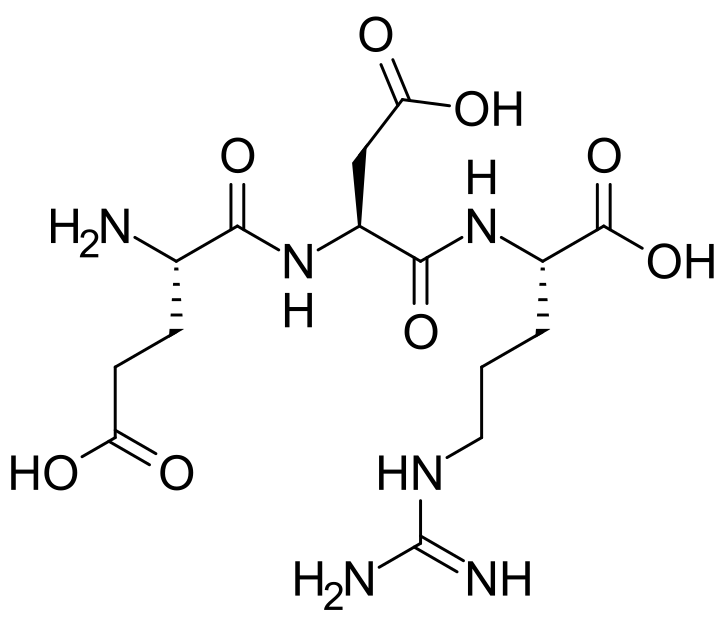
Pinealon
From Peptidepedia, the trusted peptide wiki.



- Pinealon is a synthetic tripeptide from Russian research that may enhance brain function and protect nerve cells.
- It works by supporting the pineal gland to produce melatonin naturally and reduce cellular damage from aging.
- Users typically take 10-20 mg daily in cycles of 10-30 days, with sleep improvements appearing within one week.
Pinealon is a synthetic tripeptide (Glu-Asp-Arg) developed through Russian bioregulatory research, primarily studied for its neuroprotective and cognitive-enhancing properties. It has gained popularity among biohackers, longevity enthusiasts, and individuals seeking cognitive support, particularly for age-related mental decline, sleep optimization, and stress resilience. Typical dosing protocols range from 10-20 mg daily administered sublingually or intranasally, with cycles lasting 10-30 days followed by equal rest periods.
What Is Pinealon?
Pinealon belongs to a class of compounds known as bioregulatory peptides or cytomedins, originally developed at the St. Petersburg Institute of Bioregulation and Gerontology under the direction of Professor Vladimir Khavinson. This tripeptide consists of three amino acids—glutamic acid, aspartic acid, and arginine—arranged in a specific sequence that demonstrates selective affinity for pineal gland tissue and central nervous system structures.
The compound emerged from decades of Soviet and Russian research into geroprotective (anti-aging) substances, with Khavinson's team isolating peptide fractions from various organs to identify tissue-specific regulatory molecules. Pinealon represents the synthetic, standardized version of peptides naturally found in pineal gland extracts.
What distinguishes Pinealon from other nootropic compounds is its proposed epigenetic mechanism of action. Rather than simply modulating neurotransmitter levels, research suggests it may influence gene expression patterns associated with cellular protection and repair processes. This positions it within the emerging field of peptide bioregulation, which theorizes that short-chain peptides serve as endogenous signaling molecules that maintain tissue homeostasis.
Primary human-use benefits attributed to Pinealon include:
- Enhanced cognitive function and mental clarity
- Improved sleep architecture and circadian rhythm regulation
- Neuroprotection against oxidative stress and age-related decline
- Stress adaptation and anxiolytic effects
- Support for melatonin synthesis pathways
How It Works
Epigenetic Gene Regulation
Pinealon's proposed primary mechanism involves direct interaction with DNA sequences. Research published in the Bulletin of Experimental Biology and Medicine demonstrated that short peptides, including Pinealon, can penetrate cell nuclei and bind to specific DNA regions, potentially influencing transcription of genes involved in cellular protection and antioxidant defense.
This epigenetic modulation may upregulate expression of genes encoding antioxidant enzymes such as superoxide dismutase and catalase, while simultaneously downregulating pro-inflammatory and pro-apoptotic gene pathways. The selectivity appears tissue-specific, with Pinealon demonstrating particular affinity for neural and pineal tissue gene sequences.
Pineal Gland Support and Melatonin Modulation
The pineal gland serves as the body's master circadian regulator through melatonin production. Age-related calcification and functional decline of this gland correlates with sleep disturbances, cognitive impairment, and accelerated aging markers. Pinealon research suggests the peptide may support pinealocyte function and optimize melatonin synthesis capacity without directly supplementing melatonin itself.
This indirect approach potentially preserves the body's natural circadian feedback mechanisms while enhancing the gland's functional reserve—a distinction from exogenous melatonin supplementation, which can suppress endogenous production over time.
Antioxidant and Neuroprotective Pathways
Oxidative stress represents a primary driver of neurodegeneration and cognitive decline. Pinealon has demonstrated antioxidant properties in experimental models, reducing markers of lipid peroxidation and protein oxidation in neural tissue. Studies in aged animals showed improved antioxidant enzyme activity and reduced accumulation of oxidative damage markers following peptide administration.
The neuroprotective effects extend beyond simple antioxidant activity. Research indicates Pinealon may modulate apoptotic pathways in neurons exposed to various stressors, potentially reducing programmed cell death in vulnerable brain regions.
Neurotransmitter System Interactions
While not a direct neurotransmitter modulator like conventional nootropics, Pinealon appears to influence the broader neurochemical environment. Animal studies have documented effects on serotonergic and GABAergic systems, which may underlie reported anxiolytic and mood-stabilizing effects. These interactions likely occur downstream of the peptide's primary gene-regulatory actions rather than through direct receptor binding.

Dosage Protocols
Standard Pinealon dosing follows established bioregulatory peptide protocols developed through Russian clinical experience:
Conservative Protocol: 5-10 mg daily for 10-20 days, suitable for initial assessment of individual response and tolerance.
Standard Protocol: 10-20 mg daily for 20-30 days, representing the most commonly employed regimen for cognitive and sleep optimization goals.
Intensive Protocol: 20-30 mg daily for 10-14 days, occasionally used for acute cognitive demands or recovery from significant stressors, though less commonly recommended.
Cycling remains fundamental to bioregulatory peptide use. The standard approach involves treatment periods equal to or shorter than rest periods—for example, 30 days on followed by 30-60 days off. This cycling strategy theoretically allows gene expression changes to stabilize while preventing receptor desensitization or feedback suppression.
Some practitioners employ Pinealon in shorter, more frequent cycles (10 days on, 20 days off) repeated throughout the year, while others prefer longer cycles (30 days) conducted 2-3 times annually during periods of increased cognitive demand or seasonal transitions affecting sleep patterns.
How to Use / Administration Methods
Sublingual Administration: The most common method involves placing the peptide powder or solution under the tongue for 60-90 seconds before swallowing. This bypasses first-pass hepatic metabolism and provides relatively rapid absorption through the sublingual mucosa. Dosing is typically performed once daily, preferably in the evening given Pinealon's association with sleep and circadian function.
Intranasal Administration: Some users prefer intranasal delivery for enhanced central nervous system bioavailability. The nasal mucosa provides direct access to the brain via olfactory pathways, potentially increasing peptide concentrations in target neural tissues. Intranasal use requires reconstitution in bacteriostatic water or saline and administration via nasal spray device.
Subcutaneous Injection: Though less common for Pinealon specifically, some protocols include subcutaneous administration. This method ensures complete bioavailability but requires proper sterile technique and may be unnecessary given the peptide's apparent effectiveness via less invasive routes.
Oral Capsules: Pinealon is available in oral capsule form, though bioavailability may be reduced compared to sublingual or intranasal routes due to gastrointestinal degradation. Higher doses are sometimes employed to compensate for absorption losses.
Results Timelines
Week 1: Initial effects typically manifest as subtle improvements in sleep onset latency and sleep quality. Some users report mild anxiolytic effects and improved stress tolerance within the first several days.
Weeks 2-3: Cognitive effects become more apparent, including enhanced mental clarity, improved focus duration, and better verbal fluency. Sleep architecture improvements consolidate, with users often reporting more vivid dreams and feeling more refreshed upon waking.
Week 4 and Beyond: Full effects plateau, with sustained improvements in cognitive performance, mood stability, and sleep quality. Some users report cumulative benefits that persist into the off-cycle period, consistent with the epigenetic mechanism hypothesis.
Post-Cycle: Unlike compounds requiring continuous administration, Pinealon's effects may partially persist for weeks to months following cessation, attributed to lasting gene expression changes. However, periodic re-administration is typically recommended to maintain optimal benefits.
Research Evidence
The evidence base for Pinealon derives primarily from Russian research institutions, with studies published in peer-reviewed journals including the Bulletin of Experimental Biology and Medicine, Advances in Gerontology, and various Russian-language medical publications.
Key findings include demonstrated neuroprotective effects in cellular and animal models of oxidative stress and neurodegeneration. Studies have shown Pinealon's ability to normalize disrupted circadian rhythms and melatonin production in aged animals, with corresponding improvements in cognitive performance on maze navigation and memory tasks.
Human clinical data remains more limited, though observational studies and clinical experience from Russian medical practice suggest benefits for age-related cognitive decline, sleep disorders, and stress-related conditions. Professor Khavinson's research group has published extensively on bioregulatory peptides, including long-term safety data from clinical applications spanning decades.
It must be acknowledged that much of this research has not been replicated by independent Western laboratories, and publication in Russian-language journals limits accessibility for international scientific review. Prospective, randomized controlled trials meeting Western regulatory standards remain lacking.
Stacking
Pinealon is frequently combined with other bioregulatory peptides for synergistic effects:
Pinealon + Epithalon: This combination targets complementary aspects of pineal function and cellular aging. Epithalon (AEDG peptide) activates telomerase and supports telomere maintenance, while Pinealon provides direct pineal and neural support.
Pinealon + Cortexin/Cerebrolysin: For intensive cognitive support, Pinealon may be combined with other neuropeptide preparations, though such combinations should be approached cautiously and are typically reserved for significant cognitive concerns.
Pinealon + Semax: This stack combines Pinealon's gene-regulatory effects with Semax's neurotrophic and cognitive-enhancing properties, potentially providing complementary mechanisms for cognitive optimization.
Pinealon + Adaptogenic Compounds: Non-peptide combinations with adaptogens like Rhodiola rosea or Ashwagandha may enhance stress-resilience effects while supporting the hypothalamic-pituitary-adrenal axis from multiple angles.
Reconstitution, Storage & Prep
Pinealon is typically supplied as a lyophilized (freeze-dried) powder requiring proper storage and, for certain administration routes, reconstitution.
Storage: Lyophilized Pinealon should be stored refrigerated (2-8°C) protected from light. Properly stored, the powder remains stable for 24+ months. Avoid repeated freeze-thaw cycles if storing frozen.
Reconstitution (for intranasal/injectable use): Add bacteriostatic water slowly to the vial, directing the stream against the glass wall rather than directly onto the powder. Allow the peptide to dissolve naturally without shaking—gentle swirling is acceptable. Standard reconstitution creates concentrations allowing convenient dosing volumes.
Reconstituted Solution Storage: Once reconstituted, solutions should be refrigerated and used within 3-4 weeks. Never freeze reconstituted peptide solutions.
Sublingual Powder: For sublingual use, the lyophilized powder can be administered directly without reconstitution, measured using a precision milligram scale.
Side Effects
Pinealon demonstrates a favorable safety profile in available research and clinical reports. Reported adverse effects are generally mild and infrequent:
- Transient headache, particularly during initial use
- Vivid dreams or altered dream content (often considered a positive indicator of pineal activation)
- Mild drowsiness if taken during daytime hours
- Occasional gastrointestinal discomfort with oral administration
- Rare reports of temporary mood fluctuations during initial adaptation
No serious adverse events have been documented in published literature. Long-term safety data from Russian clinical experience spanning decades suggests good tolerability, though this data has not undergone rigorous independent verification.
Contraindications and precautions include pregnancy and lactation (insufficient safety data), autoimmune conditions (theoretical concern with immune-modulating peptides), and concurrent use of medications affecting melatonin or circadian function.
Legal Status / FDA
Pinealon is not approved by the U.S. Food and Drug Administration for any medical indication. It is classified as a research chemical in most Western jurisdictions, legally available for purchase for research purposes but not approved for human therapeutic use.
In Russia, bioregulatory peptides including those from the Khavinson research program have achieved varying degrees of regulatory acceptance, with some formulations approved for clinical use in age-related conditions.
Individuals purchasing Pinealon assume responsibility for their decision to use an unapproved substance. Quality control varies significantly between suppliers, making source verification essential.
Sports/WADA
Pinealon does not currently appear on the World Anti-Doping Agency (WADA) Prohibited List. However, athletes subject to anti-doping regulations should exercise caution, as peptide hormones and related substances face ongoing scrutiny, and testing methodologies continue evolving.
The compound's mechanism—primarily gene-regulatory rather than direct performance-enhancing—places it in a gray area regarding sports use. Athletes should consult current WADA guidelines and consider that regulatory status may change.
Conclusion
Pinealon represents a distinctive approach to cognitive enhancement and neuroprotection, operating through proposed epigenetic mechanisms rather than conventional neurotransmitter modulation. Its origins in Russian bioregulatory research provide decades of clinical experience, though Western scientific validation remains limited.
For individuals seeking cognitive support, sleep optimization, or neuroprotective strategies, Pinealon offers a generally well-tolerated option with a plausible mechanism of action. However, the absence of FDA approval and limited independent research necessitate informed decision-making and realistic expectations.
As with all unapproved peptides, sourcing from reputable suppliers, starting with conservative doses, and monitoring individual response remain essential practices.
FAQ
How long does it take for Pinealon to work?
Initial effects on sleep quality may appear within the first week, while cognitive benefits typically develop over 2-4 weeks of consistent use.
Can Pinealon be taken with melatonin?
While not contraindicated, combining Pinealon with exogenous melatonin may be redundant, as Pinealon aims to support endogenous melatonin production. If combining, reduced melatonin doses are advisable.
Is Pinealon safe for long-term use?
Russian clinical experience suggests good long-term tolerability, though cycling (periods on and off) is recommended rather than continuous indefinite use.
What is the best time of day to take Pinealon?
Evening administration is generally preferred given the peptide's association with pineal function and sleep regulation, though some users report good results with morning dosing.
Does Pinealon require a prescription?
In most Western countries, Pinealon is available as a research chemical without prescription, though it is not approved for human therapeutic use.
Can Pinealon help with jet lag?
Anecdotal reports suggest benefit for circadian disruption including jet lag, consistent with its proposed mechanism of supporting pineal function and melatonin regulation.
How does Pinealon differ from taking melatonin directly?
Pinealon aims to support the pineal gland's own melatonin-producing capacity rather than replacing it with exogenous hormone, potentially preserving natural feedback mechanisms.
Is Pinealon detectable on drug tests?
Standard employment or medical drug screens do not test for Pinealon. Specialized peptide testing could theoretically detect it, though such testing is not routine.
References
- Khavinson VK, et al. "Peptide bioregulation of aging: results and prospects." Bulletin of Experimental Biology and Medicine. 2006.
- Khavinson VK, et al. "Short peptides modulate the effect of endonucleases of wheat seedling." Bulletin of Experimental Biology and Medicine. 2012.
- Khavinson VK, Malinin VV. "Gerontological aspects of genome peptide regulation." 2005.
- Anisimov VN, Khavinson VK. "Peptide bioregulation of aging." Biogerontology. 2010.
- St. Petersburg Institute of Bioregulation and Gerontology research publications.
- National Center for Biotechnology Information - PubMed peptide bioregulation database.
- World Anti-Doping Agency Prohibited List.
- U.S. Food and Drug Administration - Unapproved Drugs.