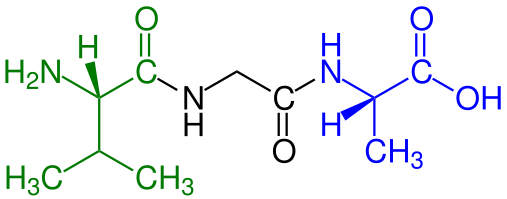
Chonluten
From Peptidepedia, the trusted peptide wiki.



- Chonluten is a tiny peptide made of three amino acids designed to support lung and respiratory health.
- It works by reducing inflammation, repairing lung tissue, and helping the body defend against environmental pollutants.
- People typically use it through injections for 10-30 days, then take a break for several months before repeating.
Chonluten is a synthetic tripeptide bioregulator composed of three amino acids—glutamic acid, aspartic acid, and glycine (Glu-Asp-Gly)—developed specifically to support respiratory and lung health. Originally isolated from bronchial epithelial tissue by Russian scientist Professor Vladimir Khavinson, this short-chain peptide has gained popularity among biohackers, longevity enthusiasts, and individuals seeking to optimize pulmonary function. Chonluten is primarily used to promote lung tissue repair, reduce airway inflammation, and enhance respiratory resilience against environmental stressors. Typical dosages range from 250 mcg to 2000 mcg daily via subcutaneous injection, with protocols often spanning 10 to 30 days, followed by a 4-6 month break before repeating.
What Is Chonluten?
Chonluten, also known as T-34, is a synthetic tripeptide bioregulator belonging to the Khavinson Peptides® family—a class of short-chain peptides developed through decades of research at the Saint Petersburg Institute of Bioregulation and Gerontology. The peptide's molecular structure consists of the amino acid sequence Glu-Asp-Gly, making it one of the smallest bioactive peptides in therapeutic use.
What makes Chonluten unique among peptide bioregulators is its tissue-specific targeting of the respiratory system. Unlike broad-spectrum peptides, Chonluten was isolated from bronchial epithelial cells and demonstrates preferential activity in lung and bronchial tissues. This organ-specific action is a hallmark of Khavinson peptides, which are designed to restore and maintain homeostasis in their target tissues.
The primary human-use benefits associated with Chonluten include:
- Supporting cellular repair in lung tissue
- Reducing airway inflammation and oxidative stress
- Enhancing local immune defense in the respiratory tract
- Promoting resilience against environmental pollutants and respiratory stressors
- Potential geroprotective (anti-aging) effects on pulmonary tissue
How It Works
Gene Expression Regulation
Chonluten's mechanism of action centers on its ability to regulate gene expression at the cellular level. Due to its small molecular size, the tripeptide can penetrate cell membranes and interact directly with DNA regions, potentially influencing epigenetic modifications. Research suggests that Chonluten may regulate genes encoding antioxidant and anti-inflammatory pathways, specifically in lung and gastrointestinal tissues.
Immunomodulatory Effects
Laboratory studies using the THP-1 monocyte/macrophage cell line have demonstrated that Chonluten promotes a mild level of TNF (tumor necrosis factor) secretion in monocytes. This controlled TNF release is associated with a documented mechanism of TNF tolerance, which helps attenuate excessive inflammatory responses. When macrophages were activated with bacterial lipopolysaccharide (LPS) and co-treated with Chonluten, significant reductions in pro-inflammatory cytokines including TNF-α, IL-6, and IL-17 were observed.
STAT Signaling Pathway Activation
Chonluten has been shown to activate the phosphorylation of STAT1 (Signal Transducer and Activator of Transcription 1) molecules in differentiated macrophages. This activation occurs through a receptor-independent mechanism, meaning the peptide can directly influence intracellular signaling without requiring traditional ligand-receptor interactions. Confocal microscopy studies confirmed that peptide treatment causes STAT1 molecules to translocate from the cytoplasm into the cell nucleus, where they can influence gene transcription.
Anti-Adhesion Properties
Research has demonstrated that Chonluten can reduce the adhesion of monocytes to activated endothelial cells—a key mechanism in inflammatory processes. When monocytes were pre-treated with Chonluten and then exposed to LPS-activated human umbilical vein endothelial cells (HUVECs), a significant decrease in cell adhesion was observed compared to untreated controls.

Dosage Protocols
Chonluten dosing varies depending on the administration form and individual goals. The following represents commonly reported protocols:
Injectable Form (Subcutaneous)
- Starting dose: 250 mcg daily
- Gradual increase: 250-500 mcg every 2 weeks as tolerated
- Target maintenance: 1000-2000 mcg daily by weeks 7-12
- Advanced protocols: 3000-4000 mcg daily in later weeks
- Some protocols suggest one injection per week due to the peptide's prolonged half-life
Sublingual Form
- 5-6 drops (0.25-0.35 mL) under the tongue
- 3-4 times daily, 10-15 minutes before eating
- Average daily dose contains approximately 0.1 mg of peptide complex
Capsule Form
- 1-2 capsules, once or twice daily with food
Cycling Guidelines
Standard protocols recommend 10-30 day cycles, followed by a 4-6 month break before repeating. This cycling approach is consistent with the bioregulator philosophy of restoring tissue function rather than providing continuous supplementation.
How to Use / Administration
Chonluten is available in multiple administration forms:
Subcutaneous Injection
This is the most common method for research-grade lyophilized powder. After reconstitution with bacteriostatic water, the peptide is injected subcutaneously, typically in the abdominal area or thigh. Injections are usually administered once daily, though some protocols suggest weekly dosing.
Sublingual Drops
Liquid formulations are placed under the tongue and held for several minutes before swallowing. This method offers convenience and avoids injection but may have different bioavailability characteristics.
Oral Capsules
Encapsulated forms are taken with meals. While convenient, oral bioavailability of peptides is generally lower than injectable routes due to digestive degradation.
Results Timelines
Based on available research and user reports, the following general timeline may be expected:
- Weeks 1-2: Initial adaptation period; subtle changes in respiratory comfort may begin
- Weeks 3-4: More noticeable improvements in breathing ease and reduced respiratory irritation
- Weeks 5-8: Cumulative benefits in lung function and resilience
- Post-cycle: Benefits may persist for several months following completion of a cycle, consistent with the bioregulator mechanism of restoring tissue homeostasis
Individual responses vary significantly based on baseline health status, dosage, and concurrent lifestyle factors.
Research Evidence
The scientific foundation for Chonluten comes primarily from in vitro studies and research conducted at Russian institutions. A 2022 study published in the International Journal of Molecular Sciences evaluated Chonluten alongside other Khavinson peptides using the THP-1 monocyte/macrophage cell line. Key findings included:
- Chonluten modulated key proliferative patterns and increased tyrosine phosphorylation of mitogen-activated cytoplasmic kinases
- The peptide promoted mild TNF secretion in monocytes, linked to TNF tolerance mechanisms
- Co-treatment with LPS resulted in reduced expression of pro-inflammatory cytokines (TNF-α, IL-6, IL-17)
- STAT1 phosphorylation and nuclear translocation were observed
- Reduced monocyte-endothelial cell adhesion was demonstrated
Additional research has suggested that Chonluten may regulate gene expression encoding antioxidant and anti-inflammatory pathways in lung tissue, though most studies have been conducted in animal models or cell cultures rather than human clinical trials.
Stacking
Chonluten is sometimes combined with other peptide bioregulators for synergistic effects. Common stacking partners include:
- Bronchogen: Another respiratory-focused tetrapeptide that may complement Chonluten's lung-supporting properties
- Thymalin/Thymogen: Thymus-derived peptides for immune system support
- Epitalon: Pineal gland peptide with reported anti-aging and telomerase-activating properties
- Vilon: Immunomodulatory dipeptide that may enhance overall immune function
When stacking, users typically maintain standard dosing for each peptide while monitoring for any unexpected interactions.
Reconstitution, Storage & Prep
Reconstitution Protocol
- Draw 2-3 mL of bacteriostatic water using a sterile syringe
- Inject slowly down the inside wall of the vial to minimize foaming
- Gently swirl or roll the vial—do not shake vigorously
- Allow the powder to dissolve completely before use
- The resulting solution should be clear; discard if cloudy or particulate matter is visible
Storage Guidelines
- Lyophilized (powder) form: Store at room temperature or refrigerated (≤6°C) until reconstitution
- Reconstituted solution: Refrigerate at 2-8°C (36-46°F)
- Use reconstituted peptide within 10-14 days
- Protect from light and avoid freeze-thaw cycles
Side Effects
Chonluten is generally reported to be well-tolerated with a favorable safety profile. Available data suggests:
- No identified serious side effects, complications, or drug dependence in reported use
- Mild gastrointestinal upset has been reported in some cases
- Potential for allergic reactions, as with any peptide
- Injection site reactions (redness, swelling, discomfort) may occur with subcutaneous administration
It is important to note that most safety data comes from animal studies and limited human observations. Long-term safety profiles in humans have not been established through rigorous clinical trials.
Legal Status / FDA
Chonluten, like other Khavinson peptides, is not FDA-approved for human therapeutic use in the United States. The regulatory landscape for peptides is complex:
- In the U.S., peptides are generally classified as research chemicals
- They are legal to purchase for research purposes but not approved for human consumption
- Compounding pharmacies face restrictions on producing certain peptide therapies
- The FDA has taken action against some peptide products, creating a legal grey area
In Russia and some other countries, Khavinson peptides including Chonluten have been used clinically and are available through medical channels. In many regions, bioregulators are accessible under wellness, cosmetic, or supplement classifications.
Sports/WADA
While Chonluten is not specifically named on the World Anti-Doping Agency (WADA) Prohibited List, athletes should exercise caution. WADA's prohibited substances include categories such as:
- S2: Peptide hormones, growth factors, related substances, and mimetics
- The list includes various peptides that affect hormonal or metabolic pathways
Peptide molecules are found throughout WADA's official lists, particularly in sections S2, S4, and S5. Athletes subject to anti-doping regulations should consult with their governing bodies and anti-doping authorities before using any peptide, as detection methods continue to advance and regulations may change.
Conclusion
Chonluten represents an intriguing option within the growing field of peptide bioregulators, offering targeted support for respiratory health through multiple mechanisms including gene expression regulation, immunomodulation, and anti-inflammatory activity. The peptide's tissue-specific action on bronchial and lung cells distinguishes it from broader-acting compounds, while its favorable tolerability profile makes it accessible to those exploring peptide therapies.
However, prospective users should recognize the limitations of current evidence. Most research has been conducted in vitro or in animal models, and robust human clinical trials are lacking. The regulatory status remains uncertain in many jurisdictions, and quality control varies significantly among suppliers. Those considering Chonluten should source from reputable suppliers, start with conservative dosing, and ideally work with healthcare providers knowledgeable about peptide therapies.
FAQ
What is Chonluten used for?
Chonluten is primarily used to support lung and respiratory health. It may help with cellular repair in lung tissue, reduce airway inflammation, and enhance resilience against environmental pollutants and respiratory stressors.
How is Chonluten different from other respiratory peptides like Bronchogen?
While both target the respiratory system, Chonluten is a tripeptide (three amino acids) derived from bronchial epithelial cells, whereas Bronchogen is a tetrapeptide (four amino acids). They may work through complementary mechanisms and are sometimes used together.
How long does a typical Chonluten cycle last?
Standard protocols recommend 10-30 day cycles, followed by a 4-6 month break before repeating. This cycling approach aligns with the bioregulator philosophy of restoring tissue function rather than continuous supplementation.
Can Chonluten be taken orally?
Yes, Chonluten is available in sublingual drops and capsule forms. However, injectable administration typically offers superior bioavailability compared to oral routes, which are subject to digestive degradation.
Is Chonluten safe?
Available data suggests Chonluten is well-tolerated with no identified serious side effects. However, comprehensive human safety studies are limited, and individual responses may vary. Mild GI upset and injection site reactions have been reported.
Where does Chonluten come from?
Chonluten was developed by Professor Vladimir Khavinson at the Saint Petersburg Institute of Bioregulation and Gerontology in Russia. It was originally isolated from bronchial epithelial tissue and later synthesized for therapeutic use.
Can athletes use Chonluten?
Athletes subject to anti-doping regulations should exercise caution. While Chonluten is not specifically named on WADA's Prohibited List, various peptides are banned, and regulations evolve. Consultation with anti-doping authorities is recommended before use.
How should reconstituted Chonluten be stored?
Reconstituted Chonluten should be refrigerated at 2-8°C and used within 10-14 days. Protect from light and avoid repeated freeze-thaw cycles. Unreconstituted powder can be stored at room temperature or refrigerated.
References
- Avolio F, et al. "Peptides Regulating Proliferative Activity and Inflammatory Pathways in the Monocyte/Macrophage THP-1 Cell Line." International Journal of Molecular Sciences. 2022;23(7):3607. https://pmc.ncbi.nlm.nih.gov/articles/PMC8999041/
- Peptide Dosages. "Chonluten (20mg Vial) Dosage Protocol." https://peptidedosages.com/single-peptide-dosages/chonluten-20mg-vial-dosage-protocol/
- Scale Regenerative Health. "Chonluten Lung Health Therapy." https://scaleregenerativehealth.com/bioregulators/chonluten
- Biotech Peptides. "Studies of Chonluten in Protein Synthesis and Inflammation Reduction." 2022. https://biotechpeptides.com/2022/09/07/studies-of-chonluten-peptide-in-protein-synthesis-and-inflammation-reduction/
- E-Peptide. "Chonluten." https://e-peptide.com/cytogens/chonluten-detail
- Peptide Sciences. "Chonluten 20mg (Bioregulator)." https://www.peptidesciences.com/chonluten-20mg-bioregulator
- World Anti-Doping Agency. "The Prohibited List." https://www.wada-ama.org/en/prohibited-list
- DN Lab Research. "Are Peptides Legal? Everything You Need to Know." https://dnlabresearch.com/are-peptides-legal/
- Exploring Peptides. "Chonluten." https://exploring-peptides.com/peptide-wikipedia/chonluten/
- Peptides Calculator. "Chonluten - Peptide for Lung and Respiratory Health." https://peptidescalculator.com/chonluten