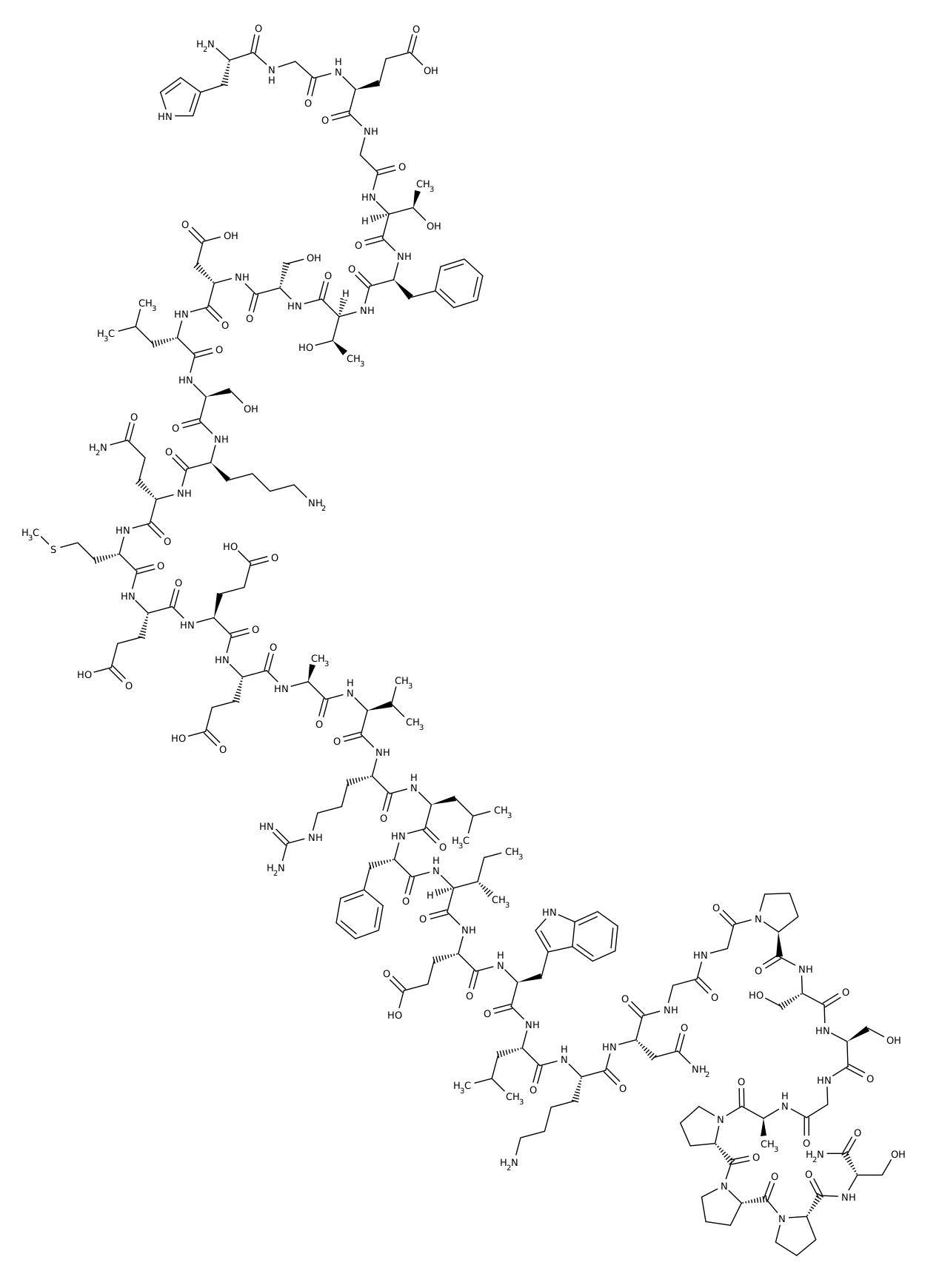
Exenatide
From Peptidepedia, the trusted peptide wiki.



- Exenatide is a medicine from Gila monster saliva that helps control blood sugar and weight.
- It works by telling the pancreas to release insulin and slowing down digestion to reduce hunger.
- Results appear within 4-12 weeks with improved glucose control and weight loss.
Exenatide is a synthetic glucagon-like peptide-1 (GLP-1) receptor agonist originally derived from the saliva of the Gila monster lizard, primarily used for glycemic control in type 2 diabetes and increasingly explored for weight management and neuroprotection. Popular among individuals seeking metabolic optimization, those managing insulin resistance, and biohackers interested in appetite regulation, exenatide is typically administered via subcutaneous injection at doses of 5-10 mcg twice daily (immediate-release) or 2 mg once weekly (extended-release), with meaningful glycemic and weight effects generally observed within 4-12 weeks of consistent use.
What Is Exenatide?
Exenatide is a 39-amino acid peptide that functions as an incretin mimetic, replicating the physiological effects of human GLP-1 while demonstrating significantly greater resistance to enzymatic degradation by dipeptidyl peptidase-4 (DPP-4). First isolated from Heloderma suspectum (Gila monster) venom, the compound shares approximately 53% amino acid sequence homology with native human GLP-1, yet possesses a substantially longer half-life of 2.4 hours compared to the 1-2 minute half-life of endogenous GLP-1.
The peptide's uniqueness lies in its dual origin—both a naturally occurring compound and a pharmaceutical innovation. Unlike synthetic analogs designed entirely in laboratories, exenatide represents a case of evolutionary pharmacology, where millions of years of reptilian evolution produced a molecule with remarkable therapeutic properties for human metabolic disorders.
Primary human-use benefits include:
- Glucose-dependent insulin secretion enhancement
- Suppression of inappropriately elevated glucagon secretion
- Delayed gastric emptying promoting satiety
- Reduction in food intake and body weight
- Potential cardioprotective and neuroprotective effects
How It Works
Glucose-Dependent Insulin Secretion
Exenatide binds to GLP-1 receptors on pancreatic beta cells, activating adenylyl cyclase and increasing intracellular cyclic AMP (cAMP) concentrations. This cascade potentiates glucose-stimulated insulin secretion through protein kinase A activation and subsequent calcium channel modulation. Critically, this insulinotropic effect occurs only in the presence of elevated blood glucose, substantially reducing hypoglycemia risk compared to sulfonylureas or exogenous insulin.
Glucagon Suppression
In hyperglycemic states, exenatide suppresses glucagon release from pancreatic alpha cells, reducing hepatic glucose output. This effect is preserved in type 2 diabetes, where the normal incretin-mediated glucagon suppression is often impaired. The glucagon-lowering action contributes significantly to postprandial glucose control and overall glycemic improvement.
Gastric Emptying Modulation
Exenatide activates vagal afferent pathways that slow gastric motility, extending the time nutrients remain in the stomach. This deceleration reduces the rate of glucose appearance in circulation following meals, flattening postprandial glucose excursions. The delayed emptying also enhances mechanical satiety signals, contributing to reduced caloric intake.
Central Appetite Regulation
GLP-1 receptors in the hypothalamus and brainstem mediate exenatide's anorexigenic effects. The peptide crosses the blood-brain barrier and activates neurons in the arcuate nucleus and area postrema, promoting satiety and reducing hunger signals. Neuroimaging studies demonstrate altered reward-related brain responses to food cues in exenatide-treated individuals.

Dosage Protocols
Immediate-Release Formulation:
- Initiation: 5 mcg subcutaneously twice daily for at least one month
- Maintenance: 10 mcg subcutaneously twice daily based on tolerability
- Timing: Administered within 60 minutes before morning and evening meals, with doses separated by at least 6 hours
Extended-Release Formulation:
- Standard dose: 2 mg subcutaneously once weekly
- Timing: Same day each week, any time of day, with or without meals
- No dose titration required
For research or off-label metabolic optimization purposes, some protocols suggest beginning at lower doses (2.5 mcg twice daily) to assess individual tolerance before gradual escalation. Cycling is generally not practiced with exenatide, as its benefits depend on continuous receptor activation and metabolic adaptation over time.
How to Use / Administration Methods
Exenatide requires subcutaneous injection, typically administered in the abdomen, thigh, or upper arm. Injection sites should be rotated to prevent lipodystrophy. The immediate-release formulation uses standard insulin syringes or prefilled pens, while the extended-release version requires reconstitution before injection.
Injection technique:
- Allow refrigerated medication to reach room temperature (15-30 minutes)
- Clean injection site with alcohol swab
- Pinch skin fold and insert needle at 45-90 degree angle
- Inject slowly and hold for 5-10 seconds before withdrawal
- Do not rub injection site
For the extended-release microsphere formulation, vigorous shaking is required to suspend the powder uniformly before immediate injection through the provided needle.
Results Timelines
Week 1-2: Initial appetite suppression and early satiety typically manifest. Some users report mild nausea that generally diminishes with continued use. Fasting glucose may show modest improvement.
Week 4-8: Measurable reductions in HbA1c become apparent, typically 0.5-1.0% from baseline. Weight loss of 1-2 kg is common. Postprandial glucose excursions notably flatten.
Week 12-24: Full glycemic benefits realized, with HbA1c reductions of 0.8-1.5% in clinical populations. Weight loss may reach 2-4 kg. Cardiovascular biomarkers including blood pressure and lipid profiles may show improvement.
Week 24-52: Sustained metabolic benefits with continued use. Long-term studies demonstrate maintained weight loss and glycemic control. Some evidence suggests progressive beta-cell preservation with extended therapy.
Research Evidence
Clinical evidence supporting exenatide spans multiple therapeutic domains. The DURATION trial program established the efficacy of once-weekly exenatide, demonstrating HbA1c reductions of 1.6% and weight loss of 2.3 kg over 30 weeks compared to twice-daily dosing.
The EXSCEL cardiovascular outcomes trial, involving 14,752 patients followed for a median of 3.2 years, demonstrated cardiovascular safety with a trend toward reduced major adverse cardiovascular events, though not reaching statistical significance for superiority.
Emerging research explores exenatide's neuroprotective potential. A phase 2 trial in Parkinson's disease patients showed that 48 weeks of exenatide treatment produced sustained improvements in motor function that persisted 12 weeks after drug discontinuation, suggesting possible disease-modifying effects rather than purely symptomatic benefit.
Preclinical studies indicate exenatide may enhance neurogenesis, reduce neuroinflammation, and improve mitochondrial function in brain tissue, supporting ongoing investigation in neurodegenerative conditions including Alzheimer's disease.
Stacking
Exenatide is commonly combined with other glucose-lowering agents in clinical practice:
Metformin: The most common combination, providing complementary mechanisms—metformin reduces hepatic glucose production while exenatide enhances insulin secretion and reduces appetite. This pairing demonstrates additive HbA1c reduction without increased hypoglycemia risk.
SGLT2 Inhibitors: Combining exenatide with agents like empagliflozin or dapagliflozin addresses multiple pathophysiological defects simultaneously, with evidence suggesting enhanced weight loss and cardiovascular protection.
Basal Insulin: For advanced type 2 diabetes, exenatide can be added to basal insulin, improving postprandial control while mitigating insulin-associated weight gain.
In research and biohacking contexts, some individuals combine exenatide with other peptides targeting metabolic optimization, though such combinations lack formal clinical evaluation and require careful consideration of cumulative effects.
Reconstitution, Storage & Prep
Immediate-release exenatide:
- Store refrigerated at 2-8°C (36-46°F) before first use
- After first use, may be kept at room temperature below 25°C (77°F) for up to 30 days
- Protect from light
- Do not freeze
Extended-release exenatide:
- Store refrigerated at 2-8°C prior to reconstitution
- May be stored at room temperature up to 25°C for up to 4 weeks
- Reconstitute immediately before injection by connecting the vial to the syringe and shaking vigorously for at least 15 seconds
- Use immediately after reconstitution; do not store reconstituted suspension
For research-grade lyophilized exenatide:
- Reconstitute with bacteriostatic water or sterile saline
- Typical reconstitution: Add appropriate diluent volume to achieve desired concentration (commonly 1 mg/mL)
- Gently swirl; do not shake vigorously
- Store reconstituted peptide refrigerated and use within 4 weeks
- Avoid repeated freeze-thaw cycles
Side Effects
Common (>10% incidence):
- Nausea (most frequent, typically transient)
- Vomiting
- Diarrhea
- Injection site reactions
- Headache
Less common (1-10% incidence):
- Hypoglycemia (primarily when combined with sulfonylureas or insulin)
- Decreased appetite
- Dizziness
- Dyspepsia
- Asthenia
Rare but serious:
- Acute pancreatitis (discontinue immediately if suspected)
- Acute kidney injury, particularly with dehydration from gastrointestinal effects
- Serious allergic reactions including anaphylaxis
- Thyroid C-cell tumors (observed in rodent studies; human relevance uncertain)
Gastrointestinal side effects typically diminish over 4-8 weeks of continued therapy. Slow dose titration significantly reduces initial tolerability issues. Exenatide is contraindicated in individuals with personal or family history of medullary thyroid carcinoma or Multiple Endocrine Neoplasia syndrome type 2.
Legal Status / FDA
Exenatide received FDA approval in April 2005 under the brand name Byetta (immediate-release) and in January 2012 as Bydureon (extended-release). It is classified as a prescription medication in the United States, European Union, and most developed nations. The drug is approved specifically for type 2 diabetes management as an adjunct to diet and exercise.
Off-label use for weight management in non-diabetic individuals occurs but lacks regulatory approval. Research-grade exenatide peptide exists in a regulatory gray area—while the compound itself is not a controlled substance, selling it for human consumption without approval violates FDA regulations. Possession for personal research purposes generally remains legal in most jurisdictions, though regulations vary internationally.
Sports/WADA
The World Anti-Doping Agency (WADA) does not currently list exenatide as a prohibited substance. GLP-1 receptor agonists are not classified under any prohibited category in the current WADA Prohibited List. However, athletes should verify current status before use, as prohibited lists undergo annual revision.
While not banned, exenatide offers no direct performance-enhancing benefits for athletic competition. Its primary effects on glucose metabolism and appetite would not confer competitive advantages in most sporting contexts. Some endurance athletes have theoretically explored GLP-1 agonists for body composition optimization during weight-making periods, though this application lacks supporting evidence and may impair performance through gastrointestinal effects.
Conclusion
Exenatide represents a significant advancement in peptide therapeutics, offering a well-characterized mechanism for metabolic optimization with an extensive clinical evidence base. Its unique evolutionary origin, favorable safety profile when appropriately used, and expanding research applications in neuroprotection make it a compound of considerable interest beyond its approved diabetic indication. For individuals pursuing metabolic health optimization, exenatide provides a scientifically validated option with predictable effects and manageable side effects when proper protocols are followed.
FAQ
How quickly does exenatide start working?
Appetite suppression and early satiety typically begin within the first week. Measurable glucose improvements appear within 2-4 weeks, while significant HbA1c reductions and weight loss require 8-12 weeks of consistent use.
Can exenatide be used for weight loss without diabetes?
While not FDA-approved for this indication, clinical studies demonstrate weight loss in non-diabetic obese individuals. However, other GLP-1 agonists (semaglutide, liraglutide) have received specific obesity approvals and may be more appropriate for this purpose.
What happens if I miss a dose?
For twice-daily dosing, skip the missed dose and resume the normal schedule—do not double up. For weekly extended-release, administer as soon as remembered if within 3 days of the missed dose; otherwise, wait until the next scheduled dose.
Is exenatide the same as semaglutide or tirzepatide?
No. While all are GLP-1 receptor agonists, they differ in structure, half-life, and potency. Semaglutide and tirzepatide generally demonstrate greater weight loss efficacy in comparative studies, though exenatide remains effective and well-studied.
Can exenatide cause thyroid cancer?
Rodent studies showed increased thyroid C-cell tumors with GLP-1 agonists. Human relevance remains uncertain, but exenatide is contraindicated in individuals with personal or family history of medullary thyroid carcinoma.
How long can I use exenatide continuously?
Clinical trials and post-marketing experience support continuous use for years without mandatory cycling. Long-term studies extending beyond 5 years demonstrate maintained efficacy and safety.
Does exenatide need to be refrigerated?
Yes, before first use. Once in use, immediate-release formulations can be kept at room temperature for up to 30 days. Extended-release formulations require refrigeration until reconstitution.
Can I drink alcohol while using exenatide?
Moderate alcohol consumption is generally acceptable but may increase nausea risk and affect blood glucose unpredictably. Excessive alcohol should be avoided due to potential hypoglycemia risk and gastrointestinal effects.
References
- National Center for Biotechnology Information. Exenatide. StatPearls. https://www.ncbi.nlm.nih.gov/books/NBK518981/
- Kolterman OG, et al. Exenatide (exendin-4) reduces fasting and postprandial glucose. Diabetes. 2005. https://diabetesjournals.org/diabetes/article/54/8/2436/14866/Exenatide-Exendin-4-Reduces-Fasting-and
- van Bloemendaal L, et al. Effects of GLP-1 on appetite and body weight. International Journal of Obesity. 2014. https://www.nature.com/articles/ijo2015190
- Drucker DJ, et al. Once-weekly exenatide compared with twice-daily exenatide. The Lancet. 2008. https://www.thelancet.com/journals/lancet/article/PIIS0140-6736(08)61206-4/fulltext
- Holman RR, et al. Effects of once-weekly exenatide on cardiovascular outcomes (EXSCEL). New England Journal of Medicine. 2017. https://www.nejm.org/doi/full/10.1056/NEJMoa1612917
- Athauda D, et al. Exenatide once weekly versus placebo in Parkinson's disease. The Lancet. 2017. https://www.thelancet.com/journals/lancet/article/PIIS0140-6736(17)31585-4/fulltext
- Hölscher C. Potential role of GLP-1 in neurodegeneration. Nature Reviews Endocrinology. 2016. https://www.nature.com/articles/nrendo.2016.4
- U.S. Food and Drug Administration. Byetta (exenatide) prescribing information. 2009. https://www.accessdata.fda.gov/drugsatfda_docs/label/2009/021773s9s11s18lbl.pdf