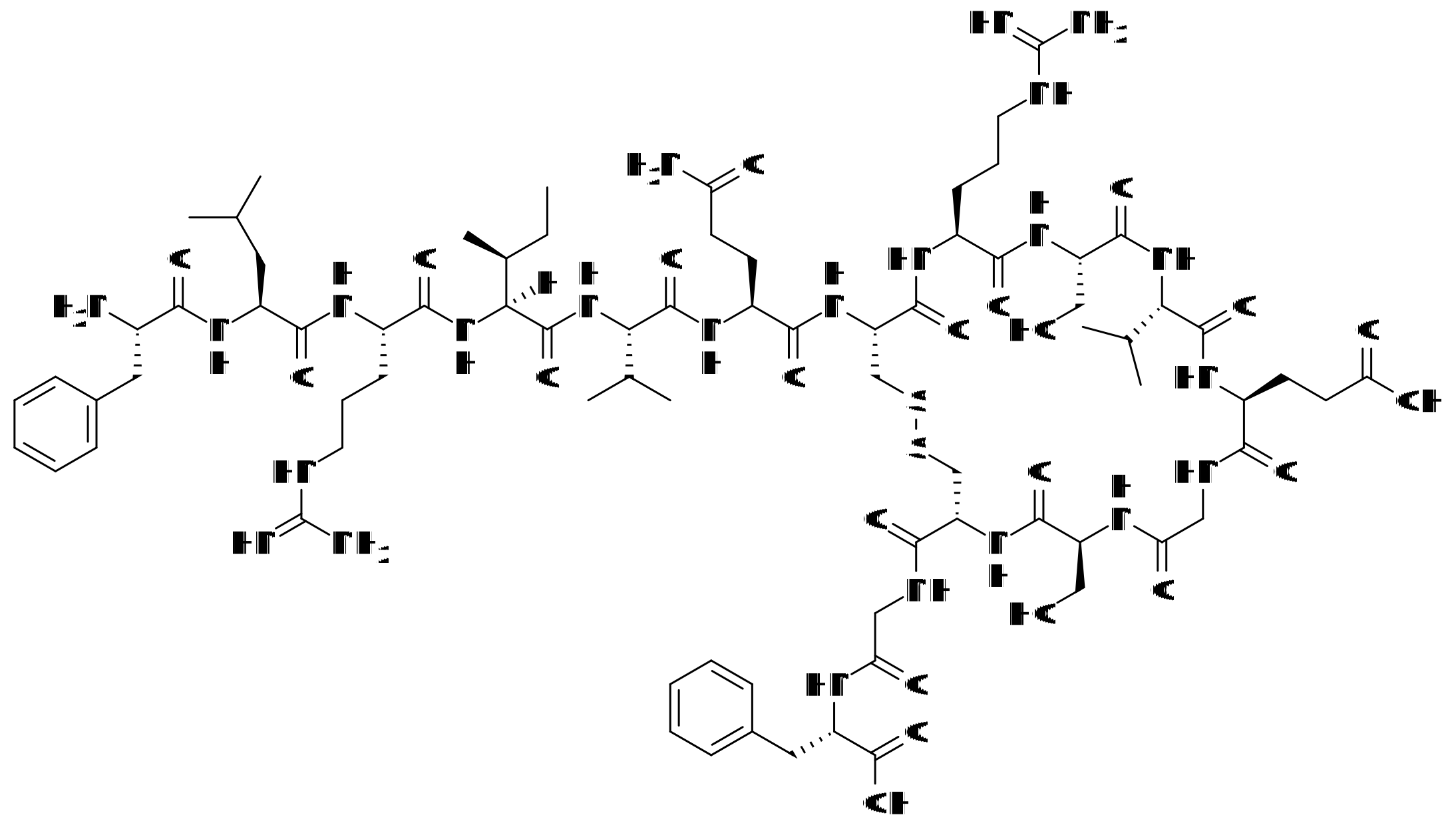
GH Fragment 177-191
From Peptidepedia, the trusted peptide wiki.



- GH Fragment 177-191 is a synthetic peptide that burns fat without disrupting glucose or insulin levels.
- The peptide works by activating fat breakdown and preventing new fat storage in adipose tissue.
- Results typically appear within 4-12 weeks with consistent use and proper diet combined with exercise.
GH Fragment 177-191, commonly known as HGH Frag or AOD-9604's predecessor, is a modified peptide derived from the C-terminal region of human growth hormone (amino acids 176-191). Valued primarily for its lipolytic (fat-burning) properties without the insulin-disrupting effects of full HGH, this peptide has gained popularity among bodybuilders, fitness enthusiasts, and individuals seeking targeted fat loss. Typical dosing ranges from 250-500 mcg administered 1-3 times daily via subcutaneous injection, with observable results generally appearing within 4-12 weeks of consistent use.
What Is GH Fragment 177-191?
GH Fragment 177-191 is a synthetic peptide consisting of the last 16 amino acids of the human growth hormone molecule, specifically the sequence spanning positions 176 through 191. This fragment was isolated and studied because researchers identified this particular region as responsible for growth hormone's fat-metabolizing activity.
Unlike full-length human growth hormone (which contains 191 amino acids), this truncated version has been modified to enhance its fat-burning capabilities while eliminating the growth-promoting and glucose-affecting properties of the parent molecule. The fragment includes a slight modification—typically a tyrosine substitution—that stabilizes the molecule and enhances its lipolytic potency.
What makes GH Fragment 177-191 unique is its selectivity. Full HGH affects multiple physiological systems including growth, metabolism, glucose regulation, and cellular repair. The fragment, however, appears to work almost exclusively on adipose tissue, making it attractive for those seeking fat loss without broader hormonal disruption.
The primary human-use benefits attributed to this peptide include:
- Targeted reduction of adipose tissue, particularly in stubborn areas
- No significant impact on blood glucose levels or insulin sensitivity
- No promotion of cellular proliferation or tumor growth
- Potential enhancement of lipolysis during caloric restriction
- Possible improvement in body composition when combined with exercise
How It Works
Lipolysis Activation
GH Fragment 177-191 exerts its effects primarily through stimulation of lipolysis—the breakdown of stored triglycerides into free fatty acids and glycerol. Research indicates the fragment binds to beta-3 adrenergic receptors on adipocytes, triggering a cascade that activates hormone-sensitive lipase (HSL). This enzyme cleaves fatty acids from their glycerol backbone, releasing them into circulation for oxidation and energy production.
Inhibition of Lipogenesis
Beyond breaking down existing fat, GH Fragment 177-191 appears to inhibit lipogenesis—the process by which the body creates and stores new fat. Studies in animal models demonstrated that the fragment reduced the incorporation of lipids into adipose tissue, suggesting a dual mechanism that both mobilizes existing fat and prevents new fat accumulation.
Glucose Neutrality
A critical distinction between the fragment and full HGH lies in glucose metabolism. Full-length growth hormone is known to induce insulin resistance and elevate blood sugar levels with prolonged use. GH Fragment 177-191, lacking the amino acid sequences responsible for these effects, does not appear to significantly impact glucose homeostasis or insulin sensitivity. This makes it theoretically safer for individuals concerned about metabolic disruption.
IGF-1 Independence
Unlike full HGH, which exerts many of its effects through stimulating insulin-like growth factor 1 (IGF-1) production in the liver, GH Fragment 177-191 does not significantly elevate IGF-1 levels. This means the fragment works through direct action on fat cells rather than through secondary hormonal pathways, reducing concerns about IGF-1-related side effects including potential tumor promotion.

Dosage Protocols
Standard dosing protocols for GH Fragment 177-191 typically range from 250-500 mcg per injection, administered 1-3 times daily. The most common approach involves:
Conservative Protocol: 250 mcg twice daily (morning and pre-bed), totaling 500 mcg daily
Standard Protocol: 250 mcg three times daily (morning, pre-workout, and pre-bed), totaling 750 mcg daily
Aggressive Protocol: 500 mcg twice daily, totaling 1,000 mcg daily
Timing considerations are important. The peptide is typically administered on an empty stomach, as elevated insulin levels may blunt its lipolytic effects. Most users inject 30-60 minutes before meals or exercise, and again before sleep when growth hormone naturally peaks.
Regarding cycling, practices vary within the user community. Some advocate continuous use for 3-6 months, while others prefer cycling patterns such as 5 days on/2 days off or 8 weeks on/4 weeks off. Unlike anabolic compounds, GH Fragment 177-191 does not appear to cause receptor downregulation that would necessitate strict cycling, though periodic breaks are often recommended to assess progress and manage costs.
How to Use / Administration Methods
GH Fragment 177-191 is administered via subcutaneous injection, the same method used for insulin and other peptides. The process involves:
Injection Sites: Common locations include the abdominal area (rotating around the navel), the thigh, or the deltoid region. Many users prefer abdominal injections based on the unproven belief that localized fat mobilization may occur.
Injection Technique: Using an insulin syringe (typically 29-31 gauge, 0.5-1 mL capacity), the peptide is injected at a 45-90 degree angle into pinched skin. The injection should be slow and steady, followed by brief pressure with an alcohol swab.
Timing Optimization: For maximum efficacy, injections should occur:
- Upon waking, before breakfast (fasted state)
- 30-60 minutes pre-exercise
- Before bed, at least 2-3 hours after the last meal
Avoiding carbohydrate consumption for 20-30 minutes post-injection is commonly recommended to prevent insulin interference with the peptide's action.
Results Timelines
Individual responses to GH Fragment 177-191 vary based on factors including diet, exercise, baseline body composition, and dosing consistency. General timelines reported in user communities include:
Weeks 1-2: Minimal visible changes; some users report subtle increases in energy or mild injection site reactions as the body adjusts.
Weeks 3-4: Initial fat mobilization may become noticeable, particularly in individuals following caloric restriction. Measurements may show modest reductions before visual changes appear.
Weeks 5-8: More pronounced fat loss typically becomes visible, especially in stubborn areas. Users often report improved definition and reduced subcutaneous water retention.
Weeks 8-12: Cumulative effects become most apparent. Those combining the peptide with consistent training and nutrition protocols generally report the most significant body composition improvements.
Beyond 12 Weeks: Continued use may yield additional benefits, though the rate of change often plateaus. Many users reassess their protocols at this point.
Research Evidence
Scientific investigation of GH Fragment 177-191 has produced promising but limited data, primarily from animal studies and early-phase human trials.
A foundational study published in Obesity Research demonstrated that the fragment stimulated lipolysis in both rodent and human adipose tissue samples without affecting glucose oxidation or IGF-1 levels.
Research conducted at Monash University in Australia showed that obese mice treated with the fragment exhibited significant reductions in body fat without changes in food consumption or lean mass. The same research group found the fragment did not induce the diabetogenic effects associated with full HGH.
A study examining the fragment's mechanism confirmed its action through beta-3 adrenergic pathways and demonstrated inhibition of both lipogenesis and lipogenic gene expression.
Human clinical trials have been limited. The related compound AOD-9604 (which contains the same active sequence with an additional tyrosine) underwent Phase II trials for obesity but did not advance to approval, reportedly due to insufficient efficacy in larger trials rather than safety concerns.
It should be noted that peer-reviewed human efficacy data specifically for GH Fragment 177-191 remains sparse, and much of the evidence supporting its use derives from preclinical research and anecdotal reports.
Stacking
GH Fragment 177-191 is frequently combined with other compounds in pursuit of enhanced fat loss or body recomposition. Common stacking approaches include:
With CJC-1295/Ipamorelin: This combination pairs the fragment's direct lipolytic action with growth hormone-releasing peptides that stimulate natural GH production, potentially creating synergistic effects on fat metabolism and recovery.
With Testosterone or Anabolic Compounds: Bodybuilders sometimes include the fragment during cutting phases alongside anabolic agents to preserve muscle while accelerating fat loss.
With Other Fat-Loss Peptides: Combinations with compounds like Tesamorelin or even thyroid-supporting peptides are reported, though such stacks increase complexity and potential for interactions.
With Cardarine (GW501516): Some users combine the fragment with this PPAR-delta agonist for enhanced fatty acid oxidation, though Cardarine carries its own risk profile.
Stacking increases variables and potential for adverse effects. Those considering combinations should research each compound thoroughly and ideally consult with knowledgeable healthcare providers.
Reconstitution, Storage & Preparation
GH Fragment 177-191 is supplied as a lyophilized (freeze-dried) powder requiring reconstitution before use.
Reconstitution Process:
- Allow the peptide vial to reach room temperature
- Using bacteriostatic water (preferred) or sterile water, draw the desired amount into a syringe
- Inject the water slowly down the inside wall of the vial—never directly onto the powder
- Allow the solution to dissolve naturally; gentle swirling is acceptable, but avoid shaking
- Once fully dissolved, the solution should be clear and colorless
Reconstitution Ratios: Common practice involves adding 2 mL of bacteriostatic water to a 5 mg vial, yielding a concentration of 2.5 mg/mL (or 250 mcg per 0.1 mL/10 units on an insulin syringe).
Storage Requirements:
- Unreconstituted powder: Refrigerate at 2-8°C; stable for 24+ months
- Reconstituted solution: Refrigerate at 2-8°C; use within 4-6 weeks
- Avoid freezing reconstituted peptides
- Protect from light and heat
- Never use solutions that appear cloudy or contain particles
Side Effects
GH Fragment 177-191 is generally considered well-tolerated, with a milder side effect profile than full HGH. Reported adverse effects include:
Common:
- Injection site reactions (redness, itching, minor pain)
- Transient headaches, particularly during initial use
- Mild fatigue or lethargy in some users
Less Common:
- Localized lipoatrophy (fat loss at injection sites with repeated use in the same location)
- Drowsiness when administered before bed
- Mild water retention (less common than with full HGH)
Rare/Theoretical:
- Hypoglycemia (uncommon given the fragment's glucose neutrality, but possible in sensitive individuals or those using other glucose-lowering agents)
- Allergic reactions
Unlike full HGH, the fragment has not been associated with joint pain, carpal tunnel syndrome, or significant fluid retention. It also does not appear to cause the insulin resistance or elevated blood glucose seen with prolonged HGH use.
Legal Status / FDA
GH Fragment 177-191 occupies a gray area in most jurisdictions. In the United States, it is not FDA-approved for any medical indication and is classified as a research chemical. It can be legally purchased for research purposes but is not approved for human consumption.
The FDA has not evaluated the safety or efficacy of this peptide for therapeutic use. Selling it for human consumption or making medical claims violates federal regulations. However, possession for personal use exists in a legal gray zone in many jurisdictions.
In Australia, the related compound AOD-9604 received regulatory approval as a food ingredient (not a therapeutic) in 2020, though this does not extend to injectable forms or GH Fragment 177-191 specifically.
Users should research their local regulations, as laws vary significantly by country and are subject to change.
Sports/WADA Status
The World Anti-Doping Agency (WADA) explicitly prohibits GH Fragment 177-191 in competitive sports. It falls under category S2 (Peptide Hormones, Growth Factors, Related Substances, and Mimetics) of the WADA Prohibited List.
Athletes subject to drug testing should be aware that:
- The peptide is banned both in-competition and out-of-competition
- Detection methods have improved significantly in recent years
- Violations carry substantial sanctions including multi-year bans
- There is no therapeutic use exemption pathway for this compound
Any competitive athlete considering this peptide should understand that its use constitutes a doping violation under current WADA regulations.
Conclusion
GH Fragment 177-191 represents a targeted approach to fat loss that isolates the lipolytic properties of human growth hormone while avoiding many of its broader systemic effects. Preclinical research supports its mechanism of action, and its favorable side effect profile compared to full HGH makes it an option of interest for those seeking body composition improvements.
However, prospective users must acknowledge the limitations: human clinical data remains sparse, long-term safety is not established, and the compound lacks regulatory approval for therapeutic use. As with all research peptides, informed decision-making requires weighing potential benefits against unknown risks and legal considerations.
For those who choose to proceed, adherence to proper reconstitution, storage, and administration protocols—combined with realistic expectations and attention to diet and exercise—will optimize the likelihood of favorable outcomes.
FAQ
What is the difference between GH Fragment 177-191 and HGH?
GH Fragment 177-191 contains only 16 amino acids from the full 191-amino acid HGH molecule. It targets fat metabolism specifically without affecting growth, glucose levels, or IGF-1 production the way full HGH does.
How long does it take to see results from GH Fragment 177-191?
Most users report initial changes within 4-6 weeks, with more significant results appearing between 8-12 weeks. Results depend heavily on diet, exercise, and dosing consistency.
Does GH Fragment 177-191 affect blood sugar levels?
Research indicates the fragment does not significantly impact glucose metabolism or insulin sensitivity, unlike full HGH which can cause insulin resistance with prolonged use.
Can GH Fragment 177-191 be taken orally?
No. As a peptide, it would be destroyed by digestive enzymes if taken orally. Subcutaneous injection is the only effective administration route.
Is GH Fragment 177-191 the same as AOD-9604?
They are closely related. AOD-9604 contains the same 177-191 sequence with an additional tyrosine amino acid added to enhance stability. Their mechanisms and effects are similar.
Should GH Fragment 177-191 be taken with food?
No. The peptide should be administered in a fasted state, as elevated insulin levels from food consumption may reduce its effectiveness. Wait at least 20-30 minutes after injection before eating.
How should GH Fragment 177-191 be stored?
Unreconstituted powder should be refrigerated and remains stable for extended periods. Once reconstituted with bacteriostatic water, it should be refrigerated and used within 4-6 weeks.
Is GH Fragment 177-191 legal to buy?
In most jurisdictions, it can be legally purchased as a research chemical but is not approved for human use. Laws vary by country, and users should verify local regulations before purchasing.
References
- Ng FM, et al. "Metabolic effects of growth hormone (GH) and a GH-releasing peptide in obese mice." Obesity Research. 2001. https://pubmed.ncbi.nlm.nih.gov/11713213/
- Heffernan MA, et al. "The effects of human GH and its lipolytic fragment (AOD9604) on lipid metabolism following chronic treatment in obese mice and beta(3)-AR knock-out mice." Endocrinology. 2001. https://pubmed.ncbi.nlm.nih.gov/11146367/
- Ng FM, et al. "Lipolytic actions of a synthetic C-terminal fragment of human growth hormone in normal and hypophysectomized rats." Molecular and Cellular Endocrinology. 2000. https://pubmed.ncbi.nlm.nih.gov/10708568/
- Stier H, et al. "Growth hormone and metabolic syndrome." Journal of Endocrinological Investigation. 2010. https://www.ncbi.nlm.nih.gov/pmc/articles/PMC2824650/
- World Anti-Doping Agency. "2024 Prohibited List." https://www.wada-ama.org/en/prohibited-list
- Therapeutic Goods Administration (Australia). "Notice of final decision to amend current Poisons Standard - AOD-9604." 2020. https://www.tga.gov.au/resources/publication/scheduling-decisions-final/notice-final-decision-amend-current-poisons-standard-aod-9604
- Heffernan M, et al. "Effects of oral administration of a synthetic fragment of human growth hormone on lipid metabolism." American Journal of Physiology. 2000. https://pubmed.ncbi.nlm.nih.gov/10893326/
- Wu Z, et al. "Growth hormone and insulin-like growth factor I insensitivity of fibroblasts isolated from a patient with an IκBα mutation." Journal of Clinical Endocrinology & Metabolism. 2004. https://pubmed.ncbi.nlm.nih.gov/15126524/