IGF-1
From Peptidepedia, the trusted peptide wiki.



- IGF-1 is a hormone that helps build new muscle cells and speeds up recovery from exercise.
- Athletes use IGF-1 injections in 4-6 week cycles to gain muscle mass and improve body composition.
- IGF-1 can cause low blood sugar and is banned in professional sports competitions.
Insulin-like Growth Factor 1 (IGF-1) is a potent anabolic peptide hormone structurally similar to insulin that plays a critical role in growth, tissue repair, and cellular regeneration. Valued by athletes, bodybuilders, and anti-aging enthusiasts for its ability to promote muscle hypertrophy, accelerate recovery, and support fat metabolism, IGF-1 has become one of the most sought-after peptides in performance enhancement circles. Typical dosages range from 20-100 mcg per day, administered subcutaneously or intramuscularly, with cycles generally lasting 4-6 weeks followed by an equivalent off period to prevent receptor desensitization.
What Is IGF-1?
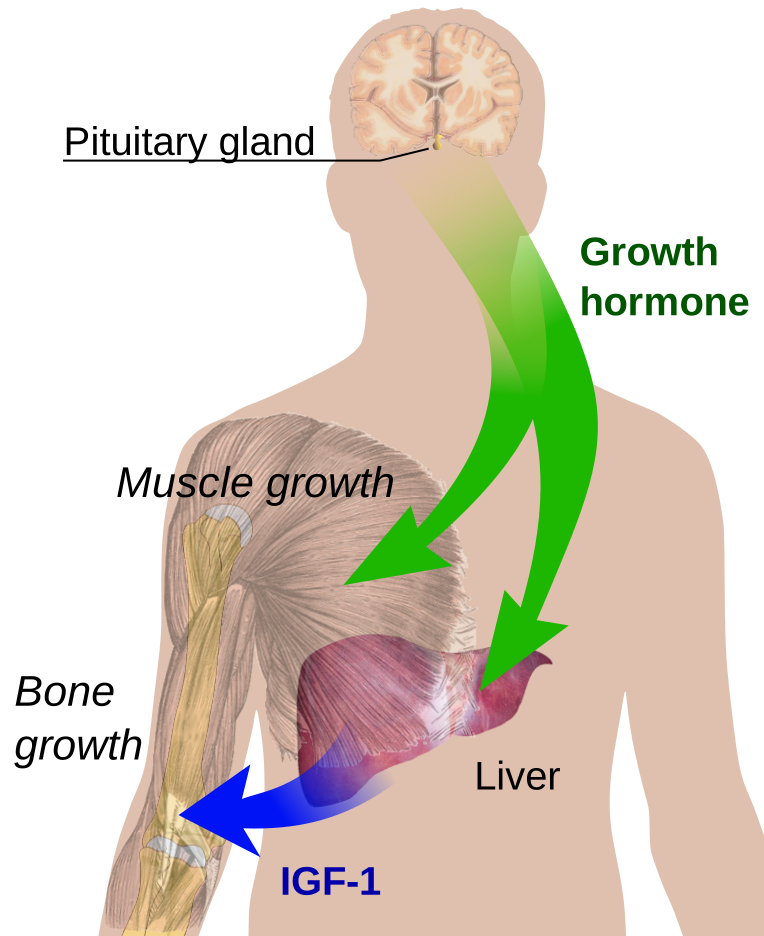
Insulin-like Growth Factor 1 is a 70-amino acid polypeptide hormone produced primarily in the liver in response to growth hormone (GH) stimulation. It serves as the principal mediator of growth hormone's anabolic effects throughout the body. IGF-1 belongs to a family of proteins involved in mediating growth and development, sharing approximately 50% structural homology with insulin.
What makes IGF-1 particularly unique among peptides is its dual mechanism of action—it functions both as an endocrine hormone circulating in the bloodstream and as a paracrine/autocrine factor produced locally in tissues. This allows IGF-1 to exert systemic effects while also acting directly at specific target sites, making it exceptionally versatile for tissue-specific growth and repair.
The primary human-use benefits attributed to IGF-1 include significant increases in lean muscle mass through hyperplasia (the creation of new muscle cells rather than merely enlarging existing ones), enhanced recovery from training and injury, improved nitrogen retention, accelerated fat oxidation, and potential neuroprotective effects. These properties have made IGF-1 popular among competitive bodybuilders seeking to break through plateaus, athletes recovering from injuries, and individuals pursuing anti-aging interventions.
How It Works
Receptor Binding and Signal Transduction
IGF-1 exerts its biological effects primarily through binding to the IGF-1 receptor (IGF-1R), a transmembrane tyrosine kinase receptor present on virtually all cell types. Upon ligand binding, the receptor undergoes autophosphorylation, triggering a cascade of intracellular signaling events. The two principal pathways activated are the PI3K-Akt pathway, which promotes cell survival and protein synthesis, and the Ras-MAPK pathway, which stimulates cellular proliferation.
Muscle Hyperplasia and Hypertrophy
Unlike most anabolic agents that solely promote hypertrophy (enlargement of existing muscle fibers), IGF-1 uniquely stimulates muscle hyperplasia—the formation of entirely new muscle cells. It accomplishes this by activating satellite cells, the muscle stem cells that remain dormant until stimulated. Once activated, these satellite cells proliferate, differentiate, and fuse with existing muscle fibers or form new myofibers, potentially increasing the total number of muscle cells.
Protein Synthesis and Anti-Catabolic Effects
IGF-1 dramatically upregulates protein synthesis through mTOR pathway activation while simultaneously inhibiting protein degradation. It suppresses the ubiquitin-proteasome pathway responsible for muscle protein breakdown and inhibits the expression of atrophy-related genes (atrogenes). This dual action creates a highly favorable anabolic environment, shifting the body's nitrogen balance toward tissue building rather than breakdown.
Metabolic and Recovery Effects
Beyond muscle tissue, IGF-1 influences glucose uptake in muscle cells (independent of insulin), promotes lipid oxidation, and accelerates the healing of connective tissues including tendons, ligaments, and cartilage. It also supports bone mineral density by stimulating osteoblast activity and collagen synthesis, making it valuable for comprehensive musculoskeletal recovery.

Dosage Protocols
IGF-1 dosing varies considerably based on the specific variant used, individual response, and goals. The most common forms encountered are IGF-1 LR3 (Long R3), which has an extended half-life of 20-30 hours, and IGF-1 DES, which has a very short half-life of approximately 20-30 minutes but higher potency at the injection site.
IGF-1 LR3 Dosing:
Beginners typically start at 20-40 mcg per day, while experienced users may utilize 50-100 mcg daily. Due to its extended half-life, once-daily administration is sufficient, typically post-workout or divided into morning and post-workout doses.
IGF-1 DES Dosing:
Given its short half-life and localized action, IGF-1 DES is typically administered at 50-150 mcg immediately pre-workout, often injected directly into the target muscle group (bilateral injections).
Cycling Guidelines:
Standard protocols recommend 4-6 week cycles followed by 4-6 weeks off to prevent IGF-1 receptor downregulation and maintain sensitivity. Some users employ a 5-days-on, 2-days-off weekly schedule throughout the cycle. Extended use beyond 50 days continuously is generally discouraged due to diminishing returns and potential receptor desensitization.
How to Use
IGF-1 peptides are administered via injection, with subcutaneous and intramuscular routes being most common.
Subcutaneous injection involves pinching a fold of skin (typically abdominal, thigh, or deltoid area) and inserting a small insulin syringe at a 45-degree angle. This method provides systemic distribution and is preferred for IGF-1 LR3.
Intramuscular injection delivers the peptide directly into muscle tissue using a slightly longer needle. This route is particularly favored for IGF-1 DES, as users often inject bilaterally into specific muscle groups they wish to target during that training session. The localized action of DES makes site-specific injection potentially advantageous for lagging body parts.
Injections are typically performed post-workout when muscles are primed for nutrient uptake, though some protocols call for pre-workout administration, particularly with IGF-1 DES. Insulin syringes (29-31 gauge) are standard, and injection sites should be rotated to prevent lipodystrophy.
Results Timeline
Week 1-2: Initial effects include enhanced muscle pumps during training, improved recovery between sessions, and increased vascularity. Some users report heightened hunger due to IGF-1's glucose-lowering effects.
Week 3-4: Noticeable improvements in muscle fullness and density become apparent. Recovery times continue to decrease, allowing for increased training frequency or volume. Early changes in body composition may be observed.
Week 5-6: Peak effects are typically experienced, with measurable increases in lean mass (2-5 lbs is commonly reported), visible reductions in subcutaneous fat, and significant strength improvements. Connective tissue benefits become more pronounced.
Post-cycle: Gains from IGF-1 are generally considered more permanent than those from other performance-enhancing substances due to the hyperplastic nature of muscle growth—new muscle cells, once created, remain even after cessation.
Research Evidence
Clinical research on IGF-1 has demonstrated significant therapeutic potential across multiple domains. Studies have shown that IGF-1 administration increases lean body mass and decreases fat mass in growth hormone-deficient adults. Research published in the Journal of Clinical Investigation demonstrated that IGF-1 plays a crucial role in muscle regeneration following injury, with IGF-1 overexpression accelerating functional recovery.
Animal studies have consistently shown that IGF-1 promotes skeletal muscle hypertrophy and can prevent age-related muscle loss (sarcopenia). A landmark study demonstrated that muscle-specific IGF-1 overexpression in mice resulted in a 15-25% increase in muscle mass.
Neurological research has revealed IGF-1's neuroprotective properties, with studies indicating potential applications in neurodegenerative conditions. IGF-1 has been shown to promote neuronal survival and may support cognitive function during aging.
Stacking
IGF-1 is frequently combined with other compounds to enhance results:
With Growth Hormone: This combination is considered synergistic, as exogenous GH elevates endogenous IGF-1 production while additional IGF-1 administration amplifies anabolic signaling. Typical protocols involve GH at 2-4 IU daily alongside IGF-1 LR3 at 40-60 mcg.
With Anabolic Steroids: IGF-1 complements traditional anabolics by adding the hyperplastic component to steroid-induced hypertrophy. This combination is popular among advanced bodybuilders during mass-building phases.
With Insulin: This stack requires extreme caution due to compounded hypoglycemia risk. Both compounds lower blood glucose, and their combination can cause dangerous drops in blood sugar. Only highly experienced users with proper monitoring should consider this combination.
With MGF (Mechano Growth Factor): MGF is a splice variant of IGF-1 that specifically activates satellite cells. Some protocols alternate between IGF-1 and MGF or use them in sequence to maximize muscle cell proliferation.
Reconstitution, Storage & Prep
IGF-1 peptides are supplied as lyophilized (freeze-dried) powder requiring reconstitution before use.
Reconstitution: Use bacteriostatic water (preferred for multi-use) or sterile water. Direct the stream of water down the inside wall of the vial, allowing it to gently saturate the powder. Do not shake—instead, roll the vial gently between palms until fully dissolved. A typical reconstitution uses 1 mL of bacteriostatic water per vial, though this varies based on desired concentration.
Storage: Unreconstituted IGF-1 should be stored in a freezer (-20°C) for long-term storage or refrigerated (2-8°C) for shorter periods. Once reconstituted, the solution must be refrigerated and used within 3-4 weeks. Never freeze reconstituted peptide, as this destroys the molecular structure.
Handling: IGF-1 is a fragile molecule sensitive to heat, light, and agitation. Keep vials away from direct sunlight, avoid shaking, and allow refrigerated solution to reach room temperature before injection to minimize discomfort.
Side Effects
Common side effects include hypoglycemia (low blood sugar), particularly when combined with insulin or during fasted states. Symptoms include shakiness, sweating, confusion, and hunger. Users should keep fast-acting carbohydrates available.
Localized effects may include injection site pain, redness, or swelling, especially with intramuscular administration. Jaw pain and facial changes have been reported with prolonged high-dose use, related to IGF-1's effects on bone and soft tissue growth.
Potential concerns include theoretical cancer risk, as IGF-1 promotes cellular proliferation. Elevated IGF-1 levels have been epidemiologically associated with increased risk of certain cancers, though causation remains unestablished. Individuals with personal or family history of cancer should exercise particular caution.
Other reported effects include water retention, joint pain (typically transient), headaches, and nausea. Organ growth (organomegaly) is possible with chronic high-dose use.
Legal Status
In the United States, IGF-1 is not FDA-approved for performance enhancement or anti-aging purposes. The only FDA-approved IGF-1 product is mecasermin (Increlex), indicated for severe primary IGF-1 deficiency in children. Possession of IGF-1 for personal use exists in a legal gray area, while sale for human consumption is prohibited.
Internationally, regulations vary significantly. IGF-1 is classified as a prescription-only medication in most developed countries, with unauthorized sale and distribution subject to penalties. Research-use peptides are available through various channels, though quality and purity vary considerably.
Sports/WADA Status
IGF-1 and all its analogs are explicitly prohibited by the World Anti-Doping Agency (WADA) under category S2 (Peptide Hormones, Growth Factors, Related Substances, and Mimetics). This prohibition applies both in-competition and out-of-competition. Detection methods have advanced significantly, with tests capable of distinguishing exogenous IGF-1 from endogenous production. Athletes subject to drug testing should be aware that IGF-1 use constitutes a doping violation with serious consequences.
Conclusion
IGF-1 represents one of the most potent anabolic peptides available, offering unique benefits through its ability to stimulate muscle hyperplasia alongside traditional hypertrophy. Its role in recovery, tissue repair, and body composition makes it attractive to serious athletes and bodybuilders seeking to maximize their physical development. However, users must carefully weigh these benefits against potential risks, legal considerations, and the importance of proper administration protocols. As with all performance-enhancing peptides, education, quality sourcing, and responsible use are paramount.
FAQ
What is the difference between IGF-1 LR3 and IGF-1 DES?
IGF-1 LR3 has an extended half-life (20-30 hours) due to a modified amino acid sequence that reduces binding to IGF binding proteins, making it suitable for once-daily systemic administration. IGF-1 DES has a very short half-life (20-30 minutes) but higher receptor affinity, making it ideal for localized, site-specific injections immediately before training.
Can IGF-1 be used without growth hormone?
Yes, IGF-1 can be used independently and will produce anabolic effects on its own. However, many users combine it with GH for synergistic benefits, as GH addresses pathways that IGF-1 does not directly influence.
How should I manage hypoglycemia risk while using IGF-1?
Administer IGF-1 with or shortly after meals containing carbohydrates. Keep glucose tablets or fast-acting carbohydrates readily available. Avoid combining with insulin unless highly experienced, and monitor for symptoms of low blood sugar including shakiness, sweating, and confusion.
Is IGF-1 detectable in drug tests?
Yes, modern testing can detect exogenous IGF-1 administration. WADA-accredited laboratories use sophisticated methods to identify synthetic IGF-1 variants and distinguish them from natural production.
What happens when I stop using IGF-1?
Unlike some performance-enhancing substances, gains from IGF-1 are considered relatively permanent because new muscle cells created through hyperplasia remain after cessation. However, the enhanced recovery and acute anabolic effects will diminish.
Can women use IGF-1?
Yes, women can use IGF-1, typically at lower doses (20-40 mcg IGF-1 LR3 daily). The compound does not cause androgenic side effects like virilization, making it more suitable for female users than many anabolic agents.
How do I know if my IGF-1 is legitimate?
Quality IGF-1 should dissolve completely and clearly upon reconstitution. Third-party testing services can verify peptide identity and purity. Purchasing from reputable sources with certificates of analysis is strongly recommended.
Should IGF-1 be injected into specific muscles?
For IGF-1 LR3, injection site is less critical due to its systemic action. For IGF-1 DES, site-specific injection into target muscles immediately before training is the standard protocol to maximize localized effects.
References
- LeRoith D, Roberts CT Jr. The insulin-like growth factor system and cancer. Cancer Lett. 2003;195(2):127-137. https://pubmed.ncbi.nlm.nih.gov/12767520/
- Florini JR, Ewton DZ, Coolican SA. Growth hormone and the insulin-like growth factor system in myogenesis. Endocr Rev. 1996;17(5):481-517. https://pubmed.ncbi.nlm.nih.gov/8897022/
- Barton ER. Viral expression of insulin-like growth factor-I isoforms promotes different responses in skeletal muscle. J Appl Physiol. 2006;100(6):1778-1784. https://pubmed.ncbi.nlm.nih.gov/16484361/
- Musarò A, et al. Localized Igf-1 transgene expression sustains hypertrophy and regeneration in senescent skeletal muscle. Nat Genet. 2001;27(2):195-200. https://pubmed.ncbi.nlm.nih.gov/11175789/
- Clemmons DR. Role of IGF-I in skeletal muscle mass maintenance. Trends Endocrinol Metab. 2009;20(7):349-356. https://www.ncbi.nlm.nih.gov/pmc/articles/PMC2824650/
- Adams GR, McCue SA. Localized infusion of IGF-I results in skeletal muscle hypertrophy in rats. J Appl Physiol. 1998;84(5):1716-1722. https://pubmed.ncbi.nlm.nih.gov/9572822/
- Barton-Davis ER, et al. Viral mediated expression of insulin-like growth factor I blocks the aging-related loss of skeletal muscle function. Proc Natl Acad Sci USA. 1998;95(26):15603-15608. https://pubmed.ncbi.nlm.nih.gov/9861015/
- World Anti-Doping Agency. 2024 Prohibited List. https://www.wada-ama.org/en/prohibited-list
- Pollak M. Insulin and insulin-like growth factor signalling in neoplasia. Nat Rev Cancer. 2008;8(12):915-928. https://www.ncbi.nlm.nih.gov/pmc/articles/PMC2743036/
- Carro E, et al. Serum insulin-like growth factor I regulates brain amyloid-β levels. Nat Med. 2002;8(12):1390-1397. https://pubmed.ncbi.nlm.nih.gov/12415260/