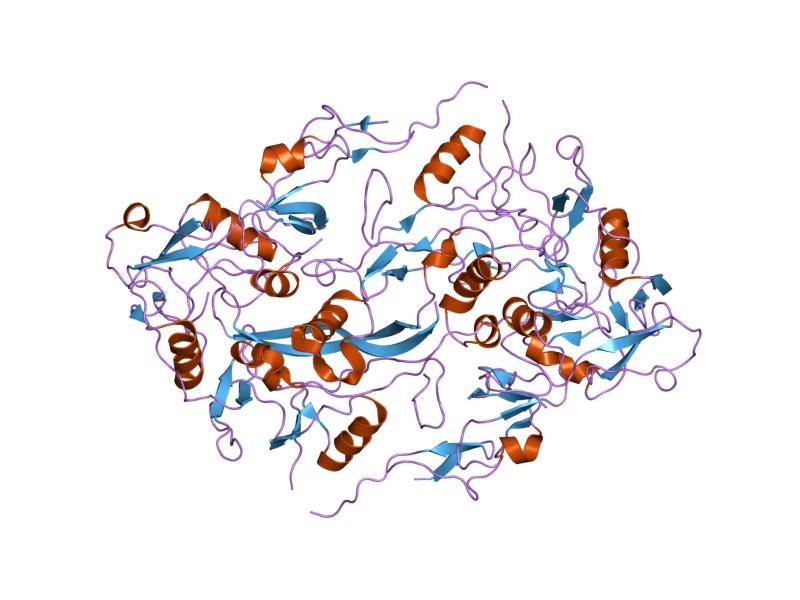
Follistatin 315
From Peptidepedia, the trusted peptide wiki.



- FS315 is a protein that blocks myostatin, allowing muscles to grow larger and stronger.
- Users inject FS315 under the skin daily for 10-30 days to build lean muscle mass.
- Results appear within 2-4 weeks with improved muscle fullness, strength, and body composition.
Follistatin 315 (FS315) is a recombinant protein that binds to and inhibits myostatin, a natural regulator that limits muscle growth. Popular among bodybuilders, athletes, and individuals seeking enhanced muscle development or recovery from muscle-wasting conditions, FS315 is valued for its potential to promote lean muscle mass, improve strength, and support body recomposition. Typical dosing protocols range from 100-300 mcg administered subcutaneously daily or every other day, with cycles commonly lasting 10-30 days depending on user goals and response.
What Is Follistatin 315?
Follistatin 315 is a specific isoform of follistatin, a naturally occurring glycoprotein encoded by the FST gene in humans. The "315" designation refers to the number of amino acids in this particular variant, distinguishing it from other isoforms such as FS288 and FS344. Produced through recombinant DNA technology, FS315 is designed to mimic the body's endogenous follistatin while offering enhanced stability for research and therapeutic applications.
What makes FS315 particularly notable is its tissue-specific binding characteristics. Unlike FS288, which binds strongly to cell surfaces and remains localized, FS315 circulates more freely in the bloodstream, allowing for broader systemic effects on muscle tissue throughout the body.
The primary human-use benefits attributed to FS315 include:
- Increased lean muscle mass through myostatin inhibition
- Enhanced muscle recovery following injury or intense training
- Potential therapeutic applications for muscle-wasting diseases
- Improved body composition with favorable muscle-to-fat ratios
- Support for strength gains during resistance training programs
How It Works
Myostatin Inhibition
The principal mechanism of FS315 involves binding to and neutralizing myostatin (also known as growth differentiation factor 8 or GDF-8). Myostatin is a member of the transforming growth factor-beta (TGF-β) superfamily and serves as a negative regulator of skeletal muscle mass. Under normal physiological conditions, myostatin limits muscle growth to maintain homeostasis.
When FS315 binds to myostatin, it prevents the protein from interacting with its receptors (ActRIIA and ActRIIB) on muscle cell surfaces. This blockade removes the "brake" on muscle growth, allowing satellite cells to proliferate and differentiate more readily, ultimately leading to muscle hypertrophy.
Activin Binding
Beyond myostatin, FS315 also binds to activins, particularly activin A and activin B. These proteins similarly signal through the ActRII receptor pathway and can inhibit muscle growth. By sequestering activins, FS315 provides an additional avenue for promoting anabolic conditions in skeletal muscle tissue.
Satellite Cell Activation
Satellite cells are muscle stem cells that remain dormant until activated by exercise, injury, or specific signaling molecules. Research indicates that myostatin inhibition through follistatin enhances satellite cell activation and proliferation. This process is essential for muscle repair and hypertrophy, as satellite cells fuse with existing muscle fibers to increase their size and regenerative capacity.
Protein Synthesis Enhancement
By removing myostatin's inhibitory effects, FS315 creates a more favorable environment for muscle protein synthesis. Studies in animal models have demonstrated that follistatin overexpression leads to significant increases in muscle fiber size and number, suggesting both hypertrophic and hyperplastic effects on skeletal muscle.

Dosage Protocols
Dosing protocols for FS315 vary considerably among users due to limited human clinical data. The following represents commonly reported protocols within the research and bodybuilding communities:
Conservative Protocol: 100 mcg subcutaneously once daily for 10-14 days, followed by an equal off-period before repeating.
Moderate Protocol: 100-200 mcg subcutaneously once daily for 20-30 days, with 4-6 weeks between cycles.
Aggressive Protocol: 200-300 mcg subcutaneously once daily or split into twice-daily administrations for 10-20 days.
Cycling is generally recommended due to the theoretical concern of antibody development with prolonged use of recombinant proteins. Most users report running cycles of 2-4 weeks followed by equivalent time off, though some protocols extend to 30 days of continuous use.
It should be noted that these dosages are derived from anecdotal reports and extrapolation from animal studies rather than controlled human clinical trials. Individual response varies significantly, and starting at lower doses to assess tolerance is prudent.
How to Use / Administration Methods
FS315 is administered via subcutaneous injection, typically into the abdominal area, thigh, or upper arm. The peptide comes as a lyophilized (freeze-dried) powder that requires reconstitution before use.
Injection Protocol:
- Reconstitute the peptide with bacteriostatic water (see Reconstitution section)
- Draw the appropriate dose using an insulin syringe (typically 29-31 gauge)
- Clean the injection site with an alcohol swab
- Pinch the skin and insert the needle at a 45-90 degree angle
- Inject slowly and withdraw the needle
- Apply light pressure if needed; do not massage the area
Injections are typically administered once daily, preferably at the same time each day. Some users prefer morning administration, while others inject post-workout. There is no established evidence suggesting optimal timing, though consistency is recommended.
Rotation of injection sites helps prevent lipodystrophy and ensures consistent absorption. Common rotation patterns include alternating between left and right sides of the abdomen or cycling through abdomen, thigh, and arm sites.
Results Timelines
User reports suggest the following general timeline for FS315 effects:
Week 1: Minimal visible changes; some users report improved workout recovery and reduced delayed-onset muscle soreness (DOMS).
Weeks 2-3: Initial increases in muscle fullness and vascularity become noticeable. Strength improvements may begin to manifest during resistance training.
Weeks 3-4: More pronounced muscle development, particularly in users combining FS315 with structured resistance training and adequate protein intake. Body composition changes become more apparent.
Post-Cycle (Weeks 4-8): Gains achieved during the cycle are generally maintained with continued training, though the rate of progress typically normalizes to baseline levels.
Results are highly dependent on training intensity, nutritional status, sleep quality, and individual genetic factors. Users with higher baseline myostatin levels may experience more dramatic responses, while those already near their genetic potential may see more modest improvements.
Research Evidence
Human clinical research on FS315 specifically remains limited, though related studies provide insight into follistatin's therapeutic potential.
A landmark gene therapy study published in Molecular Therapy demonstrated that follistatin gene transfer in patients with Becker muscular dystrophy resulted in improved muscle function and increased distance walked during six-minute walk tests. While this study used gene therapy rather than direct protein administration, it established proof-of-concept for follistatin's muscle-enhancing effects in humans.
Animal studies have consistently shown that follistatin administration or overexpression leads to substantial increases in muscle mass. Research published in PLOS ONE demonstrated that follistatin treatment in mice resulted in significant muscle hypertrophy without adverse effects on cardiac tissue.
Studies examining myostatin-null animals (those genetically lacking myostatin) show dramatic muscle hypertrophy, supporting the rationale for myostatin inhibition as a muscle-building strategy.
Stacking
FS315 is sometimes combined with other peptides or compounds to potentially enhance results:
With Growth Hormone Secretagogues: Combining FS315 with peptides like CJC-1295 or Ipamorelin may provide synergistic effects on muscle growth through complementary mechanisms—myostatin inhibition plus increased GH/IGF-1 signaling.
With IGF-1 LR3: Some users stack FS315 with IGF-1 variants to maximize anabolic signaling pathways. This combination targets muscle growth through multiple mechanisms simultaneously.
With BPC-157 or TB-500: For recovery-focused protocols, combining FS315 with healing peptides may support both muscle growth and tissue repair.
Stacking increases complexity and potential for interactions. Users should approach combination protocols with caution and ideally introduce compounds individually to assess response before combining.
Reconstitution, Storage & Prep
Reconstitution:
- Allow the vial of lyophilized FS315 to reach room temperature
- Using a sterile syringe, draw the desired amount of bacteriostatic water (typically 1-2 mL per vial)
- Inject the water slowly against the vial wall, allowing it to run down gently
- Swirl gently—never shake—until the powder is fully dissolved
- The solution should be clear; discard if cloudy or particulate matter is visible
Storage:
- Unreconstituted powder: Store at -20°C (freezer) for long-term storage or 2-8°C (refrigerator) for shorter periods
- Reconstituted solution: Store at 2-8°C (refrigerator) and use within 14-21 days
- Protect from light and avoid repeated freeze-thaw cycles
- Never store at room temperature once reconstituted
Preparation Tips:
- Use bacteriostatic water rather than sterile water for longer shelf life
- Calculate concentration based on reconstitution volume (e.g., 1 mg in 1 mL = 1000 mcg/mL)
- Mark vials with reconstitution date
- Use insulin syringes for accurate dosing
Side Effects
Reported side effects of FS315 are generally mild, though comprehensive safety data from human trials is lacking:
Common: Injection site reactions (redness, swelling, itching), mild fatigue during initial use, temporary flu-like symptoms.
Less Common: Joint discomfort, headaches, changes in appetite, water retention.
Theoretical Concerns: Development of neutralizing antibodies with prolonged use, potential effects on reproductive function (follistatin plays roles in gonadal physiology), unknown long-term effects on cardiac muscle.
The lack of extensive human safety data means that rare or long-term adverse effects may not yet be characterized. Users should monitor for unusual symptoms and discontinue use if significant adverse reactions occur.
Legal Status / FDA
Follistatin 315 is not approved by the U.S. Food and Drug Administration (FDA) for any therapeutic indication. It is legally sold for research purposes only, with vendors typically including disclaimers stating the product is "not for human consumption."
In the United States, purchasing FS315 for personal research is generally legal, though administering it to humans outside of approved clinical trials exists in a regulatory gray area. The FDA has not specifically scheduled follistatin as a controlled substance.
International regulations vary significantly. Users should familiarize themselves with local laws regarding peptide purchase and possession, as some jurisdictions have stricter controls on research chemicals.
Sports/WADA
The World Anti-Doping Agency (WADA) prohibits myostatin inhibitors under Section S4.4 of the Prohibited List, which bans "Myostatin inhibitors including but not limited to: agents reducing or ablating myostatin expression; myostatin-binding proteins (e.g., follistatin); myostatin signal transduction inhibitors".
Athletes subject to WADA testing or competing in organizations that follow WADA guidelines should be aware that FS315 use constitutes a doping violation. Detection methods for follistatin and related compounds continue to advance, and violations carry significant penalties including competition bans.
Conclusion
Follistatin 315 represents a compelling approach to muscle enhancement through targeted myostatin inhibition. Its mechanism of action—removing the natural brake on muscle growth—offers theoretical advantages for those seeking improved muscle mass, strength, and body composition. While animal studies and limited human gene therapy trials support its efficacy, the absence of comprehensive human clinical trials means users must weigh potential benefits against unknown long-term risks. For individuals who choose to use FS315, adherence to proper reconstitution, storage, and administration protocols is essential, as is realistic expectation-setting regarding results timelines and magnitude of effects.
FAQ
What is the difference between Follistatin 315 and Follistatin 344?
FS344 is a precursor form that can be cleaved into FS315 or FS288 in the body. FS315 is considered more stable in circulation and may provide more systemic effects, while FS344 offers flexibility as it converts to active forms based on tissue environment.
How long does it take to see results from FS315?
Most users report initial changes in muscle fullness and recovery within 2-3 weeks, with more significant muscle development becoming apparent by weeks 3-4 of consistent use combined with proper training and nutrition.
Can FS315 be used for fat loss?
While FS315 primarily targets muscle growth, increased muscle mass can elevate basal metabolic rate, indirectly supporting fat loss. Some research suggests myostatin inhibition may also have direct effects on adipose tissue, though this is not the primary application.
Is PCT (Post-Cycle Therapy) required after FS315?
Unlike anabolic steroids, FS315 does not suppress endogenous hormone production, so traditional PCT is not necessary. However, cycling on and off is recommended to minimize potential antibody development.
Can women use Follistatin 315?
Women can use FS315, and because it does not directly affect sex hormones, virilization effects associated with anabolic steroids are not expected. Dosing may be adjusted to the lower end of protocols.
How should FS315 be stored during travel?
Reconstituted FS315 should be kept cold during travel using insulated bags with ice packs. For longer trips, unreconstituted powder is more stable and can tolerate brief periods at room temperature.
What happens if I miss a dose?
Missing a single dose is unlikely to significantly impact results. Resume normal dosing the following day rather than doubling up. Consistency over the cycle duration matters more than individual doses.
Is FS315 detectable in drug tests?
Yes, advanced testing methods can detect follistatin and related proteins. Athletes subject to anti-doping testing should assume FS315 is detectable and prohibited.
References
- Rodino-Klapac LR, et al. "Inhibition of myostatin with emphasis on follistatin as a therapy for muscle disease." Muscle & Nerve. 2009. https://www.ncbi.nlm.nih.gov/pmc/articles/PMC2817784/
- Lee SJ. "Regulation of muscle mass by myostatin." Annual Review of Cell and Developmental Biology. 2004. https://www.ncbi.nlm.nih.gov/pmc/articles/PMC4180248/
- Mendell JR, et al. "A phase 1/2a follistatin gene therapy trial for Becker muscular dystrophy." Molecular Therapy. 2015. https://www.ncbi.nlm.nih.gov/pmc/articles/PMC4503795/
- Hedger MP, de Kretser DM. "The activins and their binding protein, follistatin—diagnostic and therapeutic targets in inflammatory disease and fibrosis." Cytokine & Growth Factor Reviews. 2013. https://www.ncbi.nlm.nih.gov/pmc/articles/PMC3753580/
- Braga M, et al. "Follistatin promotes adipocyte differentiation, browning, and energy metabolism." Journal of Lipid Research. 2014. https://www.ncbi.nlm.nih.gov/pmc/articles/PMC3884147/
- Gilson H, et al. "Follistatin induces muscle hypertrophy through satellite cell proliferation and inhibition of both myostatin and activin." American Journal of Physiology. 2009. https://www.ncbi.nlm.nih.gov/pmc/articles/PMC5723243/
- World Anti-Doping Agency. "2024 Prohibited List." https://www.wada-ama.org/en/prohibited-list
- Kota J, et al. "Follistatin gene delivery enhances muscle growth and strength in nonhuman primates." Science Translational Medicine. 2009. https://www.ncbi.nlm.nih.gov/pmc/articles/PMC2852878/