This glossary defines the key terms you'll encounter when reading about peptides, peptide therapy, and clinical research. Each definition is written in plain language. Terms link to relevant peptide profiles and guides where applicable.
A
Amino Acid
The building blocks of peptides and proteins. There are 20 standard amino acids encoded by human DNA, each with a unique side chain that determines its chemical properties. Peptides are defined by their specific sequence of amino acids. See What Are Peptides?
Agonist
A substance that binds to a receptor and activates it, producing a biological response. For example, semaglutide is a GLP-1 receptor agonist — it binds to and activates the GLP-1 receptor to reduce appetite and blood sugar. The opposite of an antagonist.
Antagonist
A substance that binds to a receptor and blocks its activation, preventing the natural response. Used therapeutically to inhibit overactive pathways.
B
Bacteriostatic Water (BAC Water)
Sterile water containing 0.9% benzyl alcohol as a preservative. Used to reconstitute lyophilized peptides. The preservative prevents bacterial growth, allowing multi-dose use from a single vial for up to 28 days. Preferred over plain sterile water for peptides that will be used over multiple days.
Bioavailability
The proportion of a drug that reaches systemic circulation after administration. Subcutaneous injection of peptides typically provides higher bioavailability than oral administration, since peptides are degraded by digestive enzymes when taken by mouth. Expressed as a percentage.
Body Protection Compound
A class of peptides derived from human gastric juice. BPC-157 is the most studied member, investigated for tissue repair and anti-inflammatory properties. See BPC-157.
C
Certificate of Analysis (CoA)
A document issued by a testing laboratory that verifies the identity, purity, and composition of a peptide product. A valid CoA includes HPLC purity data, mass spectrometry confirmation, and endotoxin testing. See Understanding Certificates of Analysis.
Clinical Trial
A research study testing a drug or treatment in human volunteers. Conducted in phases: Phase 1 (safety), Phase 2 (efficacy + dosing), Phase 3 (large-scale confirmation), and Phase 4 (post-market surveillance).
Compounding Pharmacy
A licensed pharmacy that prepares customized medications, including peptides, for individual patients based on a prescriber's order. Regulated by state boards of pharmacy and subject to USP standards. Distinct from mass-market pharmaceutical manufacturing.
Concentration
The amount of dissolved substance per unit of solvent, typically expressed as mg/mL for reconstituted peptides. A higher concentration means less volume per dose. Use our reconstitution calculator to calculate concentration.
D
Dose Escalation
A protocol where the dose is gradually increased over time to improve tolerability. Common with GLP-1 agonists like semaglutide and tirzepatide, which start at low doses and titrate up over weeks to reduce gastrointestinal side effects.
DPP-4 (Dipeptidyl Peptidase-4)
An enzyme that rapidly breaks down native GLP-1 and GIP in the body (half-life ~2 minutes). Therapeutic peptides like semaglutide are engineered with structural modifications to resist DPP-4 degradation, extending their half-life to days or weeks.
Dual Agonist
A molecule that activates two different receptors. Tirzepatide (GLP-1 + GIP) and survodutide (GLP-1 + glucagon) are both dual agonists targeting different receptor combinations for obesity treatment.
E
EC50 (Half-Maximal Effective Concentration)
The concentration of a drug that produces 50% of its maximum effect. A key measure of potency — lower EC50 values mean higher potency (less drug needed). Used to compare receptor binding affinities across compounds.
Endotoxin
A toxin released by certain bacteria. Peptide purity testing includes endotoxin assays (LAL testing) to ensure products are free of bacterial contamination. High endotoxin levels can cause fever, inflammation, and serious adverse reactions.
F
FDA (Food and Drug Administration)
The U.S. federal agency responsible for approving drugs and regulating their safety. A peptide must complete clinical trials and receive FDA approval before it can be commercially marketed for a specific medical indication. See Peptide Legality.
G
GHK-Cu (Copper Peptide)
A naturally occurring tripeptide (glycyl-L-histidyl-L-lysine) complexed with copper. Studied for skin regeneration, wound healing, and anti-aging properties. See GHK-Cu.
GHRH (Growth Hormone-Releasing Hormone)
A hypothalamic hormone that stimulates the pituitary gland to produce growth hormone. Synthetic analogs like CJC-1295 and sermorelin mimic GHRH to increase GH secretion.
GHRP (Growth Hormone-Releasing Peptide)
A class of synthetic peptides that stimulate growth hormone release through the ghrelin receptor (GHS-R), a different pathway than GHRH. Examples include GHRP-2 and GHRP-6. Often stacked with GHRH analogs for synergistic GH release.
GLP-1 (Glucagon-Like Peptide-1)
An incretin hormone released by the gut after eating. GLP-1 reduces appetite, slows gastric emptying, and stimulates insulin secretion. GLP-1 receptor agonists like semaglutide and liraglutide are FDA-approved for type 2 diabetes and obesity.
H
Half-Life
The time required for the concentration of a drug in the body to decrease by 50%. Longer half-lives allow less frequent dosing. Semaglutide has a half-life of ~7 days (weekly injection), while native GLP-1 has a half-life of ~2 minutes.
HPLC (High-Performance Liquid Chromatography)
An analytical technique used to separate, identify, and quantify components in a mixture. The primary method for determining peptide purity. A purity of ≥98% by HPLC is considered pharmaceutical grade. See Peptide Purity Testing.
I
Incretin
A group of metabolic hormones released by the gut in response to food intake. The two main incretins are GLP-1 and GIP. Incretin-based therapies are the foundation of modern obesity and diabetes pharmacotherapy.
Insulin Syringe
A syringe calibrated in "units" designed for insulin injection. On a standard U-100 syringe, 100 units = 1 mL. The most common syringe type used for subcutaneous peptide injection due to its fine gauge needle and precise graduated markings.
Investigational Drug
A pharmaceutical product that has not received regulatory approval. It may be undergoing clinical trials but cannot be legally marketed for human therapeutic use. Many peptides profiled on Peptidepedia are investigational.
K
KD (Keyword Difficulty)
Not a peptide term — but if you arrived here from a search engine, KD refers to how competitive a keyword is to rank for in Google. You're looking for Kd (dissociation constant) below.
Kd (Dissociation Constant)
A measure of binding affinity between a ligand and its receptor. Lower Kd values indicate tighter binding. Related to but distinct from EC50 — Kd measures binding strength, while EC50 measures functional potency.
L
Lyophilized
Freeze-dried. Most research peptides are supplied as lyophilized powder for maximum stability during storage and shipping. The powder must be reconstituted with bacteriostatic water before injection. Lyophilized peptides can remain stable for months to years when stored properly.
M
Mass Spectrometry (MS)
An analytical technique that measures the mass-to-charge ratio of molecules. Used alongside HPLC to confirm peptide identity — the measured mass should match the expected molecular weight of the peptide sequence.
MCG (Microgram)
A unit of measurement equal to one-millionth of a gram, or one-thousandth of a milligram. Written as mcg or μg. Most peptide doses are expressed in micrograms. 1 mg = 1,000 mcg.
MASH (Metabolic Dysfunction-Associated Steatohepatitis)
Formerly called NASH (non-alcoholic steatohepatitis). A progressive liver disease characterized by fat accumulation, inflammation, and cell damage. Several peptides including survodutide and retatrutide are in clinical trials for MASH.
N
NCT Number
A unique identifier assigned to every clinical trial registered on ClinicalTrials.gov. Format: NCT followed by 8 digits (e.g., NCT06066515). Used to look up trial details, enrollment status, and results.
P
Peptide Bond
The chemical bond linking two amino acids together. Formed by a dehydration reaction between the carboxyl group of one amino acid and the amino group of the next. The backbone of all peptides and proteins.
Pharmacokinetics (PK)
The study of how a drug moves through the body — absorption, distribution, metabolism, and elimination. PK parameters like half-life and bioavailability determine how a peptide is dosed.
R
Reconstitution
The process of dissolving a lyophilized peptide powder in a sterile solvent (typically bacteriostatic water) to create an injectable solution. The volume of solvent determines the concentration. See our reconstitution calculator and injection guide.
Receptor
A protein on the surface of (or inside) a cell that binds to specific molecules and triggers a biological response. Peptide drugs work by binding to specific receptors — for example, semaglutide binds the GLP-1 receptor.
S
Subcutaneous (SC/SubQ)
Under the skin. Subcutaneous injection delivers medication into the fatty tissue layer between the skin and muscle. The standard administration route for most peptides, using a short insulin needle at 45-90 degrees. See How to Inject Peptides.
Sequence
The specific order of amino acids in a peptide chain, written from N-terminus (start) to C-terminus (end) using one-letter or three-letter amino acid codes. The sequence determines the peptide's three-dimensional structure and biological activity.
T
Titration
The process of gradually adjusting a dose up or down to find the optimal balance of efficacy and tolerability. GLP-1 agonists typically use upward dose titration over several weeks to minimize gastrointestinal side effects.
Triple Agonist
A molecule that activates three different receptors. Retatrutide is a triple agonist targeting GLP-1, GIP, and glucagon receptors simultaneously — the first of its class in clinical development.
U
USP 797
The United States Pharmacopeia chapter governing sterile compounding. Sets standards for facilities, personnel, procedures, and quality control that compounding pharmacies must follow when preparing injectable medications including peptides.
V
Vial
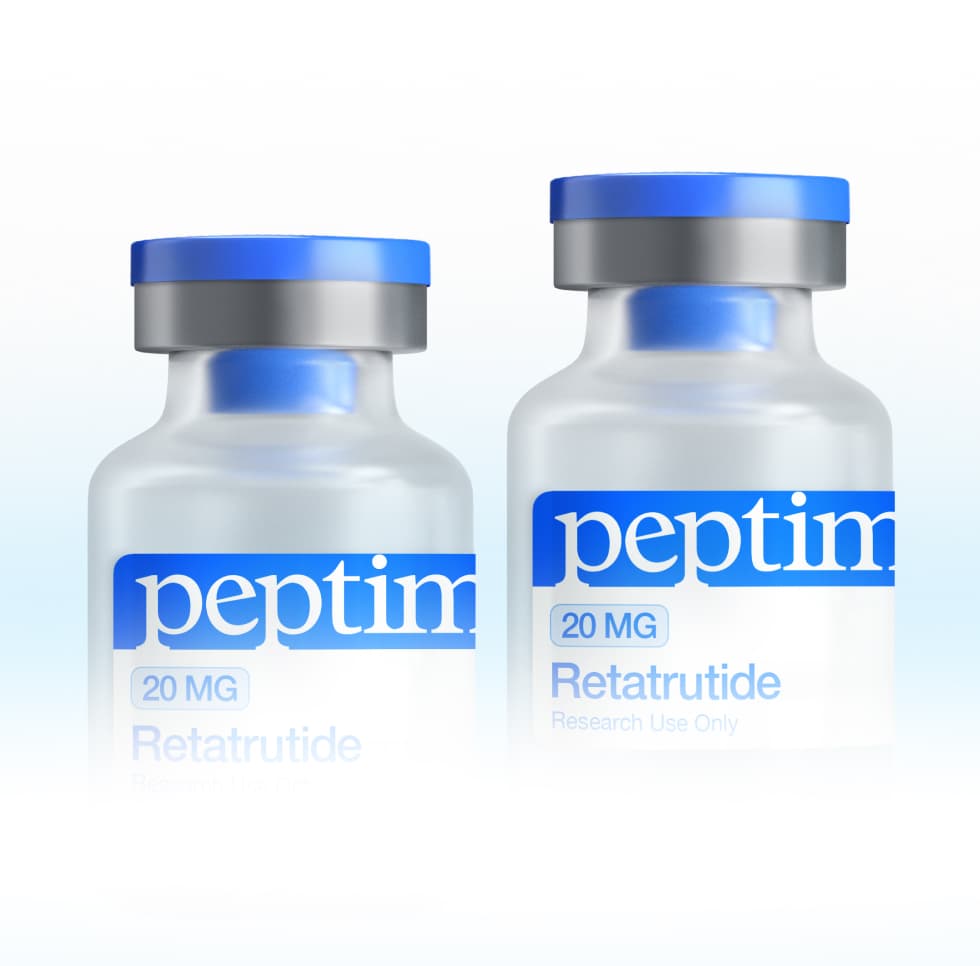
The small glass or plastic container in which peptides are supplied. Lyophilized peptides arrive in sealed vials with rubber stoppers. After reconstitution, the vial is stored refrigerated and accessed through the stopper using a syringe needle.