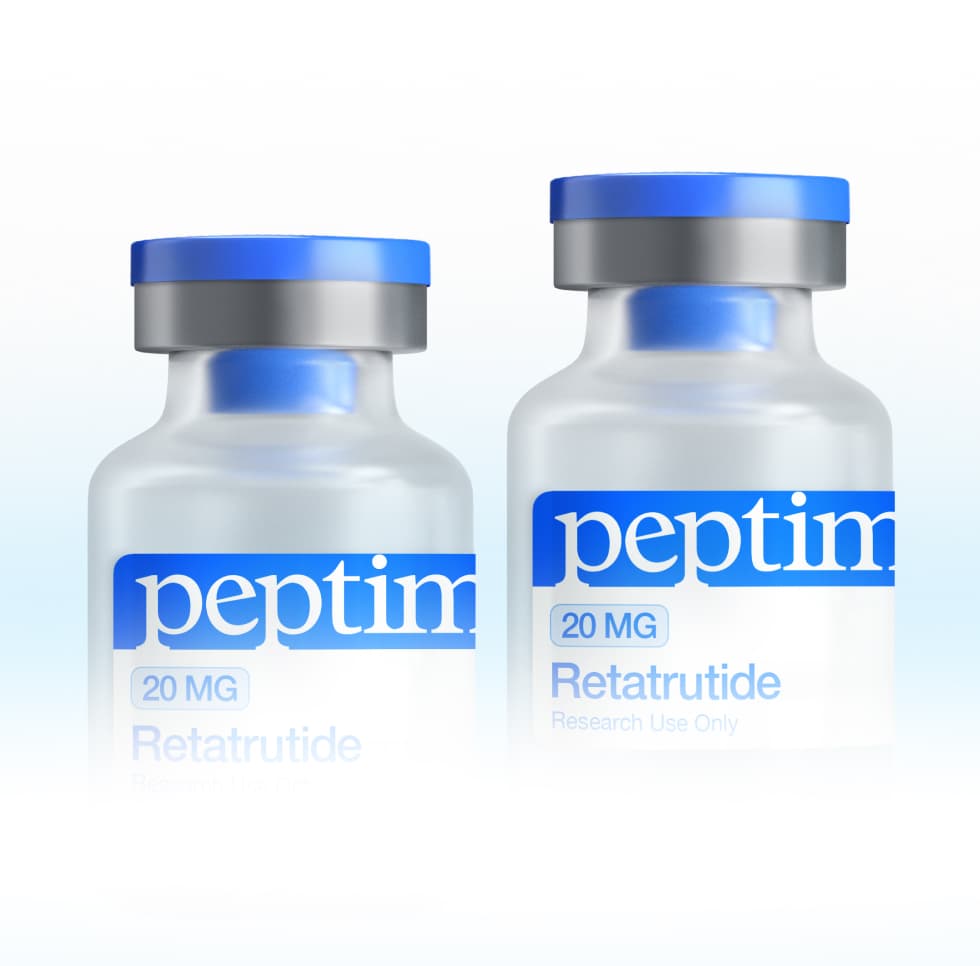
Subcutaneous injection is the standard method for administering most research and therapeutic peptides. This guide covers the complete process from gathering supplies through post-injection care, with a focus on sterile technique and accurate dosing. If any of the technical terms below are unfamiliar (lyophilized, bacteriostatic, reconstitution, subcutaneous), the peptide glossary has plain-English definitions. All peptide use should be under the supervision of a qualified healthcare professional.
What You Need
Before your first injection, gather the following supplies:
- Insulin syringes (U-100, 29-31 gauge, 0.5 mL or 1 mL) — one per injection, never reuse
- Bacteriostatic water (BAC water) — sterile water with 0.9% benzyl alcohol preservative
- Alcohol swabs — for cleaning vial stoppers and injection sites
- Sharps container — for safe disposal of used syringes
- Your lyophilized peptide vial — stored per manufacturer instructions until reconstitution
- Cotton ball or gauze (optional) — for light pressure after injection
Insulin syringes are preferred over standard syringes because their ultra-fine needles (29-31 gauge) minimize pain and tissue damage, and their graduated markings allow precise measurement of small volumes.
Step 1: Reconstitute the Peptide
If your peptide arrives as a freeze-dried powder, it must be reconstituted (dissolved) before injection.
- Clean the vial stopper — wipe the rubber stopper of both the peptide vial and bacteriostatic water with an alcohol swab. Allow to air dry.
- Draw the water — using a fresh syringe, draw your desired volume of bacteriostatic water. Common volumes are 1-2 mL for 5 mg vials.
- Add water to the peptide vial — insert the needle through the stopper and slowly release the water down the inside wall of the vial. Do not direct the stream onto the powder.
- Swirl gently — roll the vial between your palms or gently swirl until the powder is fully dissolved. Never shake — agitation can denature the peptide and reduce potency.
- Note your concentration — use our reconstitution calculator to determine your concentration and the units needed for each dose.
The resulting solution should be clear. If it appears cloudy, contains particles, or does not dissolve fully, do not use it.
Step 2: Calculate Your Dose
Accurate dosing requires knowing your concentration:
Concentration = Peptide Amount (mg) ÷ Water Volume (mL)
For example, a 5 mg vial reconstituted with 2 mL gives 2.5 mg/mL. For a 250 mcg (0.25 mg) dose:
Volume = 0.25 mg ÷ 2.5 mg/mL = 0.1 mL = 10 units
Use a reconstitution calculator to avoid errors with these conversions.
Step 3: Draw the Peptide
- Clean the vial stopper with a fresh alcohol swab
- Draw air — pull the syringe plunger back to your desired dose volume, filling with air
- Inject air into the vial — this equalizes pressure and makes drawing easier
- Invert the vial — turn the vial upside down with the needle still inserted
- Draw the peptide — slowly pull the plunger to your target number of units
- Remove air bubbles — with the needle still in the vial, tap the syringe gently and push any bubbles back into the vial
- Confirm the dose — verify the plunger is at the correct unit marking before removing from the vial
Step 4: Choose an Injection Site
Subcutaneous injections go into the fatty tissue just beneath the skin. The three most common sites are:
- Abdomen — the most common site. Inject at least 2 inches (5 cm) from the navel. Avoid the area directly around the belly button.
- Upper thigh — the front or outer surface of the thigh, roughly in the middle third between hip and knee.
- Upper arm — the fatty area on the back of the upper arm (may require assistance).
Each site should be clean and free of bruises, moles, scars, or irritation. Rotate between sites and within each site to prevent lipodystrophy (hardened or dimpled skin from repeated injection in the same spot).
Step 5: Inject
- Clean the site — wipe the injection area with an alcohol swab in a circular motion. Allow to air dry completely (injecting through wet alcohol stings).
- Pinch the skin — gently pinch a fold of skin and fat between your thumb and index finger.
- Insert the needle — insert at a 45-90 degree angle in one smooth motion. For most people with adequate subcutaneous fat, 90 degrees (straight in) is fine. Thinner individuals may use 45 degrees.
- Inject slowly — push the plunger steadily and smoothly. Rapid injection can cause more discomfort.
- Wait briefly — hold the needle in place for 5-10 seconds after fully depressing the plunger to allow complete delivery.
- Withdraw — pull the needle straight out at the same angle it entered. Apply light pressure with a cotton ball if there is any bleeding. Do not rub the site.
After the Injection
- Dispose of the syringe immediately in a sharps container. Never recap needles or throw loose syringes in the trash.
- Avoid rubbing the injection site — this can cause irritation or spread the peptide unevenly in the tissue.
- Monitor for reactions — mild redness or a small bump at the injection site is normal and usually resolves within an hour. Persistent pain, swelling, warmth, or redness may indicate infection and warrants medical attention.
Injection Site Rotation
Consistent site rotation prevents lipodystrophy, improves absorption consistency, and reduces pain. A simple system:
- Divide the abdomen into quadrants — upper left, upper right, lower left, lower right
- Rotate quadrants with each injection (e.g., Monday: upper left, Wednesday: upper right, Friday: lower left)
- Within each quadrant, vary the exact spot by at least 1 inch from the previous injection
- Include thighs and arms if injecting frequently (daily peptides)
Keep a simple log or use a consistent pattern so you don't have to remember each spot.
Common Mistakes to Avoid
- Shaking the vial during reconstitution — swirl gently instead. Shaking denatures the peptide.
- Injecting too fast — slow, steady injection reduces pain and improves absorption.
- Skipping the alcohol swab — infection risk increases significantly without proper site cleaning.
- Reusing syringes — dulled needles cause more pain and tissue damage, and introduce bacteria.
- Storing at room temperature — reconstituted peptides degrade rapidly outside the fridge.
- Directing water onto the powder — this can damage the peptide. Always aim down the vial wall.
- Not removing air bubbles — while small bubbles are harmless, they reduce dose accuracy.
When to Seek Medical Attention
Contact a healthcare professional if you experience:
- Signs of infection at the injection site — increasing redness, warmth, swelling, or pus
- Allergic reaction — hives, difficulty breathing, swelling of the face or throat
- Severe or persistent pain at the injection site lasting more than 24 hours
- Fever following injection
- Unusual symptoms that concern you — when in doubt, seek medical advice
Storage After Reconstitution
- Reconstituted peptides: Store refrigerated at 2-8°C (standard refrigerator temperature). Most remain stable for 3-4 weeks with bacteriostatic water.
- Unreconstituted peptides: Store according to manufacturer instructions — typically room temperature or refrigerated, away from direct light.
- Never freeze reconstituted solutions — ice crystal formation destroys the peptide structure.
- Protect from light — store vials in their original packaging or a dark container.
- Label your vials — note the reconstitution date, concentration, and peptide name on each vial.