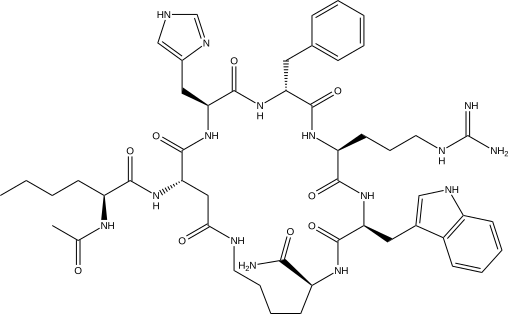
Melanotan II
From Peptidepedia, the trusted peptide wiki.



- Melanotan II is a synthetic peptide that stimulates skin tanning, enhances sexual function, and may reduce appetite.
- The peptide works by activating melanocortin receptors throughout the body, triggering melanin production for darker skin.
- MT-II is unapproved by the FDA and banned in sports; users should monitor for side effects like nausea and mole darkening.
Melanotan II (MT-II) is a synthetic peptide analog of alpha-melanocyte-stimulating hormone (α-MSH) that promotes skin pigmentation, enhances libido, and may reduce appetite. Popular among bodybuilders, fitness enthusiasts, and individuals seeking a tan without extensive UV exposure, MT-II is typically administered via subcutaneous injection at doses of 0.25–0.5 mg daily during an initial "loading phase" of 2–4 weeks, followed by maintenance dosing of 0.5–1 mg once or twice weekly to sustain results.
What Is Melanotan II?
Melanotan II is a cyclic heptapeptide developed in the 1980s at the University of Arizona during research into potential treatments for skin cancer. Scientists hypothesized that stimulating the body's natural tanning response could provide protection against UV-induced DNA damage. The peptide was designed to mimic α-MSH, a naturally occurring hormone that regulates melanin production in melanocytes.
What distinguishes MT-II from its predecessor Melanotan I (afamelanotide) is its broader receptor activity. While both peptides activate melanocortin receptors, MT-II demonstrates significant affinity for MC1R, MC3R, MC4R, and MC5R subtypes, producing effects beyond pigmentation alone. This multi-receptor activity accounts for its effects on sexual function, appetite, and potentially body composition.
The primary human-use benefits reported by users include:
- Accelerated and deeper skin tanning with minimal UV exposure
- Enhanced erectile function in men and increased sexual arousal in both sexes
- Appetite suppression and potential support for fat loss
- Possible protective effects against UV-induced skin damage
MT-II has gained substantial popularity in bodybuilding and aesthetic communities, where a tanned appearance is valued for competition and personal preference. Its dual action on appearance and libido has made it particularly appealing to recreational users despite its unapproved status.
How It Works
Melanocortin Receptor Activation
Melanotan II exerts its effects primarily through activation of the melanocortin receptor family. Upon subcutaneous injection, the peptide enters systemic circulation and binds to melanocortin receptors distributed throughout various tissues. The MC1R receptor, predominantly expressed on melanocytes in the skin, mediates the tanning response.
When MT-II binds to MC1R, it triggers a cascade of intracellular signaling involving cyclic adenosine monophosphate (cAMP). This activation stimulates tyrosinase, the rate-limiting enzyme in melanin synthesis, leading to increased production of eumelanin—the brown-black pigment responsible for darker skin tones.
Sexual Function Enhancement
The pro-sexual effects of MT-II are mediated primarily through MC4R receptors located in the hypothalamus and other central nervous system regions. Activation of these receptors influences dopaminergic pathways involved in sexual arousal and erectile function.
Unlike phosphodiesterase-5 inhibitors (such as sildenafil), which act peripherally on blood vessels, MT-II works centrally to initiate the arousal response. This mechanism explains why MT-II can produce spontaneous erections and increased libido rather than simply facilitating erections when sexual stimulation is present.
Appetite and Energy Regulation
MC3R and MC4R receptors in the hypothalamus play crucial roles in energy homeostasis and feeding behavior. MT-II activation of these receptors has been shown in research to reduce food intake and may influence fat metabolism. This anorectic effect, while secondary to the tanning application, has attracted interest from those seeking body composition improvements.
Pharmacokinetics
Following subcutaneous administration, MT-II reaches peak plasma concentrations within approximately 1–2 hours. The peptide has a relatively short half-life of approximately 1–2 hours, though its biological effects on melanogenesis persist considerably longer due to the sustained nature of melanin production once initiated.

Dosage Protocols
Melanotan II dosing typically follows a biphasic approach consisting of a loading phase and a maintenance phase.
Loading Phase: Most protocols recommend starting with a low dose of 0.1–0.25 mg to assess individual tolerance, particularly regarding nausea. Users typically increase to 0.25–0.5 mg daily, administered once per day, for a period of 2–4 weeks. Some individuals use doses up to 1 mg daily, though higher doses correlate with increased side effect frequency.
Maintenance Phase: Once desired pigmentation is achieved, dosing frequency is reduced to 0.5–1 mg administered once or twice weekly. Some users find that maintenance dosing before anticipated UV exposure optimizes results.
UV Exposure Considerations: MT-II enhances the tanning response to UV light but does not eliminate the need for sun or sunbed exposure entirely. Most users combine peptide administration with moderate UV exposure (10–20 minutes of sunbed use or natural sunlight) to activate the melanogenesis process. Importantly, MT-II does not provide complete protection against UV damage, and appropriate sun safety practices remain advisable.
Cycling: While no standardized cycling protocol exists, some users implement periodic breaks of 4–8 weeks after extended use periods of 3–6 months. This approach is anecdotally reported to maintain receptor sensitivity, though clinical data supporting this practice is limited.
How to Use / Administration Methods
Melanotan II is administered via subcutaneous injection, typically into the abdominal fat, thigh, or deltoid region. The peptide is supplied as a lyophilized (freeze-dried) powder requiring reconstitution before use.
Injection Procedure:
- Clean the injection site with an alcohol swab
- Pinch a fold of skin to isolate subcutaneous tissue
- Insert the needle at a 45–90 degree angle
- Inject the solution slowly
- Withdraw the needle and apply gentle pressure if needed
Insulin syringes (29–31 gauge, 0.5–1 mL capacity) are commonly used due to their fine needles and appropriate volume markings. Injection sites should be rotated to prevent lipodystrophy or localized reactions.
Nasal spray formulations of MT-II exist in the gray market, though bioavailability via this route is significantly lower and less predictable than subcutaneous injection. Most experienced users consider injection the only reliable administration method.
Results Timelines
Week 1: Initial effects may include facial flushing, mild nausea (particularly with first doses), and in some users, increased libido. Visible tanning is typically not apparent during the first week without UV exposure.
Weeks 2–3: With concurrent UV exposure, users generally begin noticing enhanced tanning response. Freckles and moles may darken more rapidly than surrounding skin. Sexual function effects, if present, are usually established by this point.
Weeks 4–6: Significant pigmentation changes become apparent in most users. The tan achieved often appears more natural and even compared to UV-only tanning, with many users reporting a "golden" or "bronze" quality to the color.
Maintenance Period: Once loading is complete, pigmentation can be maintained with weekly dosing and periodic UV exposure. Without maintenance, the tan will gradually fade over 1–3 months as melanin-containing keratinocytes are naturally shed through skin turnover.
Individual response varies considerably based on baseline skin type (Fitzpatrick scale), UV exposure frequency, and genetic factors affecting melanocortin receptor sensitivity.
Research Evidence
Clinical research on Melanotan II, while limited compared to approved pharmaceuticals, has demonstrated several key findings.
A phase I clinical trial published in the Journal of the American Academy of Dermatology confirmed that MT-II administration produced significant increases in skin pigmentation in human subjects with minimal UV exposure. The study documented dose-dependent tanning effects and established the basic safety profile at therapeutic doses.
Research published in the International Journal of Impotence Research demonstrated that MT-II produced erections in men with psychogenic erectile dysfunction, supporting its central mechanism of action on sexual function. This research contributed to the development of bremelanotide (PT-141), a related compound later approved by the FDA for hypoactive sexual desire disorder in women.
Studies examining melanocortin receptor pharmacology have elucidated the receptor binding profile of MT-II and its downstream effects on various physiological systems. This research has been instrumental in understanding both the therapeutic potential and side effect profile of the peptide.
Animal studies have demonstrated the appetite-suppressing effects of melanocortin receptor agonists, though human data specifically on MT-II's effects on body composition remain limited.
Stacking
Melanotan II is sometimes combined with other compounds, though evidence supporting specific combinations is largely anecdotal.
With PT-141 (Bremelanotide): Some users alternate between MT-II and PT-141, using MT-II for tanning and PT-141 specifically for sexual function enhancement when desired. PT-141 lacks the tanning effects of MT-II due to its modified receptor selectivity.
With Growth Hormone Secretagogues: Bodybuilders occasionally combine MT-II with peptides such as ipamorelin or CJC-1295 as part of broader peptide protocols. No synergistic interaction has been established, and such combinations are based on pursuing multiple goals simultaneously rather than enhanced efficacy.
With Fat Loss Agents: Given MT-II's mild appetite-suppressing properties, some users incorporate it into cutting phases alongside other compounds. The peptide's contribution to fat loss, if any, is considered modest compared to its primary tanning effects.
Reconstitution, Storage & Prep
Melanotan II is supplied as a sterile lyophilized powder, typically in vials containing 10 mg of peptide.
Reconstitution:
- Allow the vial to reach room temperature
- Using a sterile syringe, draw bacteriostatic water (preferred) or sterile water
- Inject the water slowly down the inside wall of the vial—do not spray directly onto the powder
- Gently swirl (do not shake) until the powder is fully dissolved
- The solution should be clear and colorless
Reconstitution Volume: Adding 2 mL of bacteriostatic water to a 10 mg vial yields a concentration of 5 mg/mL (500 mcg per 0.1 mL). This concentration allows convenient dosing with standard insulin syringes.
Storage:
- Unreconstituted powder: Store refrigerated (2–8°C) or frozen for extended storage; stable for 12+ months
- Reconstituted solution: Store refrigerated; use within 4–6 weeks when reconstituted with bacteriostatic water
- Protect from light and avoid repeated freeze-thaw cycles
Side Effects
Melanotan II produces several recognized side effects, most of which are dose-dependent and tend to diminish with continued use.
Common Side Effects:
- Nausea (most frequent, especially with initial doses)
- Facial flushing
- Fatigue or drowsiness
- Appetite suppression
- Spontaneous or prolonged erections in men
Less Common Side Effects:
- Darkening of existing moles and freckles
- Development of new nevi (moles)
- Injection site reactions
- Headache
- Dizziness
Concerns Requiring Attention:
The darkening of moles has raised theoretical concerns about melanoma risk, though a direct causal relationship has not been established in clinical studies. Individuals with numerous atypical moles, personal or family history of melanoma, or fair skin types should exercise particular caution. Regular dermatological monitoring is advisable for MT-II users.
Cases of priapism (prolonged painful erection) have been reported rarely and constitute a medical emergency requiring immediate attention.
Legal Status / FDA
Melanotan II has not been approved by the U.S. Food and Drug Administration (FDA) or equivalent regulatory bodies in most countries for any indication. The FDA has issued warnings regarding MT-II products sold online, citing concerns about safety, purity, and unsubstantiated claims.
In the United States, MT-II exists in a legal gray area—it is not a controlled substance, but selling it for human consumption violates FDA regulations. It is commonly sold as a "research chemical" not intended for human use.
Regulatory status varies internationally:
- Australia: Listed as a Schedule 4 prescription-only medicine; unauthorized sale is prohibited
- United Kingdom: Not approved; sale for human consumption is illegal under medicines regulations
- European Union: Not authorized; subject to individual member state regulations
Users should be aware that products obtained through unregulated channels may vary in purity, potency, and sterility.
Sports/WADA
The World Anti-Doping Agency (WADA) has included Melanotan II on its Prohibited List under the category of peptide hormones and their releasing factors (S2). The peptide is banned both in-competition and out-of-competition.
Athletes subject to drug testing should be aware that MT-II and its metabolites can be detected through standard anti-doping protocols. The detection window varies based on dosing patterns and individual metabolism but may extend several days to weeks after last administration.
Several athletes have received sanctions for MT-II use, underscoring the importance of awareness for competitive athletes regarding prohibited substance lists.
Conclusion
Melanotan II represents a pharmacologically active peptide with documented effects on skin pigmentation and sexual function. Its mechanism of action through melanocortin receptor activation is well-characterized, and limited clinical research supports its efficacy for tanning enhancement. However, its unapproved status means that users assume responsibility for sourcing, dosing, and monitoring for adverse effects. Those considering MT-II use should weigh the cosmetic benefits against the lack of long-term safety data, potential side effects, and legal considerations in their jurisdiction. Regular skin examinations and awareness of warning signs remain prudent for anyone using this peptide.
FAQ
How quickly will I see tanning results from Melanotan II?
Most users notice enhanced tanning within 2–3 weeks when combining MT-II with moderate UV exposure. Initial skin darkening may be subtle, with more pronounced results developing over 4–6 weeks of consistent use.
Can I use Melanotan II without any sun exposure?
While MT-II stimulates melanin production, UV exposure significantly enhances and accelerates visible results. Some users report mild darkening without UV, but optimal results require at least minimal sun or sunbed exposure.
Is Melanotan II the same as the "Barbie drug"?
Yes, MT-II has been colloquially referred to as the "Barbie drug" in media reports, referencing its use for achieving a tanned appearance. This nickname originated in tabloid coverage and does not reflect any official designation.
How do I minimize nausea from Melanotan II?
Starting with lower doses (0.1–0.25 mg), administering injections before bedtime, and ensuring adequate hydration can reduce nausea. Antihistamines taken 30 minutes before injection may also help. Nausea typically diminishes after the first week of use.
Will my moles get darker on Melanotan II?
Yes, existing moles and freckles commonly darken with MT-II use. This effect is expected given the peptide's mechanism but warrants monitoring. Any moles showing irregular changes in shape, border, or color should be evaluated by a dermatologist.
How long does a tan from Melanotan II last?
Without maintenance dosing, the enhanced pigmentation typically fades over 1–3 months as the skin naturally renews. Weekly maintenance doses can sustain results indefinitely.
Can women use Melanotan II?
Yes, MT-II is used by both men and women for tanning purposes. Women may also experience increased libido as a side effect. Pregnant or breastfeeding women should avoid MT-II due to lack of safety data.
What is the difference between Melanotan I and Melanotan II?
Melanotan I (afamelanotide) is more selective for MC1R and primarily affects pigmentation. Melanotan II has broader receptor activity, producing additional effects on sexual function and appetite. Afamelanotide has received regulatory approval in some regions for specific medical conditions, while MT-II remains unapproved.
References
- Dorr RT, et al. "Evaluation of melanotan-II, a superpotent cyclic melanotropic peptide in a pilot phase-I clinical study." Life Sciences. 1996;58(20):1777-84. https://pubmed.ncbi.nlm.nih.gov/9801517/
- Wessells H, et al. "Synthetic melanotropic peptide initiates erections in men with psychogenic erectile dysfunction: double-blind, placebo controlled crossover study." Journal of Urology. 1998;160(2):389-93. https://pubmed.ncbi.nlm.nih.gov/10646656/
- Hadley ME, Dorr RT. "Melanocortin peptide therapeutics: historical milestones, clinical studies and commercialization." Peptides. 2006;27(4):921-30. https://pubmed.ncbi.nlm.nih.gov/10378870/
- Fan W, et al. "Role of melanocortinergic neurons in feeding and the agouti obesity syndrome." Nature. 1997;385(6612):165-8. https://pubmed.ncbi.nlm.nih.gov/11027914/
- Brennan R, et al. "Melanotan II: a review of the evidence for efficacy and safety." Dermatology Online Journal. 2019. https://www.ncbi.nlm.nih.gov/pmc/articles/PMC6523404/
- U.S. Food and Drug Administration. "Tainted Sexual Enhancement Products." FDA Consumer Updates. https://www.fda.gov/drugs/medication-health-fraud/tainted-sexual-enhancement-products
- World Anti-Doping Agency. "The 2024 Prohibited List." WADA. https://www.wada-ama.org/en/prohibited-list
- Hruby VJ, et al. "Cyclic lactam alpha-melanotropin analogues of Ac-Nle4-cyclo[Asp5, D-Phe7,Lys10] alpha-melanocyte-stimulating hormone-(4-10)-NH2 with bulky aromatic amino acids at position 7 show high antagonist potency and selectivity at specific melanocortin receptors." Journal of Medicinal Chemistry. 1995;38(18):3454-61. https://pubmed.ncbi.nlm.nih.gov/7658432/