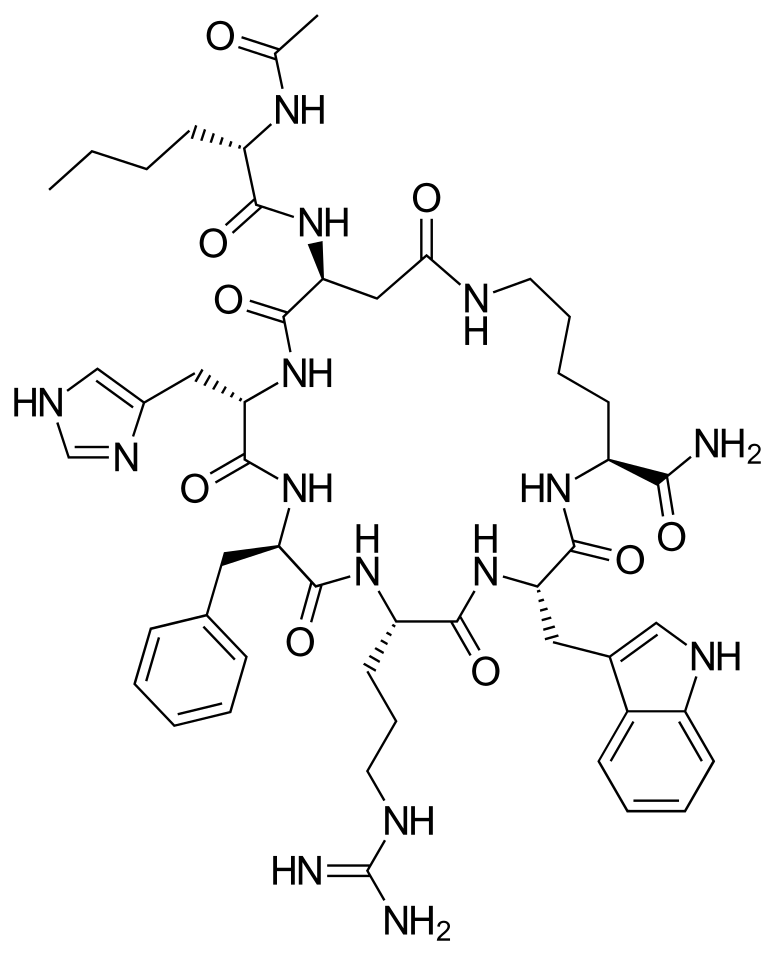
Melanotan I
From Peptidepedia, the trusted peptide wiki.



- Melanotan I is a synthetic peptide that stimulates melanin production in skin without extensive UV exposure.
- The peptide works by activating melanocortin receptors on skin cells, triggering a chemical process that produces protective dark pigment.
- Users typically see visible tanning results within 2-3 weeks using subcutaneous injections, with effects fading gradually after stopping.
Melanotan I (MT-I), also known as afamelanotide, is a synthetic analog of alpha-melanocyte-stimulating hormone (α-MSH) that promotes melanogenesis—the production of melanin in the skin. Primarily used for its photoprotective and tanning effects, Melanotan I has gained popularity among individuals seeking enhanced skin pigmentation without extensive UV exposure, those with fair skin prone to burning, and patients with photosensitivity disorders. Typical dosing protocols involve subcutaneous injections of 0.5–1 mg daily or every other day, with initial loading phases lasting 2–4 weeks followed by maintenance dosing. Visible tanning effects generally emerge within 1–3 weeks of consistent administration.
What Is Melanotan I?
Melanotan I is a linear peptide consisting of 13 amino acids, developed in the 1980s at the University of Arizona by researchers investigating methods to induce protective tanning without harmful UV radiation. It functions as a non-selective agonist of melanocortin receptors, particularly MC1R, which plays a central role in melanin synthesis within melanocytes.
Unlike its cyclic counterpart Melanotan II, which has a shorter amino acid sequence and broader receptor activity affecting sexual function and appetite, Melanotan I is more selective for pigmentation pathways. This selectivity makes it the preferred choice for users primarily interested in tanning and photoprotection rather than the additional effects associated with MT-II.
The peptide's popularity stems from its ability to stimulate eumelanin production—the darker, photoprotective form of melanin—thereby offering potential protection against UV-induced DNA damage. This mechanism has attracted attention from dermatological researchers, individuals with Fitzpatrick skin types I and II (very fair skin), and those seeking cosmetic tanning enhancement with reduced sun exposure.
The pharmaceutical-grade version, afamelanotide, has received regulatory approval in Europe and the United States for treating erythropoietic protoporphyria (EPP), a rare genetic disorder causing severe photosensitivity.
How It Works
Melanocortin Receptor Activation
Melanotan I exerts its effects by binding to melanocortin 1 receptors (MC1R) located on melanocytes in the basal layer of the epidermis. Upon binding, the receptor activates adenylyl cyclase, increasing intracellular cyclic adenosine monophosphate (cAMP) levels. This signaling cascade activates protein kinase A (PKA), which phosphorylates the cAMP response element-binding protein (CREB), ultimately upregulating microphthalmia-associated transcription factor (MITF)—the master regulator of melanogenesis.
Eumelanin Synthesis Stimulation
The activation of MITF increases transcription of tyrosinase and related enzymes (TRP-1 and TRP-2) essential for melanin biosynthesis. Importantly, Melanotan I preferentially stimulates eumelanin production over pheomelanin. Eumelanin provides superior photoprotection by absorbing UV radiation and scavenging reactive oxygen species, whereas pheomelanin can generate free radicals upon UV exposure.
Photoprotective Mechanisms
Beyond pigmentation, research indicates that MC1R activation triggers DNA repair mechanisms independent of melanin production. Studies demonstrate that α-MSH analogs enhance nucleotide excision repair of UV-induced DNA damage, suggesting Melanotan I may offer photoprotection through multiple complementary pathways.
Systemic Distribution
Following subcutaneous injection, Melanotan I distributes systemically, reaching melanocytes throughout the body. This results in generalized pigmentation rather than localized tanning, producing a more uniform appearance compared to natural sun exposure, which typically affects only exposed areas.

Dosage Protocols
Melanotan I dosing typically follows a biphasic approach consisting of a loading phase and maintenance phase.
Loading Phase: Most protocols recommend 0.5–1 mg administered subcutaneously once daily or every other day for 2–4 weeks. Some users begin with lower doses (0.25–0.5 mg) to assess tolerance before increasing. The loading phase establishes baseline pigmentation and allows the body to accumulate melanin.
Maintenance Phase: Once desired pigmentation is achieved, dosing frequency decreases to 1–2 times weekly at the same dose (0.5–1 mg) to maintain results. Some individuals require only weekly injections during maintenance, while others may need twice-weekly administration depending on their baseline skin type and UV exposure.
UV Exposure Considerations: While Melanotan I can induce pigmentation without UV exposure, research suggests that concurrent low-dose UV exposure (natural sunlight or controlled UVB) may enhance and accelerate results. However, the peptide's photoprotective benefits mean users should require significantly less UV exposure than would otherwise be necessary for comparable tanning.
Cycling: Extended cycling is not strictly necessary with Melanotan I, though some users implement periodic breaks of 4–8 weeks after several months of use. Pigmentation typically fades gradually over weeks to months following cessation, returning to baseline within 1–3 months depending on individual factors.
How to Use / Administration Methods
Melanotan I is administered via subcutaneous injection, the only effective route for this peptide due to its degradation in the gastrointestinal tract if taken orally.
Injection Sites: Common injection sites include the abdominal area (avoiding the navel by 2 inches), anterior thigh, and upper arm. Rotating injection sites prevents lipodystrophy and local irritation.
Injection Technique: Using an insulin syringe (29–31 gauge, 0.5–1 mL), pinch a fold of skin at the chosen site, insert the needle at a 45-degree angle, inject slowly, and withdraw. No aspiration is necessary for subcutaneous injections.
Timing: Injections are typically administered in the evening, as some users report transient nausea or flushing that may be less disruptive during sleep. Taking the injection 30–60 minutes before bed allows any acute side effects to subside overnight.
Nasal Spray Considerations: While nasal spray formulations exist in the gray market, bioavailability via this route is significantly lower and less predictable than subcutaneous injection. Most experienced users and researchers consider injection the only reliable administration method.
Results Timelines
Week 1: Most users notice minimal visible changes during the first week. Some may observe slight darkening of existing moles or freckles, which is a normal response to melanocortin stimulation.
Weeks 2–3: Initial pigmentation becomes apparent, often described as a subtle "glow" or light tan. Fair-skinned individuals typically notice changes earlier than those with more baseline pigmentation.
Weeks 4–6: Significant tanning develops during this period for most users. The tan appears natural and uniform across the body, including areas not typically exposed to sunlight.
Weeks 6–12: Pigmentation continues to deepen and stabilize. Most users achieve their desired results within this timeframe and transition to maintenance dosing.
Post-Cessation: Following discontinuation, pigmentation fades gradually over 4–12 weeks, with complete return to baseline typically occurring within 2–3 months.
Research Evidence
Clinical research on Melanotan I (afamelanotide) has primarily focused on its application in photosensitivity disorders. A pivotal phase III trial published in the New England Journal of Medicine demonstrated that afamelanotide significantly increased pain-free time in sunlight for patients with erythropoietic protoporphyria compared to placebo.
Studies examining photoprotective effects in healthy volunteers have shown that afamelanotide increases melanin density and reduces UV-induced erythema (sunburn). Research published in the Journal of Investigative Dermatology found that the peptide provided measurable photoprotection equivalent to an SPF of approximately 3–4, with greater benefits observed in fair-skinned individuals.
Investigations into potential applications for vitiligo have shown promising results, with combination therapy of afamelanotide and narrowband UVB producing superior repigmentation compared to UVB alone in controlled trials.
Long-term safety data from EPP treatment studies spanning several years have not identified significant safety concerns, though post-marketing surveillance continues.
Stacking
Melanotan I is occasionally combined with other compounds, though it functions effectively as a standalone peptide.
With Melanotan II: Some users combine MT-I with lower doses of MT-II, theorizing that the combination provides enhanced pigmentation. However, this approach increases the likelihood of MT-II-associated side effects (nausea, appetite suppression, spontaneous erections) without clear evidence of superior tanning results.
With GHK-Cu or BPC-157: Users focused on skin health sometimes combine MT-I with peptides purported to support skin repair and collagen synthesis. No clinical evidence supports synergistic effects, though the combination is generally considered low-risk.
With Sunless Tanners: Topical DHA-based tanners can complement MT-I by providing immediate surface color while the peptide develops deeper melanin-based pigmentation.
Reconstitution, Storage & Prep
Melanotan I typically arrives as a lyophilized (freeze-dried) powder requiring reconstitution before use.
Reconstitution: Using bacteriostatic water (preferred for multi-use vials) or sterile water, inject the diluent slowly down the inside wall of the vial to avoid damaging the peptide. Do not shake; instead, gently swirl until fully dissolved. Common reconstitution volumes are 1–2 mL per vial, depending on the peptide quantity and desired concentration.
Storage Pre-Reconstitution: Lyophilized powder remains stable at room temperature for several weeks but should be refrigerated (2–8°C) for longer storage. Freezing extends stability to 12+ months.
Storage Post-Reconstitution: Reconstituted Melanotan I must be refrigerated and used within 3–4 weeks. Never freeze reconstituted peptide solutions, as this can cause degradation.
Handling: Minimize exposure to light and temperature fluctuations. Use sterile technique when drawing doses to prevent bacterial contamination.
Side Effects
Common Side Effects:
- Facial flushing (typically transient, lasting 30–60 minutes post-injection)
- Nausea (most common during initial doses; often diminishes with continued use)
- Fatigue or drowsiness
- Injection site reactions (redness, minor irritation)
Less Common Side Effects:
- Headache
- Dizziness
- Darkening of existing moles or nevi (requires monitoring)
- Appetite changes
Considerations:The darkening of moles warrants attention, as changes in nevi should be evaluated by a dermatologist to rule out malignancy. While no causal relationship between Melanotan I and melanoma has been established in clinical trials, theoretical concerns exist given the peptide's mechanism of action. Individuals with a personal or family history of melanoma should exercise particular caution and consult healthcare providers.
Legal Status / FDA
In the United States, afamelanotide (brand name Scenesse) received FDA approval in October 2019 specifically for treating erythropoietic protoporphyria in adults. It is available only through a restricted program under a Risk Evaluation and Mitigation Strategy (REMS).
For cosmetic tanning purposes, Melanotan I remains unapproved and is classified as a research chemical. The FDA has issued warnings against using unregulated melanotan products, citing quality control concerns and potential health risks from unregulated sources.
In the European Union, Scenesse received marketing authorization from the European Medicines Agency in 2014 for EPP treatment.
In Australia, the Therapeutic Goods Administration (TGA) has not approved melanotan products and has issued public warnings about their use.
Sports / WADA
The World Anti-Doping Agency (WADA) does not currently list Melanotan I as a prohibited substance. Unlike some performance-enhancing peptides, MT-I does not directly affect athletic performance, muscle growth, or recovery.
However, athletes should note that unregulated peptide products may contain contaminants or undeclared substances that could trigger positive drug tests. Additionally, WADA's prohibited list undergoes annual revision, and athletes bear responsibility for any substances in their system regardless of intent.
Conclusion
Melanotan I represents a well-researched synthetic peptide with established mechanisms for stimulating melanogenesis and providing photoprotection. Its approval for erythropoietic protoporphyria validates its efficacy and acceptable safety profile within regulated medical use. For individuals pursuing cosmetic tanning enhancement, MT-I offers a more selective alternative to Melanotan II, with fewer off-target effects. As with any unregulated compound, users should prioritize product quality, proper storage and handling, and awareness of potential side effects. Regular dermatological monitoring is advisable for anyone using melanocortin-stimulating peptides.
FAQ
How long does it take to see results from Melanotan I?
Most users observe initial pigmentation changes within 2–3 weeks of consistent dosing, with significant tanning developing by weeks 4–6. Individual response varies based on baseline skin type, dosing protocol, and UV exposure.
Is Melanotan I safer than Melanotan II?
Melanotan I has greater selectivity for MC1R and fewer reported side effects related to sexual function and appetite. Clinical trial data for afamelanotide provides more robust safety information than exists for MT-II. However, "safer" depends on individual circumstances and product quality.
Do I need sun exposure while using Melanotan I?
Sun exposure is not strictly required, as MT-I can induce pigmentation independently. However, low-dose UV exposure may enhance and accelerate results. The peptide's photoprotective effects mean less UV is needed compared to natural tanning.
How should I store reconstituted Melanotan I?
Reconstituted MT-I must be refrigerated at 2–8°C and used within 3–4 weeks. Protect from light and avoid freezing the reconstituted solution.
Will my tan fade after stopping Melanotan I?
Yes, pigmentation gradually fades over 4–12 weeks following cessation, typically returning to baseline within 2–3 months. Maintenance dosing can preserve results indefinitely.
Can Melanotan I cause melanoma?
No causal relationship has been established in clinical trials. However, the peptide stimulates melanocyte activity, and theoretical concerns exist. Individuals with melanoma history should consult healthcare providers, and all users should monitor moles for changes.
What is the difference between Melanotan I and afamelanotide?
Afamelanotide is the pharmaceutical name for Melanotan I. They are the same peptide; afamelanotide refers specifically to the regulated, pharmaceutical-grade product (Scenesse) approved for medical use.
Can I use Melanotan I with fair skin that always burns?
Fair-skinned individuals (Fitzpatrick types I–II) often respond well to MT-I and may benefit most from its photoprotective effects. Starting with lower doses and gradual UV exposure is recommended.
References
- Langendonk JG, et al. Afamelanotide for Erythropoietic Protoporphyria. N Engl J Med. 2015;373(1):48-59. https://www.nejm.org/doi/full/10.1056/NEJMoa1510001
- European Medicines Agency. Scenesse (afamelanotide) EPAR. https://www.ema.europa.eu/en/medicines/human/EPAR/scenesse
- Abdel-Malek ZA, et al. The melanocortin 1 receptor and the UV response of human melanocytes. Photochem Photobiol. 2014;90(5):993-1004. https://pubmed.ncbi.nlm.nih.gov/24411596/
- Böhm M, et al. α-Melanocyte-stimulating hormone: A protective peptide against chemotherapy-induced hair damage? Br J Dermatol. 2014. https://www.ncbi.nlm.nih.gov/pmc/articles/PMC5765853/
- Barnetson RS, et al. [Nle4-D-Phe7]-alpha-melanocyte-stimulating hormone significantly increased pigmentation and decreased UV damage in fair-skinned Caucasian volunteers. J Invest Dermatol. 2006;126(8):1869-78. https://pubmed.ncbi.nlm.nih.gov/16858418/
- Grimes PE, et al. Afamelanotide and narrowband UV-B phototherapy for the treatment of vitiligo. JAMA Dermatol. 2013. https://pubmed.ncbi.nlm.nih.gov/28763162/
- U.S. Food and Drug Administration. FDA Approves First Treatment to Increase Pain-Free Light Exposure in Patients with Rare Disorder. October 2019. https://www.fda.gov/news-events/press-announcements/fda-approves-first-treatment-increase-pain-free-light-exposure-patients-rare-disorder
- U.S. Food and Drug Administration. Melanin and Melanotan Products. https://www.fda.gov/drugs/medication-health-fraud/melanin-and-melanotan
- Brenner M, Hearing VJ. The protective role of melanin against UV damage in human skin. Photochem Photobiol. 2008;84(3):539-549. https://www.ncbi.nlm.nih.gov/pmc/articles/PMC4126803/